Shenzhen's Longgang District published a draft policy on March 7 committing public funds to subsidize businesses building on OpenClaw, the open-source AI agent framework. The document, open for public comment through April 6, appears to be the first local government policy anywhere specifically targeting OpenClaw adoption as an economic development tool.
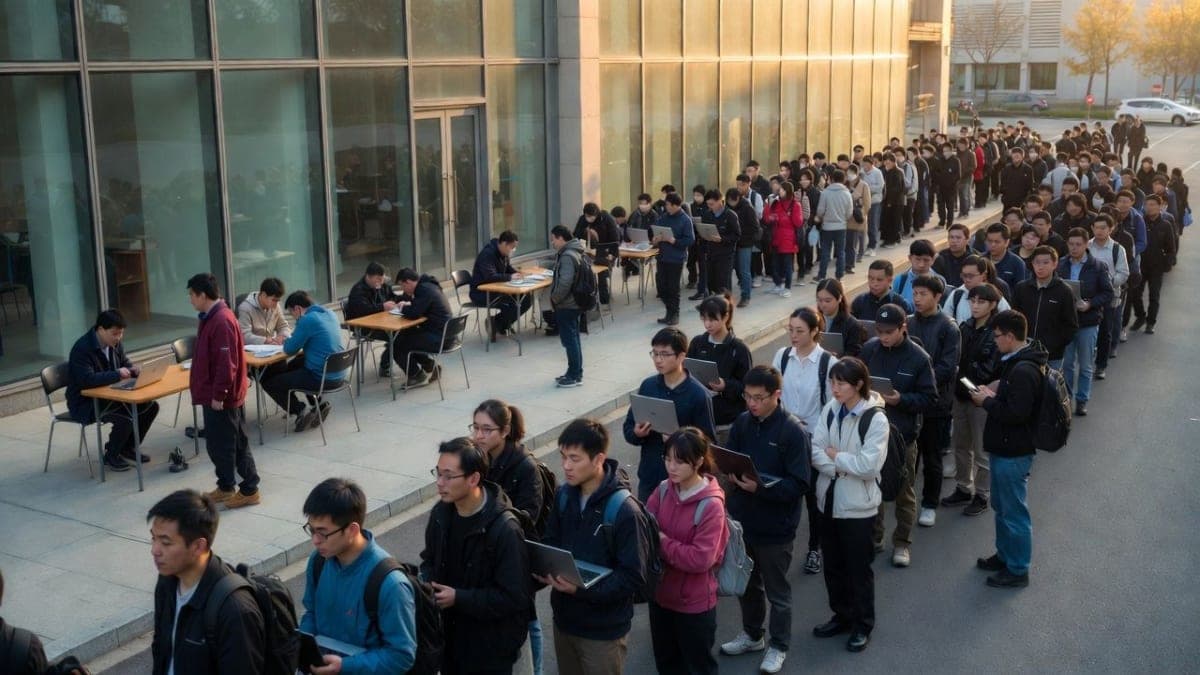
The timing is not subtle. Two days earlier, Premier Li Qiang's government work report called for faster adoption of AI agents and large-scale commercial AI applications. One day before the draft dropped, nearly 1,000 people lined up outside Tencent's Shenzhen headquarters to get OpenClaw installed on their laptops for free. Longgang's bureaucrats clearly read the room.
What the money actually buys
The policy reads less like a tech initiative and more like a relocation brochure. Platforms that set up "Lobster Service Zones" offering free OpenClaw deployment get government subsidies. Developers who contribute code to open-source communities or build industry-specific skill packages can claim up to 2 million yuan (roughly $275,000). Companies buying subsidized AI NAS hardware, branded "Lobster Boxes," get 30% knocked off the price. Data services for OpenClaw development are half off.
Then there's the lifestyle package: two months of free housing for newcomers, 18 months of discounted office space, settlement grants up to 100,000 yuan for recent graduates, and three months of free compute for new arrivals. Seed-stage projects can apply for equity investment up to 10 million yuan, with youth-led startups getting priority.
Fred Gao, who translated and analyzed the policy on his Substack, made a point worth repeating: nearly every line item corresponds to actual fiscal expenditure. Whether a government is serious about a policy comes down to whether it writes checks. Longgang is writing checks.
Three weeks from concept to policy draft
The speed here is the real story. The OPC concept, short for "One Person Company," barely existed in Chinese public discourse before early 2026. OpenClaw itself only went viral in China after the Spring Festival holiday. Subtract the weeks when civil servants were off, and Longgang's AI (Robotics) Bureau produced a policy with specific subsidy ratios, eligibility criteria, and dollar amounts in roughly three weeks.
That pace would be unusual for any government. For context, OpenClaw's creator Peter Steinberger announced he was joining OpenAI just three weeks before this policy dropped, and his tool has existed for only a few months. Chinese local governments have a reputation for moving fast on industrial policy, but subsidizing a specific open-source project by name while it's still unstable feels like a new gear.
The part nobody's talking about
What makes this interesting isn't the dollar amounts. It's what Longgang chose to subsidize. China has spent years pouring money into chips, foundation models, and compute infrastructure. This policy targets none of that. It targets the agent layer: the orchestration software that sits on top of models and actually does things on behalf of users. The "Lobster Boxes" are cheap NAS devices. The compute grants are three months. The real bet is on the applications people build, not the infrastructure underneath.
That's a specific bet on where value will accumulate in the AI stack, and it tracks with what's happening on the ground. Social media in China is full of people charging 300 to 1,000 yuan to install OpenClaw on someone's computer. Entrepreneurs like Cheetah Mobile's Fu Sheng are building entire AI agent teams during recovery from ski injuries. The Seoul Economic Daily reports that Wuxi, another Chinese city, has offered up to 5 million yuan for tech breakthroughs combining OpenClaw with robotics.
Meanwhile, China's Ministry of Industry and Information Technology has warned about security risks from poorly deployed OpenClaw instances, including data leaks and loss of system control. Security researchers have found over 17,500 exposed instances. Gartner called the software an "unacceptable cybersecurity risk" for businesses. Longgang's policy doesn't address any of this, at least not in the public draft.
So is this real?
It's a draft. One district. Public comment period runs until April 6. Applicants would need to pass verification. Twitter took the news and ran with claims that Shenzhen was handing out OpenClaw for free, which is not what the document says.
But Longgang is not a backwater. The district is home to Huawei's headquarters and has a GDP exceeding 400 billion yuan. When its AI bureau publishes a ten-section policy with line-item subsidies for an open-source agent framework, it's at minimum a signal of where Shenzhen thinks the next wave of startup activity is heading. Tencent has already begun internal testing of QClaw, a one-click OpenClaw installer integrated with WeChat and QQ.
The public comment period closes April 6. If the policy survives largely intact, other districts and cities will likely follow. They usually do.