Qualcomm walked into its 2026 investor day in New York on June 24 and announced it wants a piece of the AI data center market. The mobile chip company unveiled a server CPU called Dragonfly C1000, named Meta as its first customer, and confirmed it is buying AI software startup Modular for roughly $3.9 billion in stock.
The pitch is power efficiency. Qualcomm argues that decades spent squeezing performance out of phone batteries gives it an edge in data centers, where electricity bills and grid strain have become the real ceiling on AI growth.
The chip, and the catch
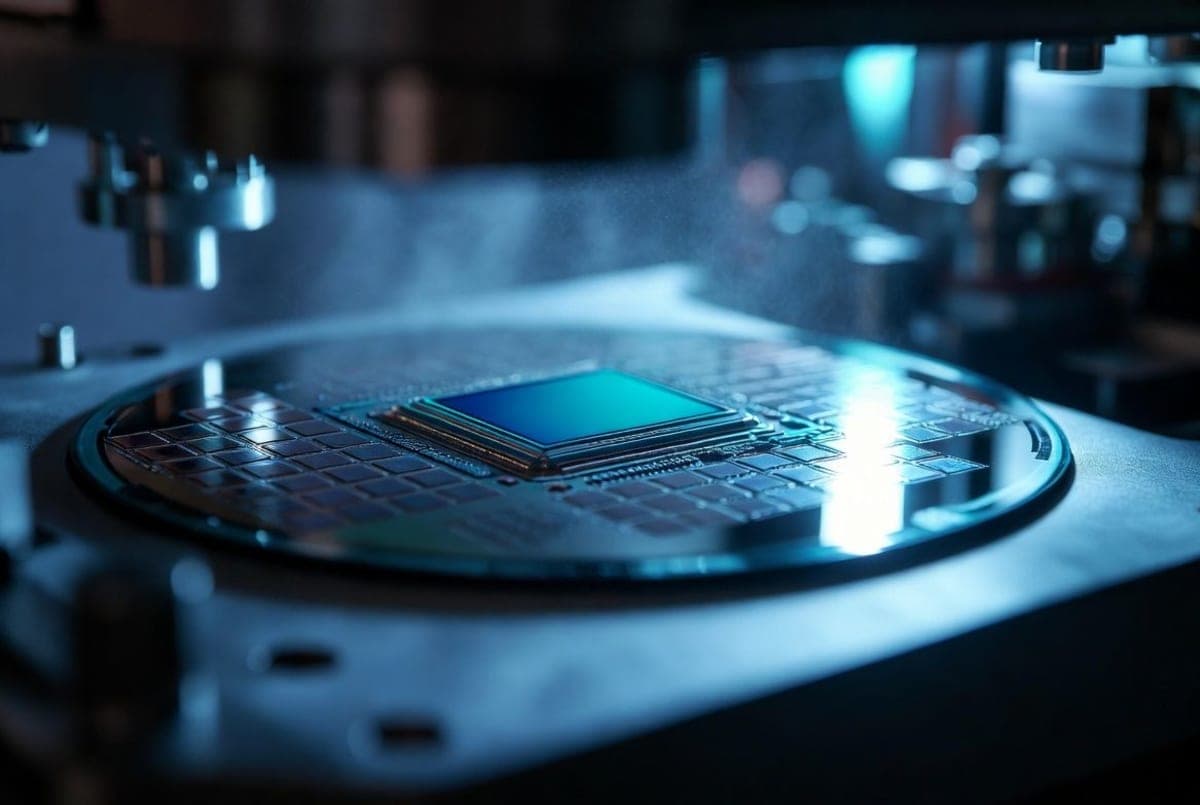
Dragonfly C1000 is built on Qualcomm's custom Oryon cores, with a multi-chiplet design carrying more than 250 cores running above 5 GHz. The company's stated pitch is more than 2x better performance per watt than competing server processors. That number comes from Qualcomm's own published specs, not an independent benchmark, so treat it accordingly.
Here is the part the headlines glossed over. Meta committed as the first named customer, but the C1000 does not ship until 2028. That is more than two years out. A hyperscaler signing a multi-generation deal before independent benchmarks exist is a vote of confidence, sure, but it is also a commitment made entirely on paper.
Investors noticed the timing too. The stock popped on the news after Qualcomm roughly doubled its fiscal 2029 non-handset revenue target to $40 billion, though some reporting noted a pullback as the 2028 ship date sank in.
Why buy a company that makes no chips?
Modular doesn't build silicon. It builds the software layer that lets AI models run across chips from different vendors without rewriting code for each one. Two pieces matter: the Mojo programming language and the MAX inference engine.
The target is Nvidia's CUDA, the software moat that has kept developers locked to Nvidia hardware for the better part of two decades. Qualcomm is essentially betting that if it can lower the switching cost, its own chips become a safer purchase.
The team came with a pedigree. Modular was founded in 2022 by Chris Lattner, the engineer behind Apple's Swift language and the LLVM compiler infrastructure.
"Joining Qualcomm gives us the scale and platform reach to accelerate that mission," Lattner said in the official announcement.
The mission being an open, hardware-agnostic AI stack. Whether that mission survives being absorbed by a single chip vendor is the question nobody at the podium wanted to dwell on.
The numbers, hedged
The deal is valued at approximately $3.92 billion, all stock, based on Qualcomm's Tuesday closing price. Not the clean $4 billion you'll see rounded up elsewhere. Qualcomm will issue roughly 19 million shares, and the transaction is expected to close in the second half of 2026, pending regulatory approval.
So the picture is a 2028 chip, a 2026 acquisition close, and revenue targets stretching to 2029. Qualcomm's first real test arrives well before any of that: proving the performance-per-watt claims hold up under an independent benchmark, not a slide deck.