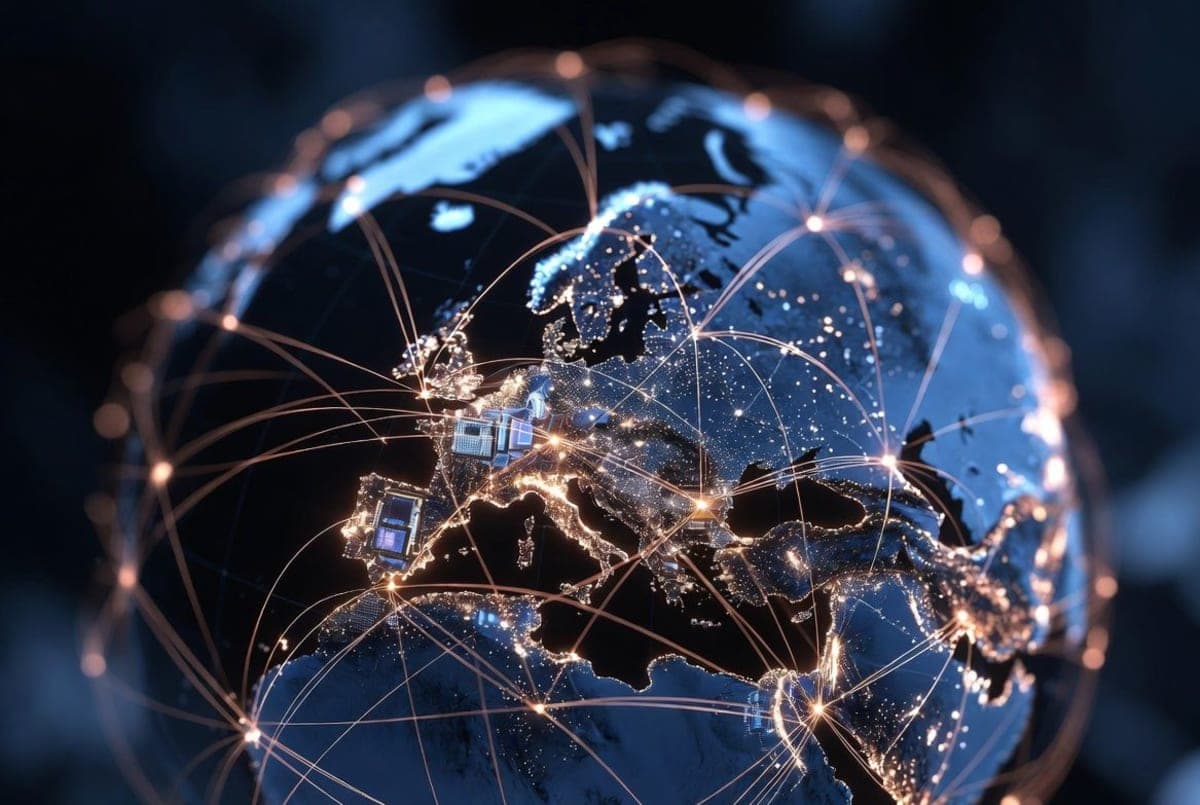
The European Union signed onto Pax Silica this week, the US-led effort to wire together AI supply chains among countries Washington considers trustworthy. The accession was confirmed around the second Pax Silica summit in Washington on June 25, alongside Germany, the Netherlands and Greece. Five more governments, including Kazakhstan and a cluster of Latin American states, are lined up to follow, which would push membership to 24.
Who actually signed
Deputy Secretary of State Christopher Landau read out the new signatories at the summit: Argentina, Germany, the Netherlands, Chile, Costa Rica, Greece, Kazakhstan, Panama and the EU itself. He called it the first time economies from the Western Hemisphere had joined. The State Department's own declaration page frames the whole thing as a non-binding political statement, which matters more than it sounds. Non-binding is how you get the EU to sign something it spent weeks arguing about internally.
Because it did argue. France pushed back hard, according to Euronews, casting the initiative as a threat to Europe's tech sovereignty agenda before Brussels eventually decided that being inside the tent beat being outside it. The Commission's pitch to wavering capitals was that joining as a bloc would give European firms a seat rather than leaving individual countries to cut their own deals, which several had already started doing.
The number to watch is 24
That 24-country figure comes from Under Secretary Jacob Helberg, the initiative's architect, in an FT interview reported secondhand through Seoul Economic Daily and others. It counts the five expected signatories this week as if they're already in. Treat it as a target, not a headcount. The declaration is political, accession timelines slip, and "set to join this week" is the kind of phrasing that ages badly.
Helberg's framing is that the G7 and G20 are too clumsy for the AI era. "There's no grouping that's purpose-built to manage the AI economy," he told the FT. Fine, but every official launching a new club says the old clubs don't fit. The more revealing line was his pitch for "innovation sovereignty" over "digital sovereignty," a direct shot at the EU's own regulatory instincts even as the EU was signing up.
Kazakhstan and the minerals play
The piece of this with real teeth is Central Asia. The US plans to set up an economic security zone with Kazakhstan to expand critical mineral supply chains, and Helberg was blunt about the motive: "Historically, the United States has had almost no presence in Central Asia." Kazakhstan sits on minerals the AI hardware build-out needs, and Washington has watched China operate there largely unchallenged for years.
Whether a non-binding declaration plus a planned zone actually shifts mineral flows is the open question. Helberg himself conceded in a separate Hudson Institute appearance that minerals are "just not that sensitive" compared to chip fabrication, which is the friendlier, easier layer to build a coalition around. The hard part, semiconductors, stays guarded.
The summit also produced a Declaration on AI Opportunity and a logistics platform called Pax Pass routed initially through Panama, backed by $50 million in US foreign assistance. Ministerial endorsement from the EU side is still pending and could land in the coming days. Until those signatures are actually on paper, 24 is a forecast.