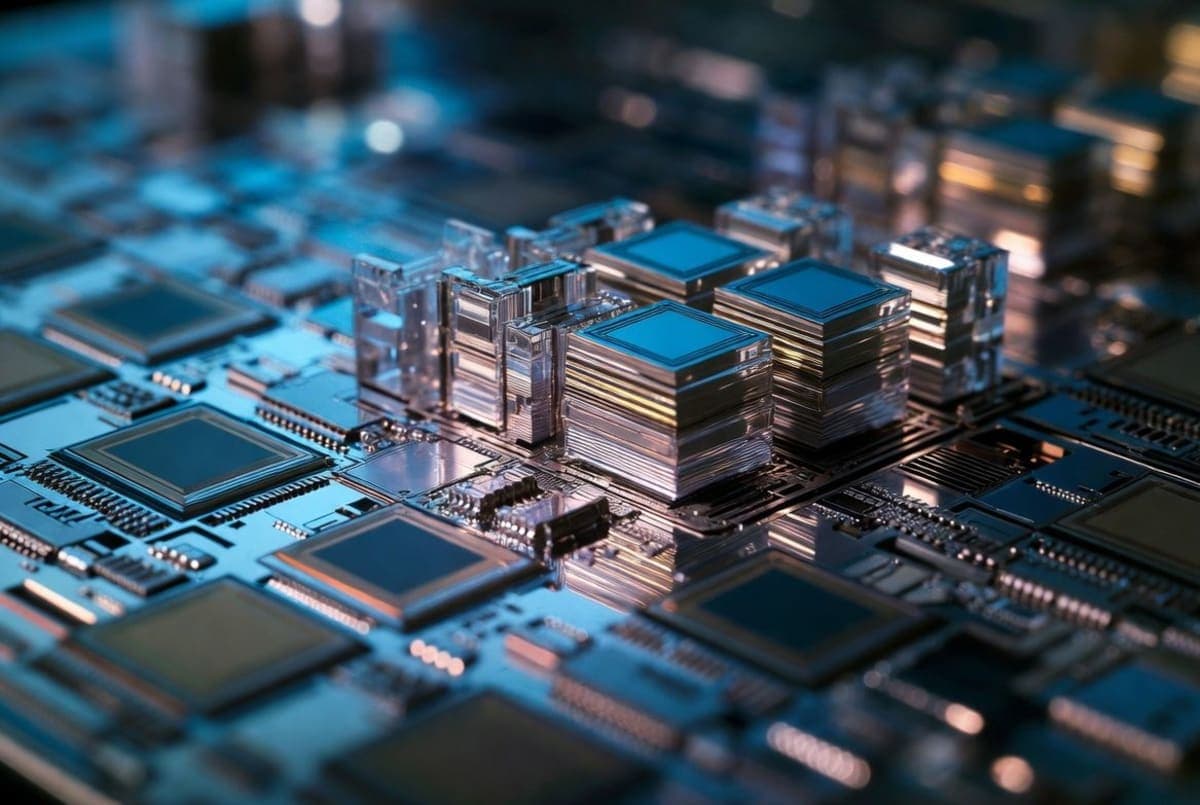
MIT researchers have built a system-on-a-chip called Gleanmer that lets tiny, battery-powered robots construct detailed 3D maps of their surroundings in real time while drawing only about 6 milliwatts. The team presented the work at the IEEE Symposium on VLSI Circuits, and MIT News published the details on June 23.
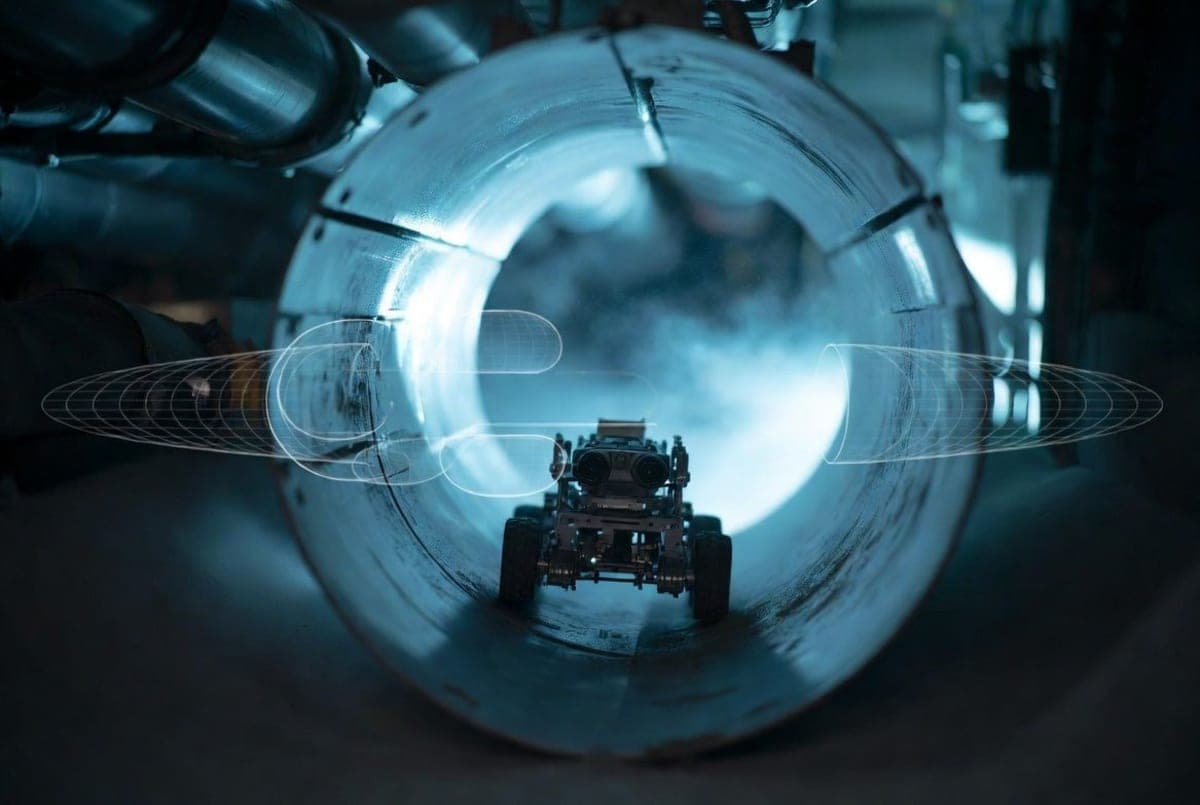
The pitch is navigation, not graphics. A drone crawling through an industrial HVAC duct to sniff out gas leaks needs to know where the walls are before it clips one. That kind of obstacle-and-free-space map normally eats memory and power, which is exactly what a bottlecap-sized robot does not have.
Ditching the voxels
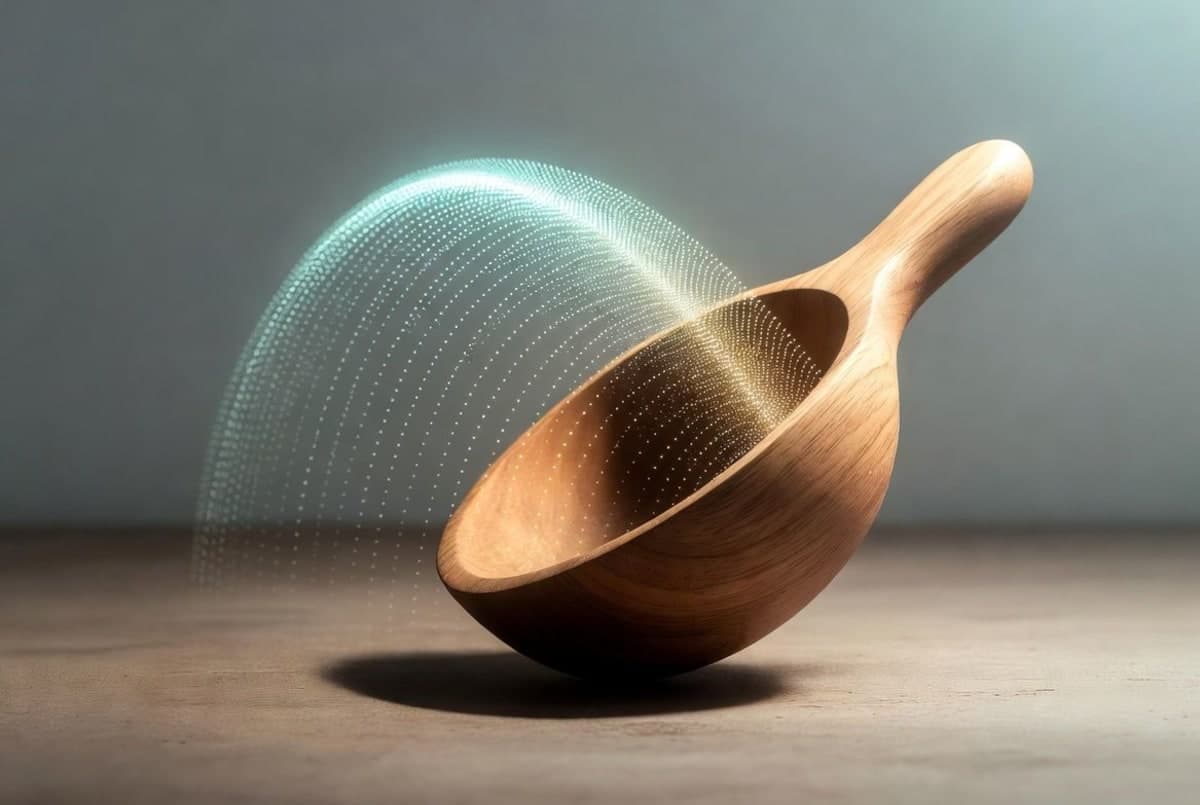
Most spatial mapping leans on voxels, the 3D equivalent of pixels, stored as a grid of little cubes. Accurate, but greedy: each depth frame gets loaded and reprocessed several times, and the cube grid balloons in memory. The MIT group went with Gaussians instead, stretchy ellipsoid blobs that bend to fit a curved surface. One elongated blob can stand in for a region that would otherwise need a pile of voxels.
The chip runs an algorithm the lab published earlier called GMMap, which generates those Gaussians from depth images in a single pass. Conventional methods compare every pixel in a frame against every other pixel. GMMap just assumes neighboring pixels belong to the same blob, compares each one to its neighbors, and throws the image away. The paper lays out the full architecture.
"At any point in time, we only need to store a few pixels in memory," says co-lead author Peter Zhi Xuan Li. Which is the whole trick, really, the rest of the chip is built around never having to phone home to slow external storage.
The co-design part
Here is the messier problem. A moving robot sees the same chair from three angles and generates three overlapping Gaussians. Merge them or the map bloats. Merging usually means digging back into raw pixels in memory. The team worked out how to fuse overlapping Gaussians directly, blob on blob, no return trip to the original pixels.
Because the map stays so compact, the Gaussians the chip needs next can sit in small on-chip memory right next to the compute units. "By having a dedicated memory that just stores the objects you've seen in the previous few frames, you can access the data much more efficiently," co-lead author Zih-Sing Fu explains. Senior author Vivienne Sze frames the broader point as hardware-and-algorithm co-design, designing both halves together so the efficient algorithm runs on hardware tuned for exactly that workload.
How good is 2.5 percent, really?
MIT says Gleanmer used about 2.5 percent of the power the best existing map-construction chip would need for the same job, and that path planning ran on roughly 20 percent of the usual energy. Worth a flag: those are comparisons against prior chips on the team's chosen test environments, reconstructed from pre-recorded 3D scenes plus a live iPhone camera feed. Impressive, but it is a lab benchmark, not a duct in a working factory. The single-LED comparison is doing some marketing work too.
Sertac Karaman, who co-authored the paper and directs MIT's LIDS, calls real-time 3D mapping the missing piece for small autonomous systems. The applications he points to, pipeline-inspecting drones and AR glasses that map a room without cooking the battery, are the obvious ones.
The work was supported in part by Amazon, Intel, the U.S. National Science Foundation, and the MIT-MathWorks Fellowship. Next on the team's list: pushing the compute units closer to the sensors, and testing whether Gaussians can represent schematics so AI can reason over blueprints. No commercial timeline, and no word on when this leaves the lab.