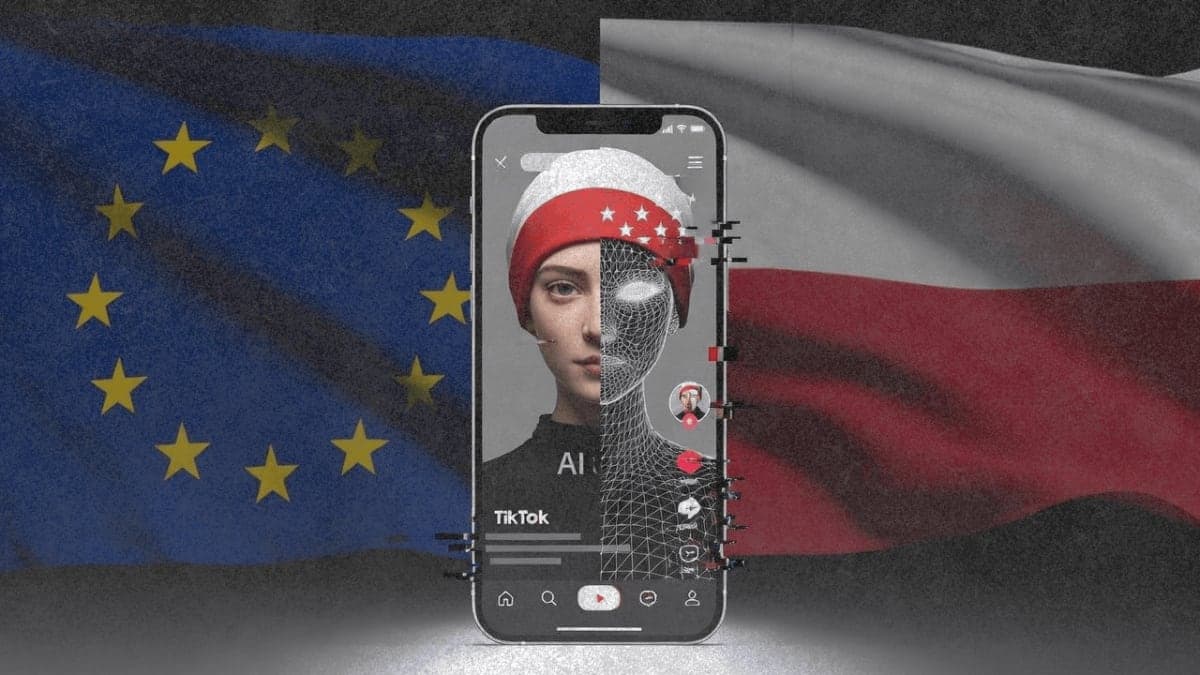
The Polish government has asked the European Commission to open proceedings against TikTok under the Digital Services Act, alleging the platform failed to contain AI-generated videos urging young Poles to support leaving the European Union. Deputy digital affairs minister Dariusz Standerski sent the formal request to Henna Virkkunen, the EU's tech sovereignty commissioner, on December 30.
What the videos showed
A TikTok account called "Prawilne Polki" published AI-generated clips featuring young women dressed in Polish national symbols, addressing viewers aged 15 to 25. The content pushed "Polexit" talking points and criticized Prime Minister Donald Tusk's pro-EU government. The account's profile description included slogans associated with Grzegorz Braun, the far-right leader who openly campaigns for Poland to leave the bloc.
Res Futura Data House, a Polish security analysis group, flagged the account in late December. Government spokesman Adam Szłapka was blunt about the attribution: "There is no doubt that this was Russian disinformation." Some of the video scripts contained Russian syntax, officials noted.
The account existed since May 2023 under a different name, posting unrelated English-language content. It pivoted to Polish on December 13 and began publishing the Polexit material, according to investigative service Konkret24. TikTok removed the channel after user complaints, though the damage assessment remains unclear.
Why this is different
Standerski's letter to the Commission argues the videos "pose a threat to public order, information security, and the integrity of democratic processes." The claim that TikTok lacks adequate AI content moderation mechanisms is pointed, given the platform's already fraught relationship with EU regulators.
The Commission found TikTok in preliminary breach of DSA transparency obligations in October. The platform subsequently made binding commitments on advertising transparency to avoid penalties. But the Polish complaint targets a different problem entirely: the ability to flood a platform with synthetic content designed to simulate organic political sentiment.
Polish officials aren't wrong that something shifted. Polexit support sat at 6% in 2021. Two polls in December showed 25% of Poles now favor leaving the EU, the highest figure since accession in 2004. Whether AI-generated TikTok content contributed to that shift is unknowable, but the timing makes Warsaw nervous.
The enforcement context
The DSA's first non-compliance fine landed just weeks ago. X received €120 million on December 5 for its blue checkmark system, opaque ad repository, and researcher data access barriers. Virkkunen made the contrast explicit: "If you engage constructively with the Commission, we settle cases. If you do not, we take action."
TikTok took the constructive route on ad transparency. But content moderation for AI-generated political material is a messier problem. The DSA requires very large platforms to identify and mitigate "systemic risks" including threats to electoral processes and the spread of illegal content. Whether a coordinated AI influence operation falls cleanly into existing enforcement categories remains untested.
The broader pattern is familiar. U.S. intelligence officials documented Russian use of AI-generated content targeting the 2024 presidential election. Romania's Constitutional Court annulled a presidential election round after authorities identified Russian-linked AI disinformation boosting a far-right candidate. The Poland case adds another data point, though at smaller scale.
What happens next
The Commission will decide whether to open formal proceedings. If it does, TikTok faces the same investigation-to-preliminary-findings-to-potential-fine pipeline that X just completed. The DSA permits penalties up to 6% of global turnover for confirmed violations.
More likely is quiet pressure. TikTok already removed the offending account. The platform displays warnings when users search "Polexit." Res Futura's Wójtowicz suggested the operation may have been testing detection capabilities: "They will go underground and come back in the future."
The 25% Polexit figure is alarming if you're pro-EU, but context matters. A 2022 state poll found 92% support for EU membership. That's dropped to around 66%, still a substantial majority. Braun's Confederation of the Polish Crown has risen to roughly 7-11% in recent polls, enough to potentially enter parliament as a coalition partner after 2027 elections. The videos didn't create that trend; they're attempting to accelerate it.