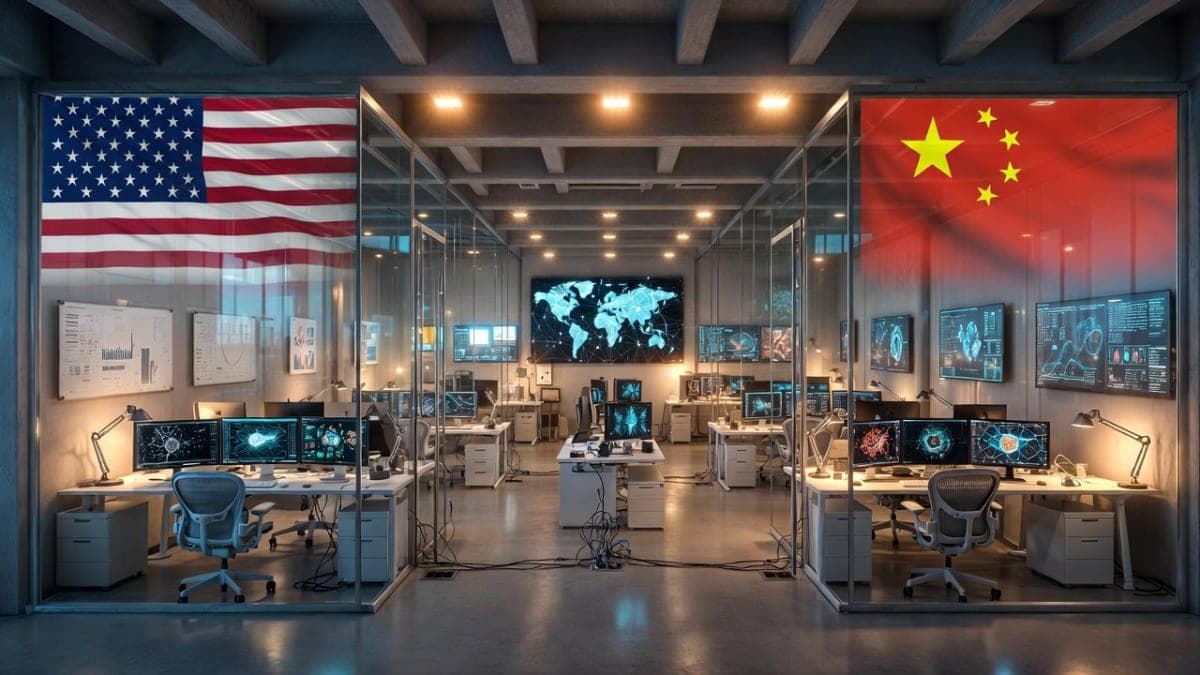
ByteDance has posted nearly 100 open positions for its AI division across San Jose, Los Angeles, and Seattle, according to Bloomberg. The roles are for Seed, the company's AI research team, and cover everything from large language model data production to drug discovery. The timing is something.
The TikTok divestiture deal closed in late January, with Oracle, Silver Lake, and Abu Dhabi-based MGX taking a combined 45% stake in a new US joint venture. ByteDance retained 19.9%. The whole point of the deal was to address years of national security concerns about a Chinese company's grip on American user data and content algorithms. And now, less than a month later, ByteDance is aggressively recruiting AI talent on American soil. The company didn't respond to Bloomberg's questions about the job postings.
What the listings actually say
The job postings are specific enough to be revealing. One category involves "producing international data" for ByteDance's LLMs, which is a polite way of saying they need people who can curate English-language training sets. Other roles focus on advancing text, image, and video generation tools. And then there's the Seed Edge Research Initiative, which the listings describe as "developing general intelligence models" with "human-like learning abilities, interaction capabilities, and tool-use proficiency."
That's AGI research. In San Jose. Funded by a Chinese company that just spent months trying to convince US lawmakers it wasn't a national security threat.
ByteDance is also hiring scientists with backgrounds in biology, physics, and chemistry to build models for drug discovery. One posting mentions developing "open, high-precision, generalizable models that drive breakthroughs in biology and drug discovery," which puts ByteDance directly in competition with OpenAI's healthcare push and Anthropic's life sciences work.
The Seedance problem
Here's the backdrop that makes this hiring push land differently than it might have a month ago. On February 12, ByteDance launched Seedance 2.0, a video generation model. Within days, users were churning out fake Tom Cruise fight scenes, alternate Stranger Things endings, and clips featuring Marvel characters. The Motion Picture Association demanded ByteDance "immediately cease its infringing activity." Disney sent a cease-and-desist accusing ByteDance of a "virtual smash-and-grab" of its IP. Paramount, Netflix, and Sony piled on.
ByteDance's response was a boilerplate statement about respecting intellectual property and strengthening safeguards. The company has not disclosed what training data powers Seedance.
So the picture right now is: ByteDance is simultaneously getting hammered by every major Hollywood studio for IP violations, and posting jobs in California asking American researchers to help improve these exact tools. Whether that strikes you as brazen or just business-as-usual probably depends on how you feel about the broader US-China AI competition.
Not just a social media company
Americans mostly know ByteDance as the TikTok company. But its AI operation is massive. Doubao, ByteDance's chatbot (comparable to ChatGPT or Claude), had 155 million weekly active users in China as of late December 2025, according to QuestMobile data. That's nearly double DeepSeek's 81.6 million. ByteDance released Doubao 2.0 on February 14, claiming performance on par with GPT-5.2 at a tenth of the cost. The Seed team's GitHub shows they've already released models powering over 50 applications.
I'm not sure American policymakers have fully processed this. The TikTok conversation consumed years of legislative energy and ended in a deal that still has senators asking whether the algorithm is actually free of Chinese influence. Senator Ed Markey called the final arrangement one that "raises many more questions than answers." And while that debate was happening, ByteDance was quietly building one of the most competitive AI operations in the world.
The talent question
Senator Pete Ricketts, who chairs the Senate Foreign Relations subcommittee on East Asia, framed the competition in December. "What's at stake is simple: a U.S.-led future that benefits the free world, or a China-led AI order that reshapes the global system in line with their authoritarian values," he said at a subcommittee hearing. "This race will be won by whoever attracts the best talent, wields the best chips, and trains the best algorithms."
ByteDance seems to agree on at least one point: talent matters. And it is going to recruit that talent in the same cities where OpenAI, Google DeepMind, and Anthropic are hiring. The Seed team was established in 2023 and already has labs across the US, Singapore, and China. The nearly 100 new postings suggest that presence is about to grow.
Whether US regulators have any appetite to intervene here is unclear. The TikTok law specifically addressed content algorithms and user data. It didn't say anything about a Chinese company running AI research labs on American soil. That may turn out to be a gap worth paying attention to.