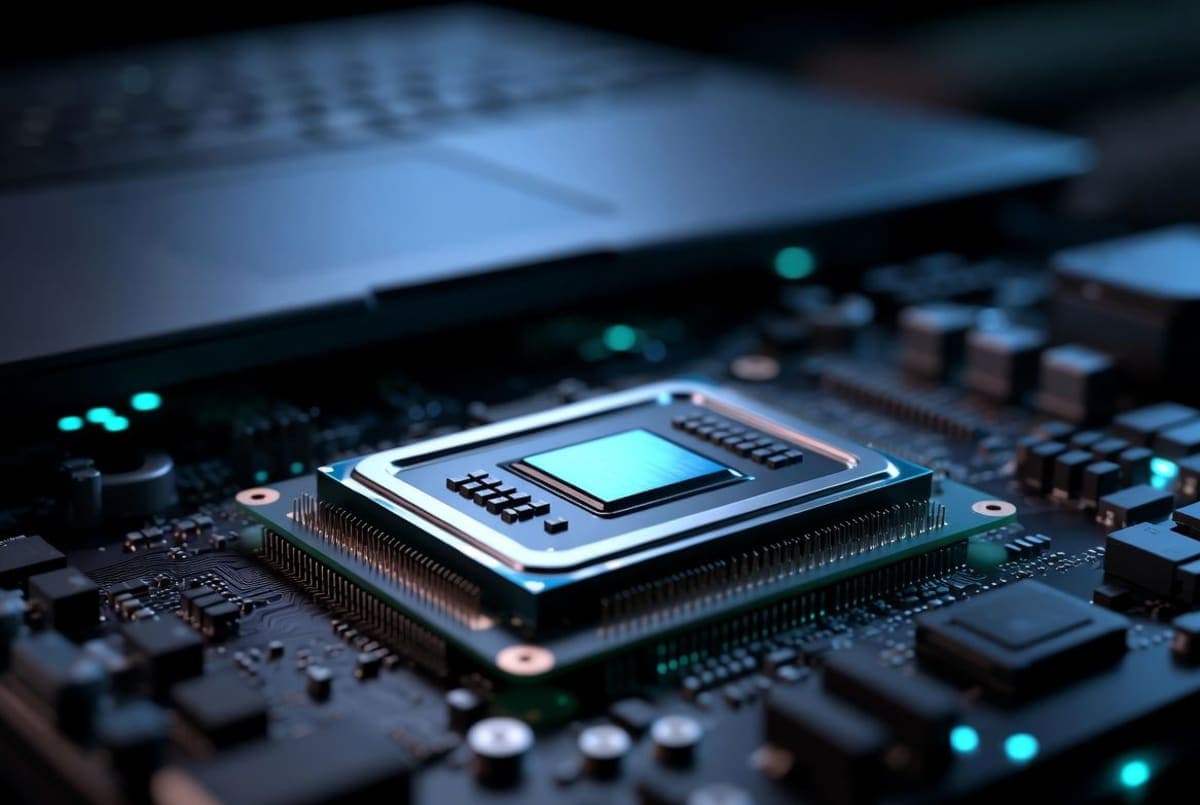
Nvidia used its Computex keynote in Taipei on Monday to walk into a market it has never sold into: the processor inside your laptop. CEO Jensen Huang announced RTX Spark, an Arm-based chip formerly known by the codenames N1 and N1X, set to ship this fall in eight Windows machines from Asus, Dell, HP, Lenovo, MSI and Microsoft.
This is Nvidia going after Intel, AMD, Qualcomm and Apple on their own turf. Huang, never one to undersell, called it the biggest reinvention of the PC in 40 years. Take that as you will.
What's in the chip
The top-end part carries 20 Arm CPU cores, a GPU with 6,144 CUDA cores, and up to 128GB of unified LPDDR5X memory. Lower SKUs trim that down, with the smaller N1 configurations reportedly landing at 64GB and below. It is, at its core, a reworked version of the GB10 that powered last year's DGX Spark mini-workstation, now bolted to Windows on Arm.
One detail Nvidia glossed over: the CPU itself was built with MediaTek, per Notebookcheck, on an unspecified 3nm TSMC node. For a company that loves to own its whole stack, leaning on a partner for the cores is worth a raised eyebrow.
On graphics, Nvidia is pitching performance around a mobile RTX 5070, with games hitting 1440p thanks to DLSS and frame generation. On CPU it offered the word "competitive" and not much else. Tom's Hardware notes the systems won't support a discrete GPU, which tells you high-end gaming was never the point. The pitch is local AI agents running on Windows.
So what does it cost?
No idea. Nvidia named no prices and said nothing about battery life, which for a thin-and-light Arm laptop is the entire ballgame. A chip that runs agents locally is meaningless if it can't make it through an afternoon unplugged.
The confirmed launch lineup includes the Asus ProArt P14 and P16, Dell XPS 16, HP OmniBook X 14 and Ultra 16, Lenovo Yoga Pro 9n, the MSI Prestige N16 Flip AI, and Microsoft's Surface Laptop Ultra. Nvidia says more than 30 laptops and over 10 desktops are in the pipeline with partners over time.
The Surface inclusion matters. The CNBC report says the N1X was made alongside Microsoft, and Huang framed the whole thing as Nvidia and Microsoft reinventing the PC together. Whether agentic features actually land depends on Windows getting the software to match, which likely means waiting for the next major Windows release.
Two more things, because Nvidia doesn't do small
Alongside the laptop chip came the DGX Station for Windows, a deskside box built on the GB300 Grace Blackwell Ultra superchip. Nvidia's newsroom lists up to 20 petaflops of AI performance and 784GB of unified memory, enough to run models up to a trillion parameters locally. The spec sheets disagree slightly on memory, with 748GB showing up elsewhere depending on configuration, which is the kind of inconsistency that turns up when a product has been re-announced a few times. It targets Q4 2026.
Then the robot. Nvidia and Unitree unveiled the Isaac GR00T reference humanoid, an open design built around Unitree's H2 Plus body, Sharpa five-fingered hands, and Jetson Thor compute onboard. It's aimed squarely at academic labs, not your living room, and ships from Unitree in late 2026. Stanford, ETH Zurich, Ai2 and UC San Diego are listed as early users.
Huang also said the Vera CPU is in full production, with OpenAI, Anthropic and SpaceX among early adopters. RTX Spark laptops arrive in fall 2026.