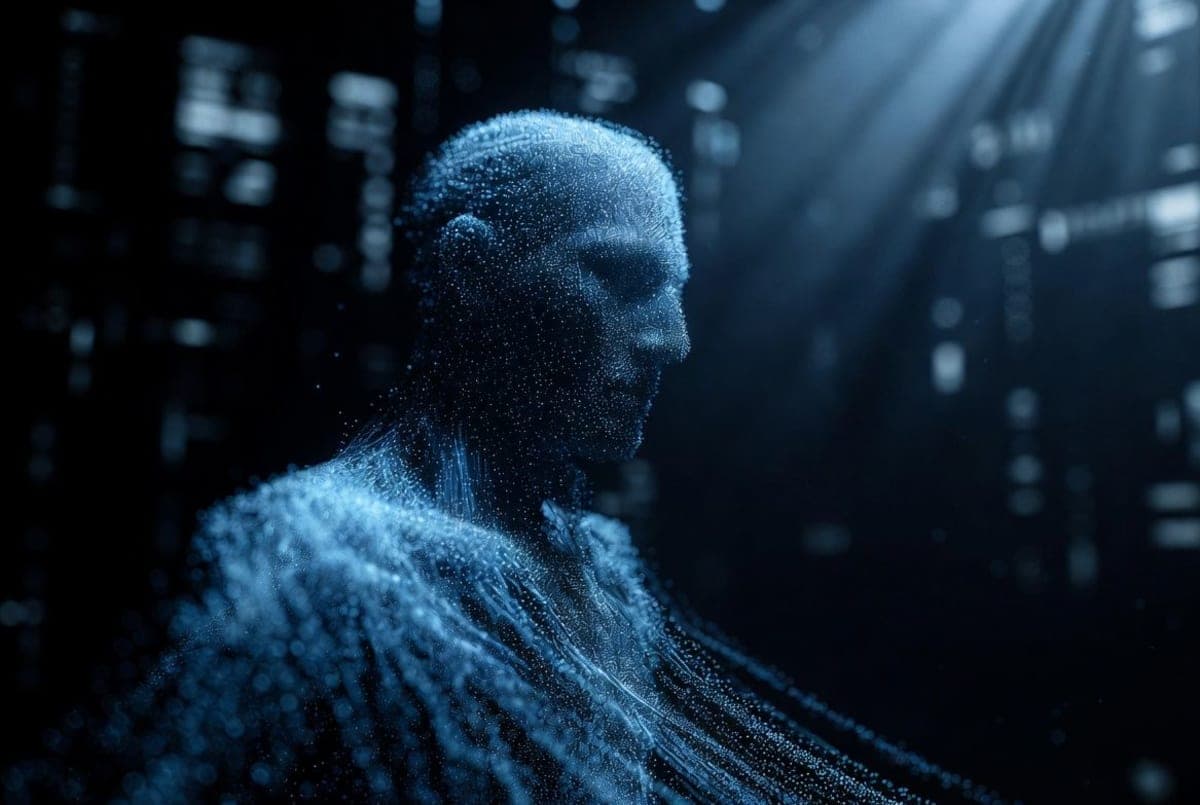
Meta is developing a photorealistic AI avatar of Mark Zuckerberg that could hold real-time conversations with employees, provide feedback, and act as a stand-in for the CEO across the company's global workforce. The project, first reported by the Financial Times on Monday, is being led by the company's newly formed Superintelligence Labs division, according to four people familiar with the matter.
The avatar is being trained on Zuckerberg's vocal patterns, mannerisms, public statements, and recent strategic thinking. The idea, as described by sources, is to make employees feel "more connected to the founder" through interactions with it. Which is a curious framing from a company that laid off more than 20,000 workers since 2022.
The CEO who codes
What makes this project unusual isn't the technology. It's Zuckerberg's involvement. Sources told the FT that Meta's CEO now spends five to ten hours a week writing code for AI projects and sitting in on technical reviews. For someone running a $1.6 trillion company with close to 80,000 employees, that's a real time commitment, and it signals how personally invested he is in Meta's AI pivot.
The avatar project sits inside Superintelligence Labs, the same team that released Muse Spark earlier this month. That model, Meta's first major release from the new division, focuses on health reasoning and visual understanding. Its benchmark scores, though, were underwhelming: a 52 on the Intelligence Index, trailing Google's Gemini 3.1 Pro and OpenAI's GPT-5.4 at 57 each. Meta framed Muse Spark as being about practical efficiency rather than raw benchmarks, which is what companies tend to say when the benchmarks aren't great.
Not a chatbot, not the metaverse (exactly)
This isn't Meta's first attempt at digital characters. The company launched celebrity-based chatbots in 2023 and rolled out AI Studio to let creators build AI personas. Those efforts were entertainment-oriented and drew mixed reactions at best. The Zuckerberg avatar is different in scope: a 3D, photorealistic figure designed for internal use, built to replicate how the actual CEO communicates.
The technical challenges are significant. Creating photorealistic characters that move and speak naturally in real time requires enormous computing power, and latency is a constant problem. Meta acquired voice technology companies PlayAI and WaveForms to help close that gap, but sources say scaling remains difficult.
There's a ghost in this story, too. Reality Labs, the division that poured resources into the metaverse, has accumulated over $83 billion in operating losses since 2020. Much of that money went into avatar technology, facial animation, and real-time rendering. Critics called it wasteful for years. Now some of those investments appear to be feeding directly into the AI avatar pipeline. Whether that counts as vindication or just recycling expensive mistakes depends on your tolerance for Zuckerberg's long game.
So who's actually in charge?
The avatar is separate from another internal project, a "CEO agent" reported by the Wall Street Journal last month, that helps Zuckerberg retrieve information and cut through management layers. That tool is designed to make Zuckerberg himself faster. The avatar, by contrast, is meant to replace him in certain interactions entirely.
This raises an obvious question that none of the reporting has answered: what authority does the avatar have? Can it approve projects? Settle disputes? Or is it just a glorified FAQ bot that happens to look like the founder? Meta declined to comment on specifics, which is typical for early-stage internal experiments.
"We're investing in AI-native tooling so individuals at Meta can get more done," Zuckerberg said on an earnings call in January. "We're elevating individual contributors and flattening teams." Read one way, that's about productivity. Read another, it's about fewer managers and more AI intermediaries.
If the avatar experiment works, Meta plans to offer similar technology to creators and influencers, letting them build their own AI doubles to interact with followers. Meta isn't alone in the CEO-cloning business: Uber's Dara Khosrowshahi said earlier this year that his employees had built an AI version of him as well.
No timeline has been announced for when Meta employees might actually interact with AI Zuckerberg. The project is in early stages, and given Meta's track record with avatar products, a healthy dose of skepticism seems warranted.