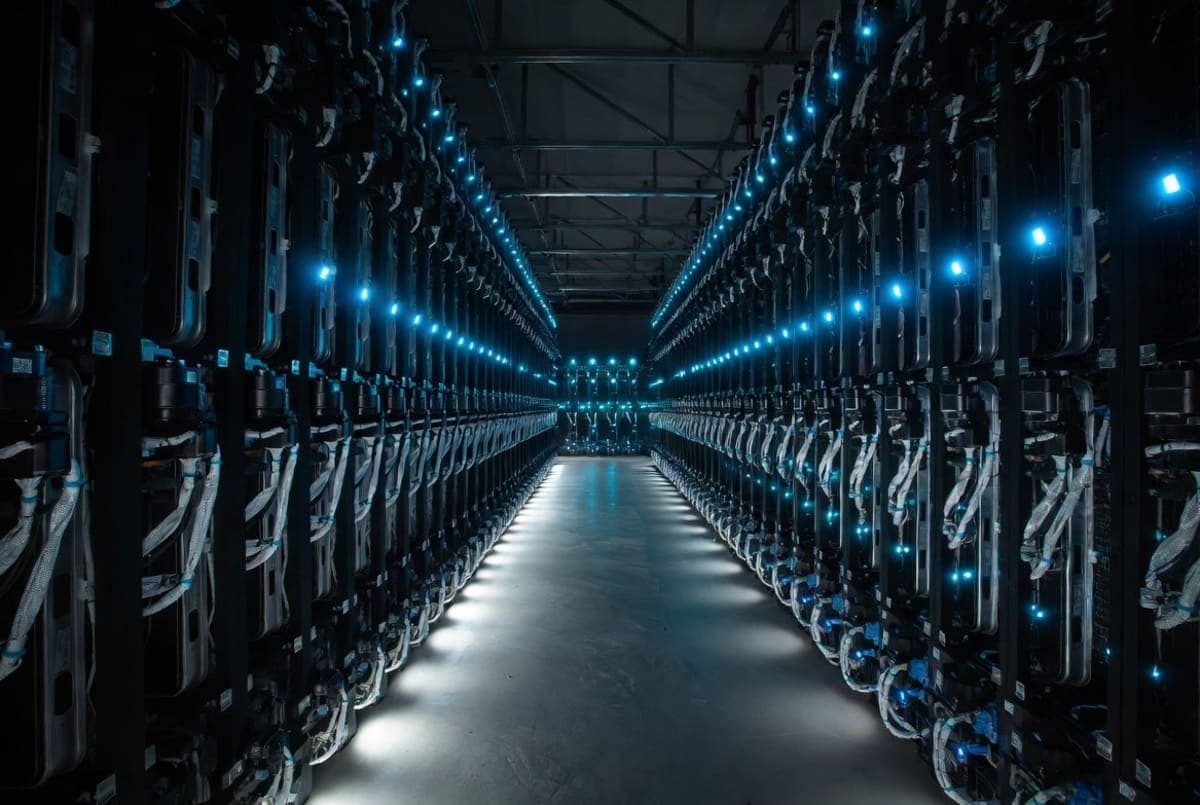
Anthropic disclosed on April 6 that its annualized revenue run rate has surpassed $30 billion, up from roughly $9 billion at the end of 2025. The company simultaneously announced an expanded partnership with Google and Broadcom for approximately 3.5 gigawatts of next-generation TPU compute capacity, with deployments beginning in 2027.
That $30 billion figure landed with a thud. In February, Anthropic told investors it was at $14 billion. By early March, Bloomberg reported $19 billion. Now $30 billion. If you're having trouble keeping up, so is everyone else. The company is adding annualized revenue at a pace that makes prior enterprise software records look quaint.
The compute bet
The new deal expands an October 2025 agreement that gave Anthropic access to over a gigawatt of Google Cloud TPU capacity and up to one million TPU chips. According to a Broadcom SEC filing released Monday, the expanded collaboration will provide Anthropic with roughly 3.5 gigawatts of next-generation TPU-based compute starting in 2027, with the supply agreement running through 2031. Broadcom CEO Hock Tan had previewed this on an earnings call last month, saying demand from Anthropic was expected to surge past 3 gigawatts in 2027.
Mizuho analysts estimated Broadcom could pull in $21 billion in AI revenue from Anthropic in 2026 alone, climbing to $42 billion in 2027. Neither Anthropic nor Broadcom disclosed financial terms. Broadcom shares rose about 3% in after-hours trading.
There's a caveat buried in the filing worth quoting: the consumption of this expanded capacity "is dependent on Anthropic's continued commercial success." Translation: if the revenue growth stalls, the compute commitment can scale back. Given the trajectory, that reads more like boilerplate than a real risk. But it is there.
Where the money is actually coming from
Anthropic's blog post says more than 1,000 business customers now spend over $1 million annually on Claude. That number was 500 when the company announced its $30 billion Series G in February. It doubled in less than two months.
About 80% of revenue comes from enterprise customers, according to CEO Dario Amodei. Claude Code, the agentic coding tool that launched publicly in May 2025, had reached $2.5 billion in annualized revenue by February. The product has been a runaway hit in engineering teams, and a CNBC report noted that 4% of all GitHub public commits worldwide were being authored by Claude Code.
I find the enterprise concentration more interesting than the topline number. OpenAI has roughly 900 million weekly ChatGPT users and is projecting around $29 billion in 2026 revenue. Anthropic has maybe 30 million monthly active users and is running at $30 billion. The per-user monetization gap is staggering.
The multi-cloud hedge
Anthropic is careful to emphasize it trains and serves Claude across three chip platforms: Google TPUs, Amazon's Trainium (through AWS and Project Rainier), and Nvidia GPUs. Amazon remains the primary cloud provider. Claude is the only frontier model available on all three major clouds: AWS Bedrock, Google Cloud Vertex AI, and Microsoft Azure Foundry.
This matters for a practical reason beyond the PR framing. When AWS had an outage earlier this year, Claude stayed up because of the diversified infrastructure. And it matters commercially: locking in 3.5 gigawatts from Google doesn't mean Anthropic is leaving Amazon. It means the appetite for compute has grown large enough to need everyone.
What's not in the press release
Anthropic is still burning cash at a serious rate. Estimates from earlier this year pegged training costs at $12 billion and inference infrastructure at $7 billion for 2026. The company projects positive free cash flow by 2027, which is conveniently the same year this new TPU capacity starts coming online. Whether those timelines actually align is anyone's guess.
And then there's the Pentagon. The company is in an ongoing legal fight after the Department of Defense classified it as a "supply chain risk" following a standoff over AI safety guardrails. SiliconANGLE reported that the designation prompted over 100 enterprise customers to contact the company with concerns. Anthropic has called it "legally untenable" and is pursuing legal action. The prohibition is scheduled to take effect June 30.
The revenue numbers suggest enterprise customers haven't actually fled. But the $30 billion disclosure, landing on the same day as the compute deal, feels like a deliberate counterprogramming move: look at how fast we're growing, not at the government fight.
The trajectory problem
Run-rate revenue is monthly revenue multiplied by 12. It's the standard metric for high-growth startups, but it flatters companies on a steep upward curve. Anthropic hasn't earned $30 billion this year. It earned whatever it earned in March, and someone multiplied it by 12.
Still. Even accounting for that, the trajectory is real. The company went from $1 billion in annualized revenue in December 2024 to $30 billion in April 2026. Fifteen months. No enterprise technology company has done that before. Anthropic is reportedly in early talks with Goldman Sachs and JPMorgan about an IPO that could come as soon as October, at a valuation bankers are estimating between $400 billion and $500 billion.
The 3.5-gigawatt TPU commitment is a bet that the growth continues. It is a very large bet.