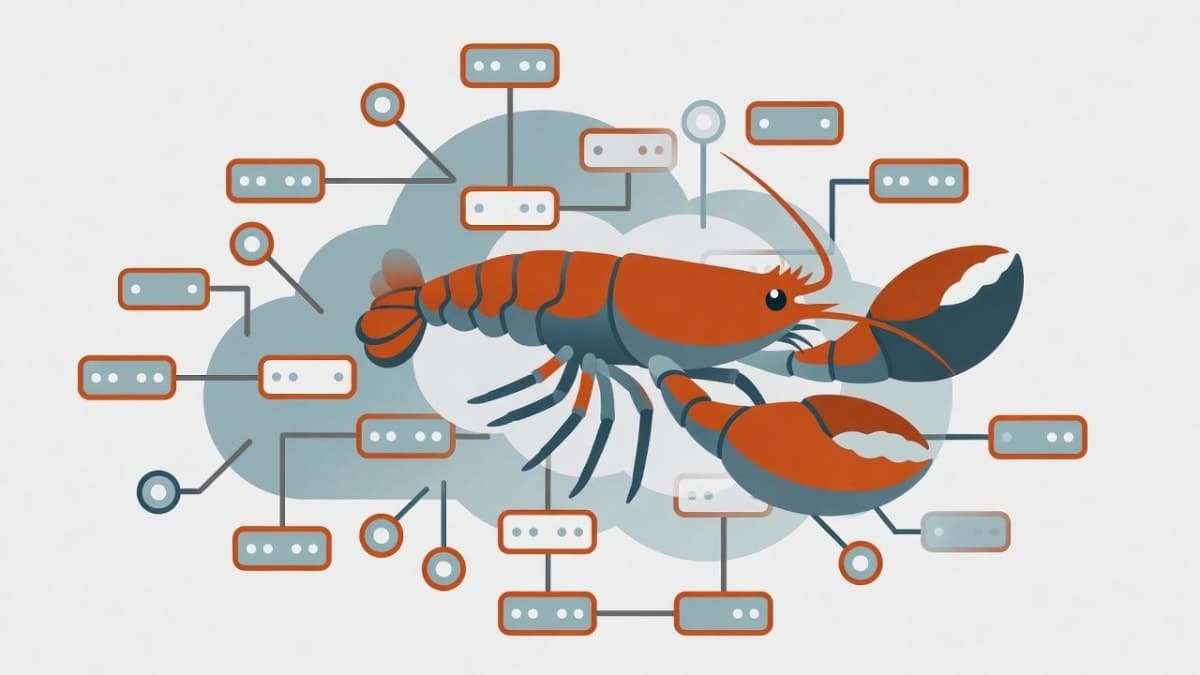
Cloudflare released Moltworker, an open-source project that packages Moltbot to run on its Developer Platform. The release comes as Mac Minis sell out globally, with developers snapping them up to host Peter Steinberger's viral AI assistant that crossed 80,000 GitHub stars this week.
What Moltworker actually does
The timing is deliberate. Moltbot's explosion in popularity sent hardware sales through the roof as users sought always-on machines to run their personal AI agents. Cloudflare's pitch: skip the hardware entirely.
Moltworker combines several Cloudflare services into a hosting solution. The Sandbox SDK provides isolated container environments where Moltbot's gateway runs. R2 storage handles persistence across container restarts. Browser Rendering gives the agent headless Chrome access for web automation. Zero Trust Access locks down authentication.
The architecture routes everything through a Worker that acts as API proxy and admin interface, connecting to the sandboxed container where Moltbot's integrations run. Cloudflare's blog post walks through the technical stack, which the team built as what they call a proof of concept rather than an official product.
Cost comparison gets complicated
Moltworker requires a Workers Paid plan at $5 per month. Beyond that, costs depend heavily on usage patterns.
The Sandbox containers that run Moltbot don't sleep by default, which Cloudflare recommends since cold starts take one to two minutes. Users who want to reduce costs can configure sleep timeouts, accepting the startup delay. AI Gateway, which routes requests to Anthropic's Claude API, is free. R2 storage has a generous free tier.
Compare that to dedicated hardware: a Mac Mini starts around $600, plus electricity and the assumption it stays online. For light users, Moltworker could be cheaper. For heavy users who'd burn through API calls anyway, the hardware investment pays off faster. Cloudflare isn't positioning this as universally cheaper, just different.
The security question hasn't gone away
Moltbot's security posture has drawn sustained criticism from researchers since the project went viral. Cisco's team published findings showing supply chain risks in the skills marketplace, including a proof-of-concept attack where malicious code gained remote execution through a popular skill. Hudson Rock found secrets stored in plaintext files, vulnerable to infostealer malware. Bitdefender documented hundreds of exposed control panels allowing unauthenticated access.
Does Moltworker change any of this?
Cloudflare's Sandbox isolates the runtime, which addresses the "infostealer grabs your local filesystem" scenario. Browser automation routes through their CDP proxy rather than running Chromium locally. But the fundamental risk profile remains: you're giving an AI agent shell access, messaging app credentials, and the ability to execute commands autonomously.
Moltbot's own documentation describes running it with full permissions as "spicy." That description applies regardless of where the container lives.
What the demos show
Cloudflare shared several examples of Moltworker in action. The agent found driving routes on Google Maps and captured screenshots. It searched for restaurant recommendations. It generated a video by browsing documentation pages and stitching frames together with ffmpeg.
These are Moltbot's standard capabilities running on different infrastructure. The novelty is deployment, not new features. Users who already have Moltbot running locally could migrate to Moltworker and get the same functionality with different tradeoffs around cost, latency, and operational overhead.
The bigger Cloudflare play
The release fits a pattern. Cloudflare has been building out AI infrastructure aggressively: Workers AI for inference, the Agents SDK for building autonomous systems, and now hosting for third-party agents. Their bet seems to be that AI workloads will follow the same trajectory web applications did, moving from self-hosted infrastructure to managed platforms.
Moltbot's virality gave them a timely opportunity. The Mac Mini shortage made the problem visceral. Shipping a solution the same week keeps Cloudflare in the conversation around where AI agents should actually run.
Moltworker is available now at github.com/cloudflare/moltworker. The project includes setup documentation for connecting AI Gateway, configuring R2 persistence, and enabling browser automation. 2026. The "69,000" figure in the original source material appears outdated.*