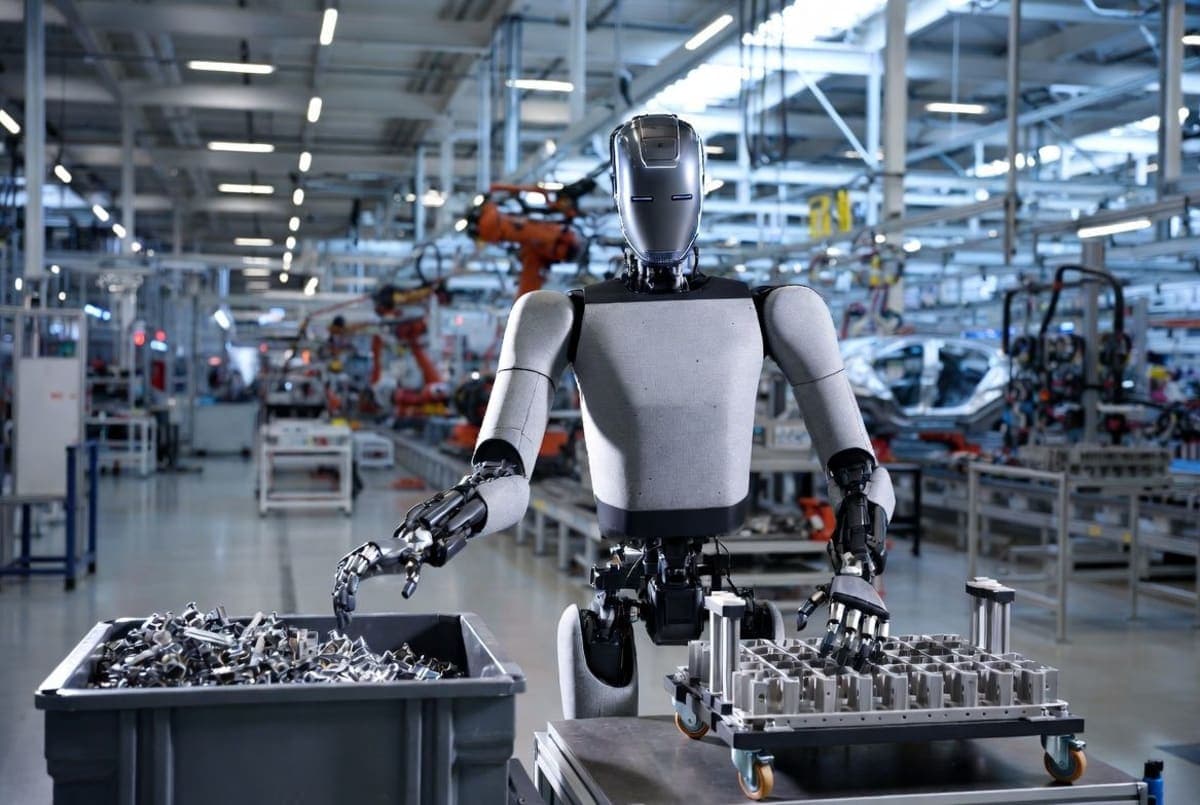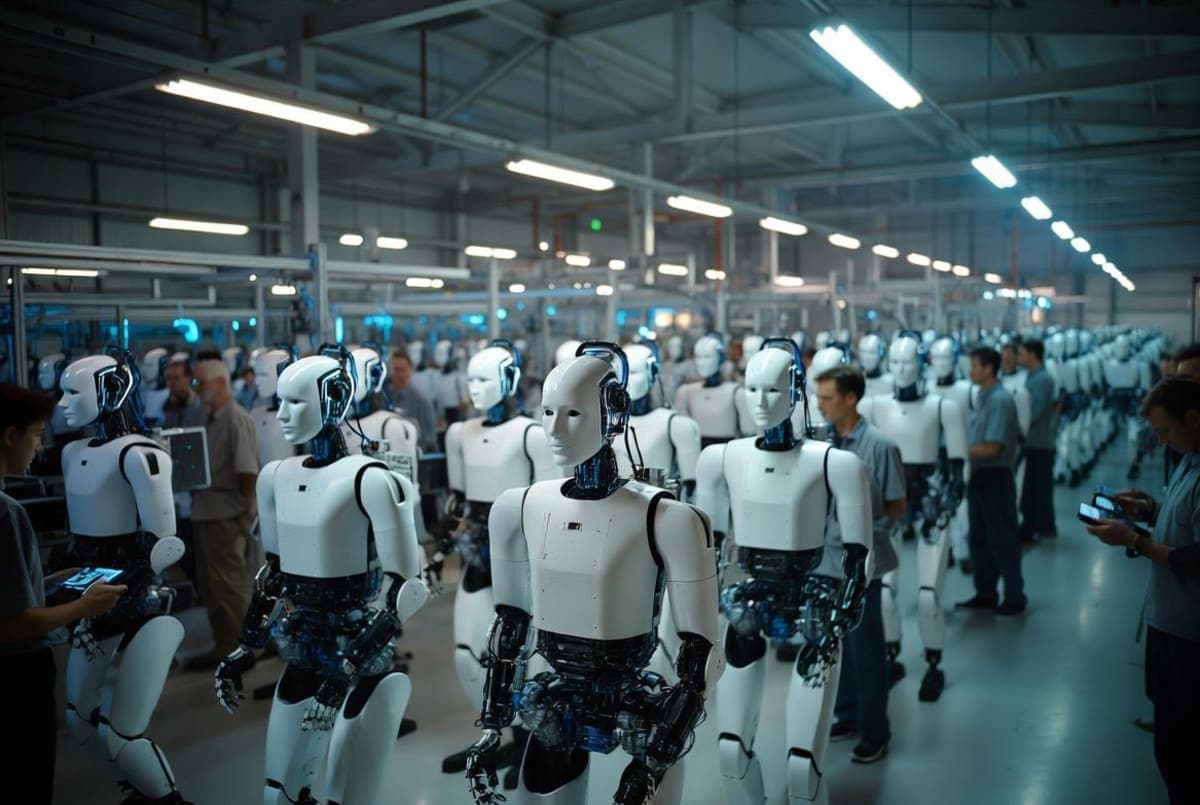
China now counts more than 140 humanoid robot manufacturers, a rental market pitched at $1.5 billion, and machines that dance on national television. What it does not have, yet, is robots that can do much of anything on their own. That gap is the entire story.
A late-June CNN report laid the mismatch out plainly. The machines sink free throws in Michael Jordan jerseys and pull crowds at trade shows. Actual deployment on factory floors or in homes is barely happening.
Basically oversized toys
The rental numbers tell you where the real demand sits. AGIBOT spun up a rental arm called SHAREBOT and floated a $1.5 billion market by the end of 2026, logging over 5,500 orders in three months. Customers pay somewhere between $440 and $520 a day, human operator included, to hire a robot for an event.
One Hangzhou livestreamer put it about as bluntly as anyone: today's robots can't run by themselves, so they're basically oversized toys. He spent $30,000 on his first one anyway, which tells you the hype is doing real work on people's wallets.
That 140-plus figure comes from market research firm TrendForce, and it reads less like a healthy industry than a stampede. TrendForce's own research manager, PK Tseng, said second-tier players have seen funding pull back sharply since last year. The word attached to the sector now is "bubble," not "boom."
Why they can't work alone
Two problems. Neither is close to solved.
The first is data. Robots learn autonomous behavior from enormous piles of information about physically interacting with the world, and that pile does not exist at anything like the scale needed. China's answer is brute force. Government-backed centers have humans manually pilot robots through the same motions, over and over. At one Hubei facility, nearly 100 humanoids fold clothes, iron, and wipe tables hundreds of times a day, guided by handheld controllers.
"It's like teaching children how to walk with lots of practice." A project spokesperson said that, which is a generous way to describe outsourced repetition on an industrial polygon.
An analyst quoted in that reporting flagged the obvious catch: build enough of these training centers and you end up with overcapacity, chasing a data shortage by manufacturing a different glut.
The hands are the hard part
The second wall is mechanical, and it lives in the robot's hands. Cramming enough motors, actuators, and sensors into something the size of a human hand runs straight into physics. A PatSnap analysis framed the tension well: the complexity you need for human-level dexterity fights the durability, cost, and maintenance that industrial gear demands.
Packing motors inside the hand, as one recent paper notes, worsens heat dissipation and makes the whole assembly more fragile on impact. So you get a component that runs hot, wears fast, and costs a fortune.
And the money is genuinely rough. Per Simplexity's read of Morgan Stanley's teardown of Tesla's Optimus Gen-2, the hands alone run roughly $9,500, about 17% of the unit's bill of materials. The performance is the part nobody puts in the demo reels: robots hit near-100% success on easy objects like apples and tennis balls, then drop to around 30% on a screwdriver or a pair of scissors. No factory wants a hand that whiffs two times out of three on a spoon.
So when does this actually pay off?
Beijing is not slowing down. The government launched a national push to deploy humanoids across more than 100 high-value application scenarios by the end of this year, and Chinese makers already ship the bulk of the world's humanoids, well ahead of Tesla and Figure AI. Even Elon Musk called China the biggest competition on a January earnings call.
But the builders keep saying what the analysts say. Full industrial adoption is years out, and consolidation is coming for the crowd of 140. Morgan Stanley's headline number, a $5 trillion market by 2050, is real and also 24 years away.
The figure worth watching is closer. Whether Beijing's 100-scenario target actually lands by December is the line that separates the show from the work.