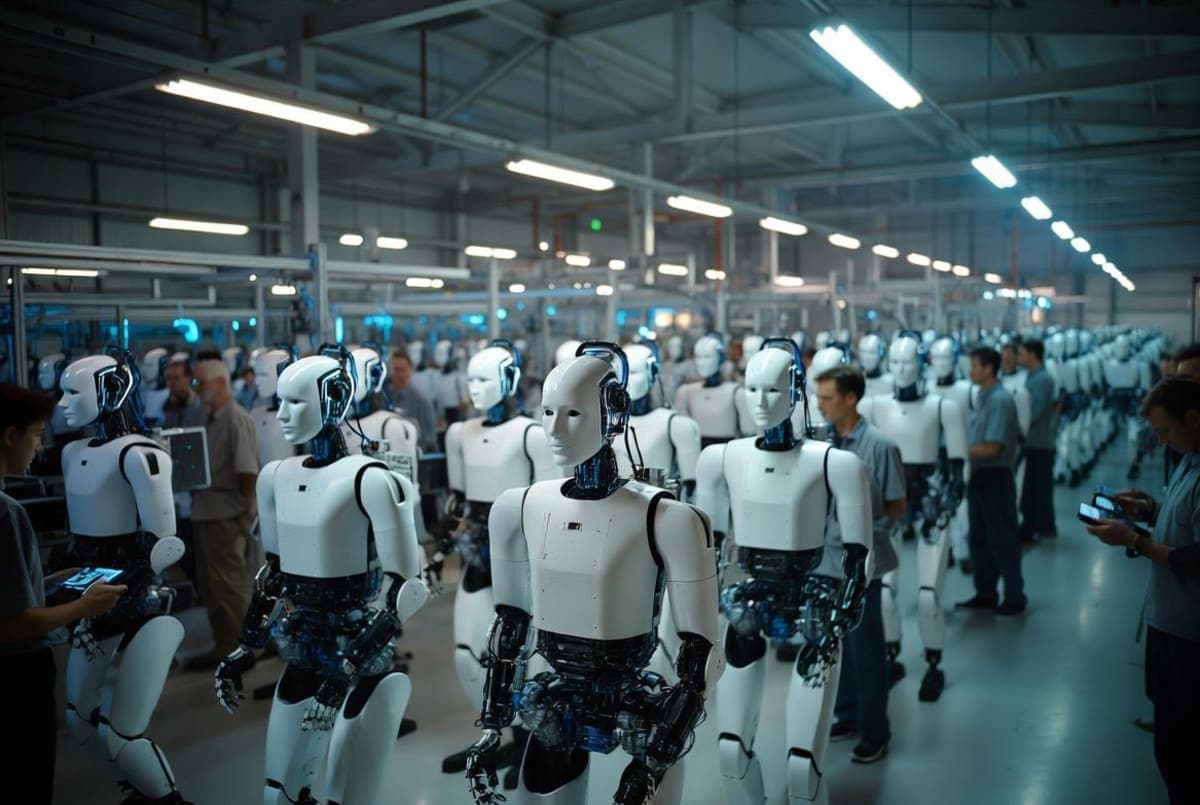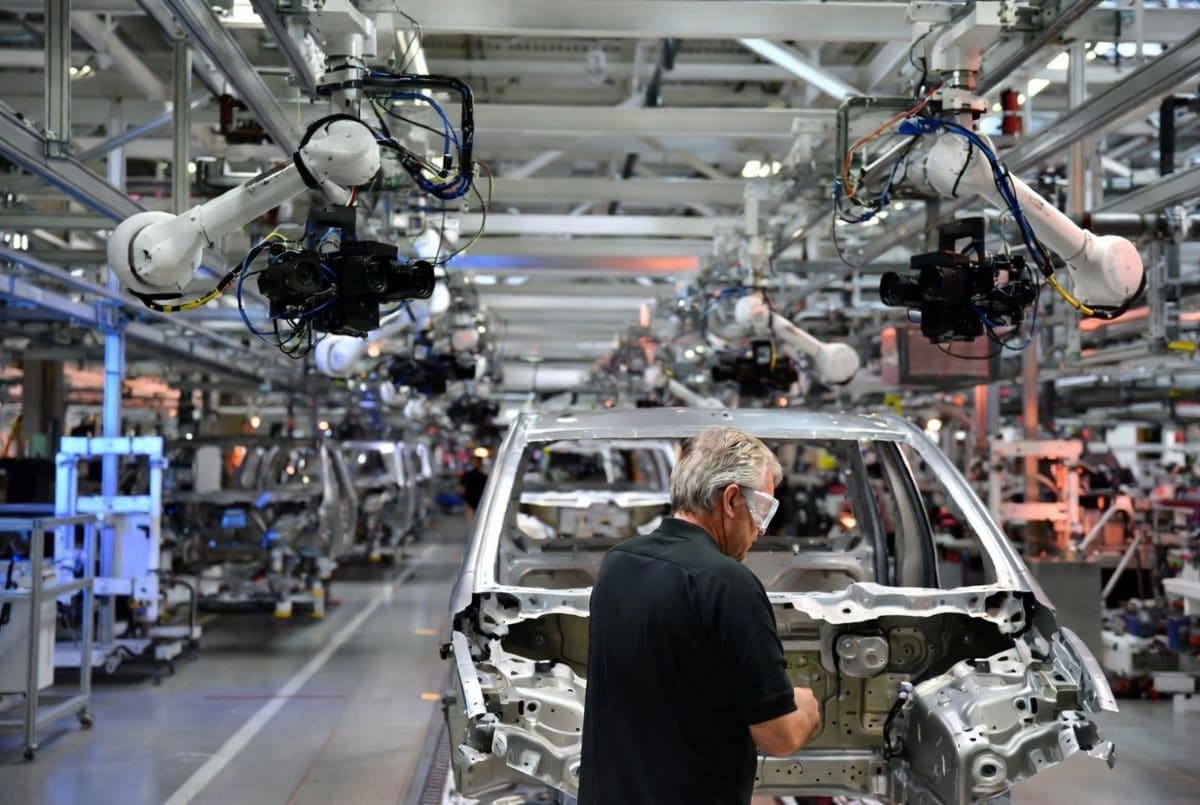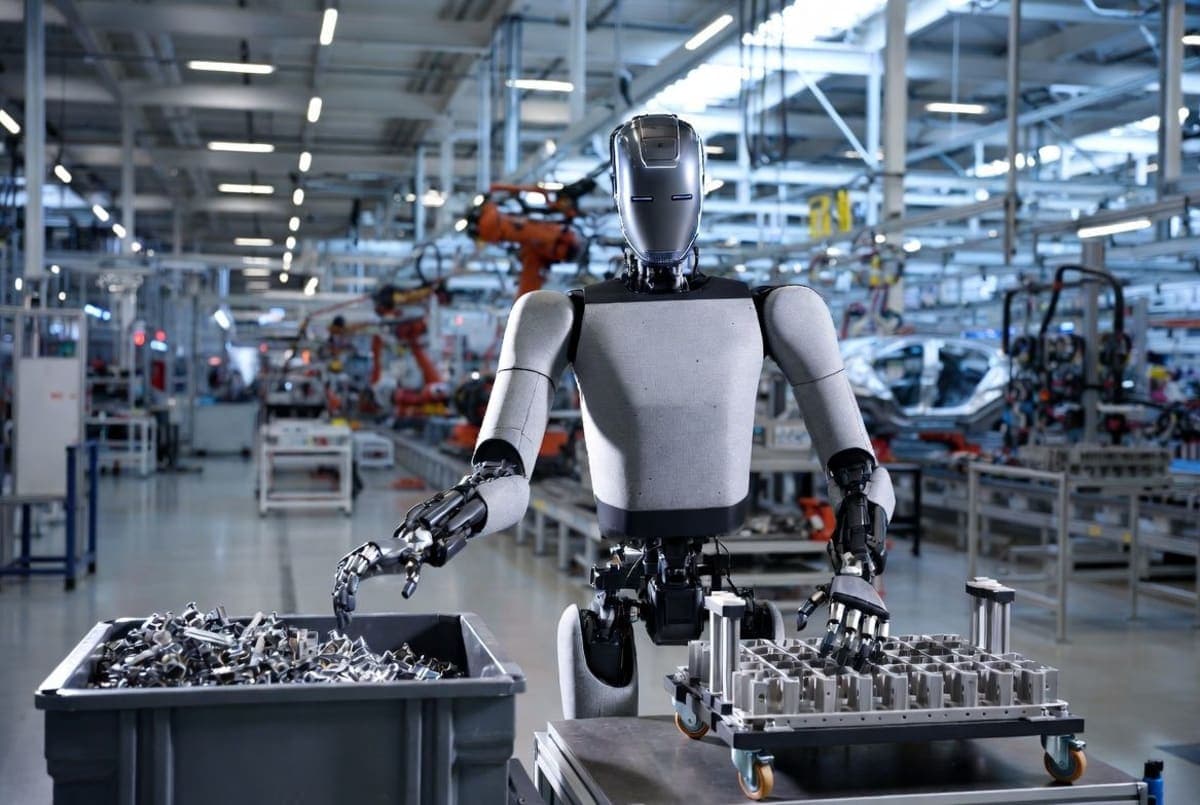
BMW is putting Figure AI's Figure 03 humanoid robot to work sorting car parts at its Spartanburg plant in South Carolina, moving the robot out of pilot mode and into a daily logistics job. The BMW announcement frames it as a sequencing task: parts show up unsorted in large containers, and the robot picks them and loads them into a trolley in the exact order assembly workers will need them.
What the robot actually does
The job is unglamorous. Components arrive mixed in bins, Figure 03 identifies and extracts them, then arranges them on a sequencing cart in installation order. An automated tugger train or Smart Transport Robot then hauls the loaded trolley to the assembly line for just-in-sequence delivery.
This is a common bottleneck in automotive logistics, and BMW is betting it's the kind of repetitive, ergonomically rough work worth handing to a machine. The deployment reportedly runs inside the plant's expanded Hall 52, where variants of the X3 and the electrified iX5 get built, each requiring different part combinations at precise moments.
The hardware upgrades
Figure 03, which the company unveiled in October 2025, brings changes aimed squarely at working near people. It's smaller and lighter than Figure 02, wrapped in meshed fabric with foam padding to cut injury risk. It charges wirelessly by standing on a pad, coils built into the feet. There's speech-to-speech audio for talking with line workers, and reworked hands carrying tactile fingertip sensors sensitive enough to register roughly 3 grams of force, plus cameras embedded in the palms for finer manipulation.
Whether any of that translates to reliable factory-floor performance is the open question. Figure says the earlier deployment surfaced hardware lessons, its forearm was the top failure point on Figure 02 thanks to tight packaging and thermal constraints, and those went into the wrist redesign on the new model.
About that 30,000 number
BMW and Figure both lean on the same headline stat: Figure 02 helped build more than 30,000 BMW X3 vehicles over a ten-month run in the body shop, inserting sheet-metal parts for welding. It's a real figure, though worth reading carefully. The robot contributed to those vehicles by handling one rigid pick-and-place step, not building cars end to end. Figure 02 has since been retired.
"Our 11-month deployment of Figure 02 proved that humanoids are no longer lab experiments," says Figure CEO Brett Adcock, which is the kind of line a founder with a $39 billion valuation is going to say regardless of what the data shows. The more interesting tell is that BMW kept going.
Ulrich Wieland, BMW Manufacturing's VP of Production Control and Logistics, called Spartanburg the birthplace of humanoid robotics in the company's daily operations. The logistics sequencing task is genuinely harder than the body-shop work, more variation, less structure, so it's a real step up if it holds.
What's next
BMW hasn't published a robot count, cycle rate, payload, or commercial terms for the new logistics operation, so treat the deployment as an expanding trial rather than a finished rollout. The company has also started a separate Physical AI pilot at its Leipzig plant in Germany, testing Hexagon's AEON humanoid for battery and component work. Watch for BMW to release performance figures from Spartanburg before committing to firm scale-up numbers.