The Association of Chartered Certified Accountants is pulling the plug on remote exams starting March 2026. ACCA's chief executive, Helen Brand, told the Financial Times that the sophistication of cheating systems is "outpacing what can be put in, [in] terms of safeguards." The decision affects more than 500,000 students across 180 countries who will now need to show up at test centers instead of logging in from their sofas.
Remote testing launched during the pandemic as a lifeline when lockdowns shuttered exam halls. It worked. But the same technology that kept aspiring accountants on track has become a vulnerability that ACCA's defenses simply cannot patch fast enough.
The chatbot problem
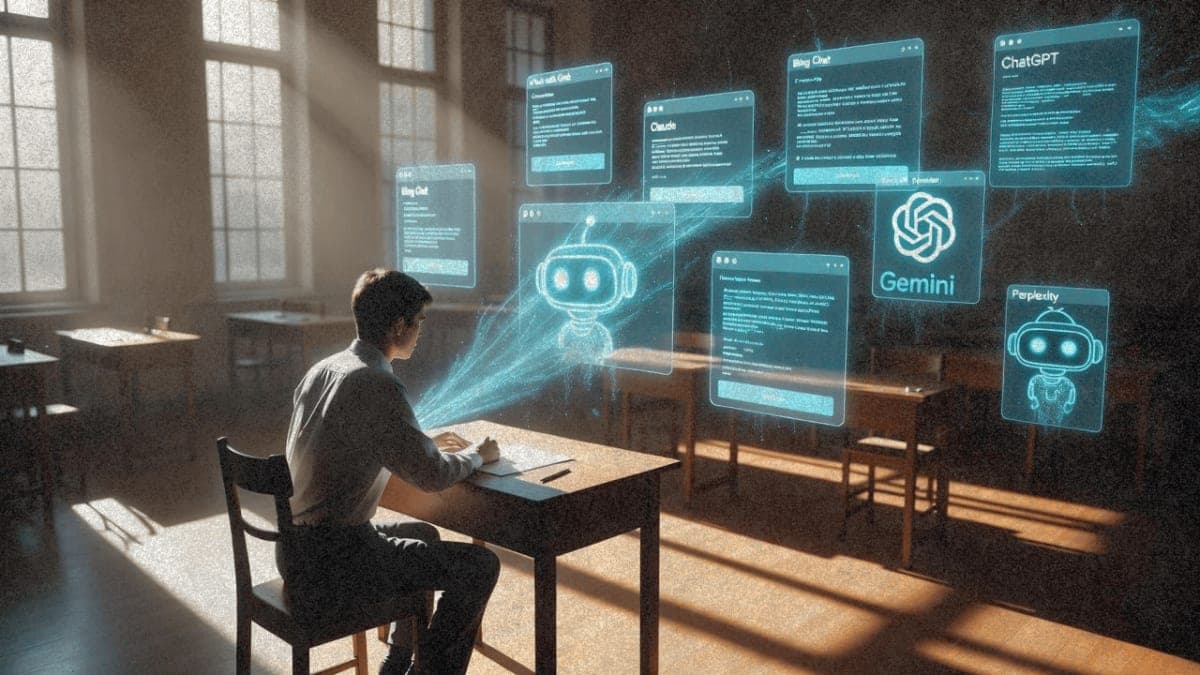
One student told the Financial Times that a friend photographed exam questions and fed them into an AI chatbot. That's not a hypothetical attack vector dreamed up by security researchers. It's what's actually happening, right now, in exams designed to certify the people who audit financial statements.
The detection tools ACCA deployed, webcam monitoring, keystroke analysis, eye tracking, all assume humans cheat in predictable ways. AI assistance doesn't look like nervous glances at hidden notes. Brand acknowledged that "people who want to do bad things are probably working at a quicker pace" than her organization can counter. A somewhat diplomatic way of saying the cheaters won.
A profession already embarrassed
ACCA's announcement lands in the middle of an industry-wide credibility crisis. In June 2022, the SEC charged Ernst & Young for cheating by its audit professionals on CPA ethics exams and for withholding evidence during the investigation. EY agreed to pay a $100 million penalty, the largest ever against an audit firm. The irony of ethics exam cheating at a Big Four firm practically writes itself.
The SEC's enforcement order revealed that 49 EY audit professionals sent or received answer keys to CPA ethics exams between 2017 and 2021. Hundreds more cheated on continuing education courses. KPMG faced a $25 million penalty in 2024 for widespread answer-sharing in the Netherlands. When the firms auditing public companies can't police their own internal tests, the professional bodies certifying accountants have zero room for doubt about their exams.
What changes, what doesn't
From March 2026, ACCA will hold session-based exams in test centers in countries where it has facilities. Remote invigilation will remain available only in countries without exam center access. Brand didn't claim the move would eliminate cheating entirely, just that old-school methods of smuggling notes are harder to scale than screenshotting questions for a chatbot.
Nearly 4,000 candidates recently sat exams at London's ExCeL centre, a preview of what's coming for everyone. For students in remote locations or with caregiving responsibilities, the change is a genuine burden. ACCA says exceptional circumstances will still permit remote options, case by case.
Teaching AI while banning AI
Here's the twist. ACCA is simultaneously overhauling its syllabus for the first time in a decade, adding emphasis on AI, blockchain, and data science. Students will learn about the technology reshaping their profession in exam halls where they're forbidden from using it. Brand told the Financial Times that AI has "fundamentally shifted" the skills required of accountants, and the new curriculum aims to build "professional scepticism," a quality she says "AI cannot fake."
The redesigned qualification launches in 2027, introducing new "Essential Employability Modules" covering digital innovation, ethical leadership, and sustainability. The number of required exams drops from 13 to 11. ACCA is betting that accountants who understand AI will be more valuable than accountants who can sneak AI into an exam.
The Institute of Chartered Accountants in England and Wales, ACCA's main domestic rival, still permits some online exams despite reporting rising cheating incidents. ACCA is making a different bet: that the credential's value depends on unimpeachable exam integrity. If employers start wondering whether ACCA letters actually mean anything, the entire business model unravels.
First in-person exams under the new policy begin March 2026. The overhauled curriculum takes effect in late 2027.