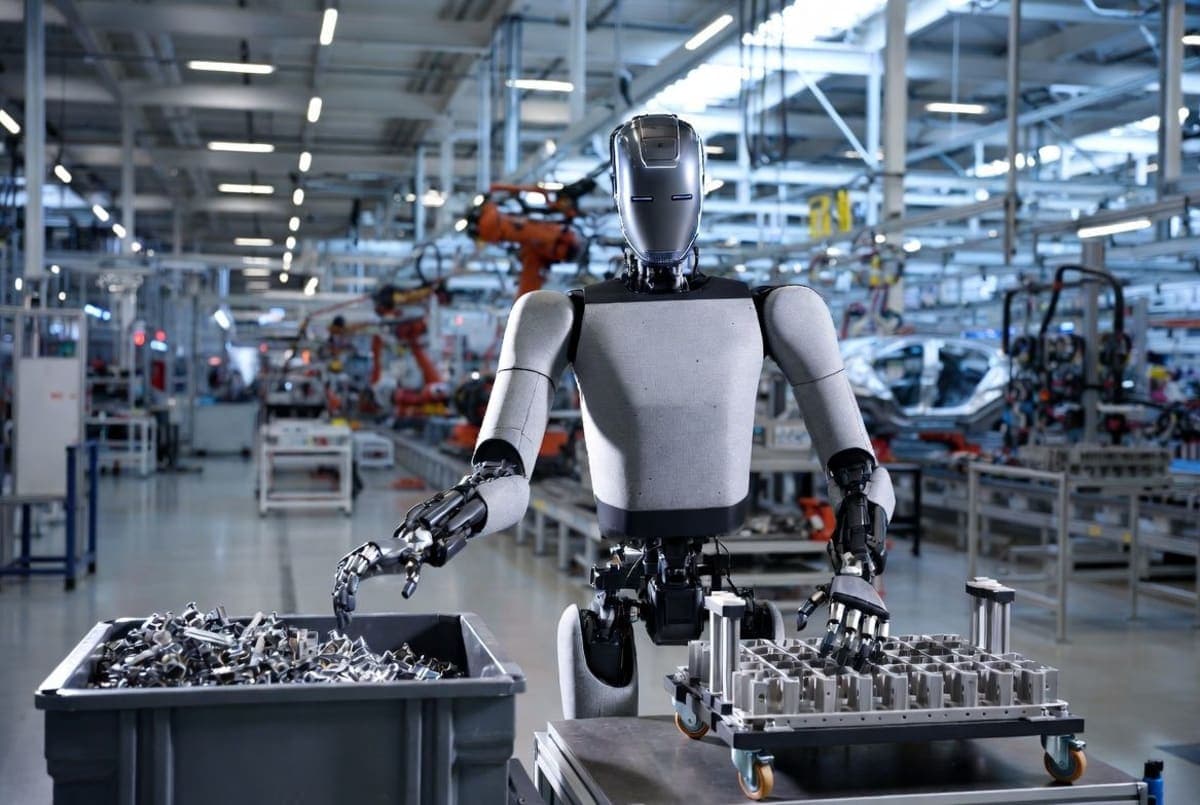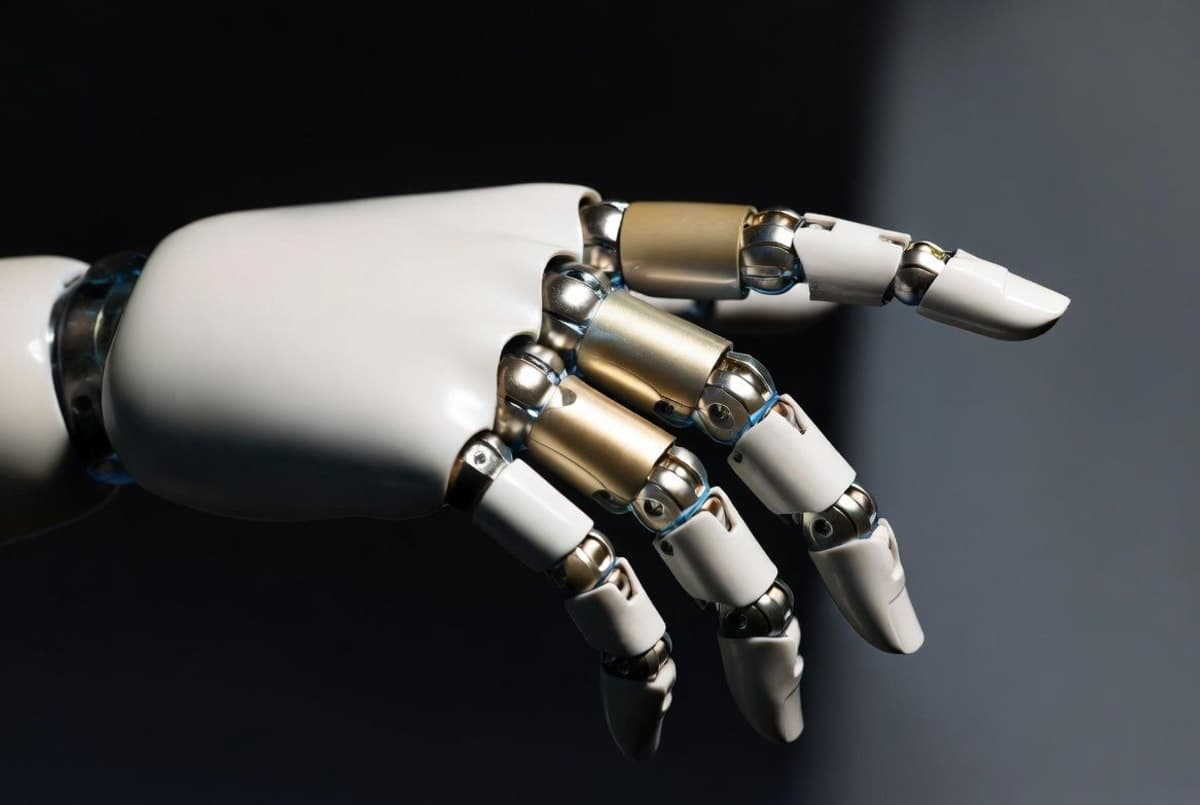
Chinese robotics startup Xynova has unveiled the Flex 2, a tendon-driven dexterous hand for humanoid robots that weighs 400 grams and can hold up to 12 kilograms in a single-hand grip. The Hangzhou-based company, founded in late 2024, says the second-generation hand offers 23 degrees of freedom and a "cerebellum"-style control layer for slip detection, adaptive grasping, and compliant reflexes.
A deliberate downgrade
Look at the numbers and Flex 2 reads like a step backward. The original Flex 1, launched in August 2025, has 25 degrees of freedom, weighs 380 grams, and lifts over 30 kilograms with more than 20 newtons of fingertip force per finger. Flex 2 has two fewer joints, twenty more grams of palm weight, and grasps roughly a third of what its predecessor can.
But that isn't a regression. It's a different bet.
Xynova's Flex 2 page leads with the Kapandji Thumb Opposition Test, a clinical scale used by hand surgeons to grade thumb mobility against the other digits. The company claims a perfect score. It also claims repeatability of ±0.1mm, force control accuracy down to 0.05 newton, and a back-drivable mechanism that supports hybrid force/position control. Sensing-first specs, in other words.
About that slip detector
Forget the DoF count for a second. The slip detector is the part to watch.
Xynova describes "multi-modal perception fusion" alongside what it calls a cerebellum-like layer handling adaptive grasping, slip detection, and compliant reflexes. The Russian-language announcement also mentions millisecond-level hardware response. Is that the actuator latency, the sensor sampling rate, or the full control loop? The product page does not say.
This matters because slip detection is the hardest unsolved problem in robotic manipulation at production scale. Shadow Robot, which has built tendon-driven hands for over two decades, packs more than 100 sensors per hand running at up to 1kHz. Xynova hasn't published a sensor count, a sampling rate, or any independent benchmark for Flex 2. It has published a marketing claim. I'd want to see a third-party slip-detection benchmark before treating that claim as proven.
A crowded race
China is in the middle of a dexterous-hand build-out. Per a January Gasgoo report, Inspire Robots delivered 10,000 hands in 2025, up from 2,000 the year before. Xynova itself has reported orders for over 10,000 hands from "top-tier clients" since Flex 1, and is building a facility targeting 10,000 hands and 200,000 micro electric cylinders annually, set to commission in Q2 2026.
And the money has shown up too. Xynova closed a roughly 100 million yuan angel round in December 2025, led by CATL Capital with Xiaomi Strategic Investment co-investing. A Pre-A round followed earlier this year, reportedly led by a major Chinese internet company. PitchBook lists total funding at $14.2 million.
Xiaomi's investment statement, obviously self-interested, still gets at the actual stakes: "Dexterous hands are key end-effectors for precise robotic operation." Translation: whoever wins the hand market gets dragged along by every humanoid OEM that needs one.
What they actually make themselves
Vertical integration is the pitch that's hardest to dismiss. Xynova manufactures its own brushless motors, servo controllers and drivers, reducers, and planetary roller screws, plus its control algorithms. Most competitors using tendon drive (Tesla Optimus, LinkerBot, and DexRobot among them) rely on at least some external suppliers for motors or screws.
That is not a vanity stat. Planetary roller screws are a notorious supply-chain bottleneck (the kind of obscure part that quietly limits how many humanoid robots anyone can actually build), with most of the world's high-precision screws coming from a handful of European and Japanese makers. Build them yourself at scale and your cost curve looks fundamentally different from competitors who can't.
What's missing?
Pricing. Customer names. Third-party benchmarks. Sensor specifications. Failure data on Flex 1 tendon ropes after months of customer use. Tendon-driven hands are well known for cable creep, where the polymer cords stretch over time and gradually degrade precision. Xynova claims "anti-creep tendon ropes" on the Flex 2 page. It does not define anti-creep or show a number.
The Q2 2026 production ramp is the next checkpoint. If Xynova hits its 10,000-unit annual run rate, real customer feedback will start telling us whether the sensing claims hold up under workload. If they miss the ramp, the spec sheet stops mattering.