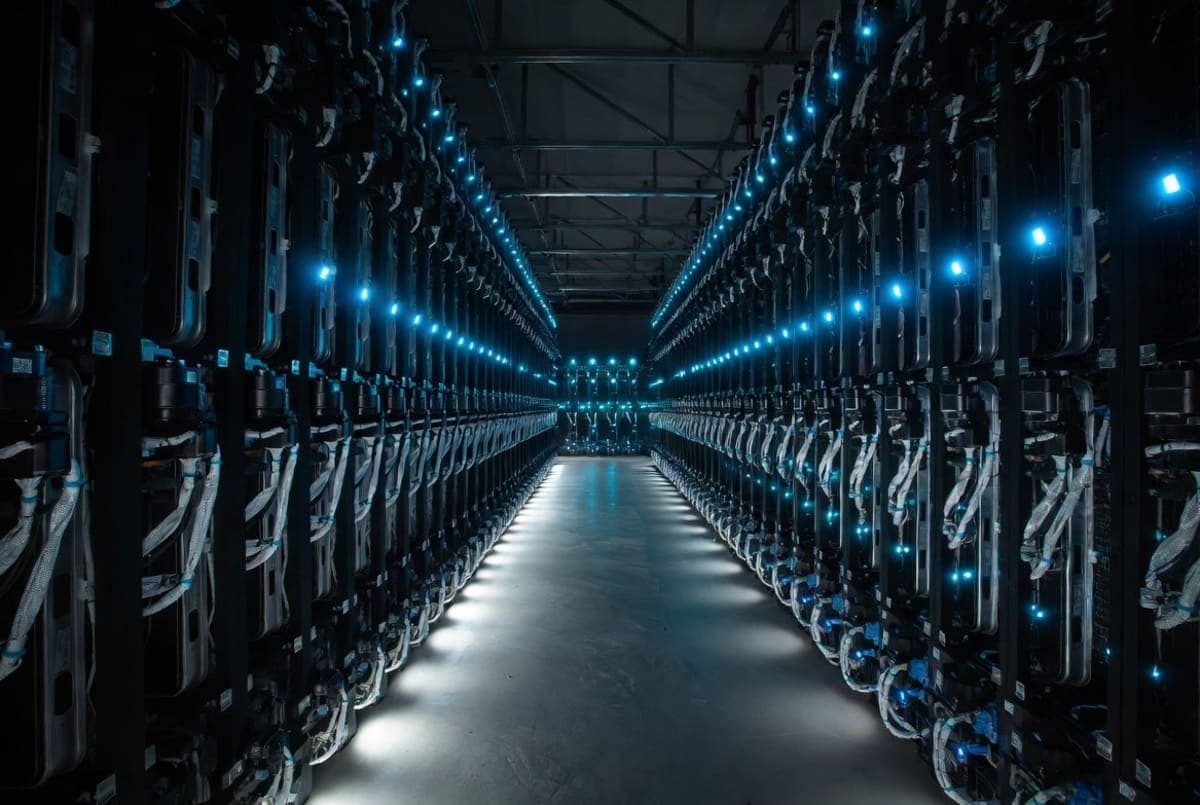
Western Digital has sold out its entire hard drive production capacity for 2026, and it's mid-February. CEO Irving Tan confirmed during the company's Q2 earnings call on January 29 that firm purchase orders from WD's top seven enterprise customers have consumed the full year's output, with long-term agreements already extending into 2027 and 2028.
"We're pretty much sold out for calendar 2026," Tan told analysts. "We have firm POs with our top seven customers." That phrasing, "pretty much," is doing a lot of work in a sentence that describes a company with zero available inventory for the next ten months.
Who gets the drives
The breakdown is stark. Cloud customers now account for 89% of WD's total revenue, or about $2.7 billion of the $3.02 billion the company pulled in last quarter. Consumer sales? Five percent. That's not a rounding error, but it's close.
Tan also disclosed that WD has signed long-term agreements with two of its largest customers through 2027 and one through 2028. These contracts lock in both volume (measured in exabytes) and pricing. In other words, WD's biggest buyers aren't just buying drives; they're reserving factory output years before the platters start spinning.
The company won't name its top seven, but the usual suspects in hyperscale data centers (think the companies training and running large language models at scale) are the obvious candidates. WD's VP of Investor Relations, Ambrish Srivastava, framed the shift bluntly during the earnings call: cloud revenue grew 28% year-over-year while the consumer business barely registers.
The 46% problem
If you've been shopping for a NAS drive lately, you already know something is wrong. According to Tom's Hardware, HDD prices have jumped an average of 46% since September 2025. That number lands differently depending on whether you're a hyperscaler locking in exabyte-scale contracts at negotiated rates or someone trying to expand a home server.
WD is one of just three HDD manufacturers left on the planet, alongside Seagate and Toshiba. When one of the three effectively exits the consumer market in all but name, the downstream effects aren't subtle. And WD has been moving in this direction for a while: the company exited the SSD market entirely to focus on spinning disks for the enterprise.
"As AI capabilities expand, cloud continues to grow as well," Tan said, in the kind of corporate-speak that translates loosely to: we go where the money is, and the money is not in your 8TB backup drive.
What the financials actually say
WD's Q2 numbers are good, undeniably. Revenue of $3.02 billion, up 25% year-over-year. Gross margin at 46.1%, up 770 basis points from the year-ago quarter. The company shipped 215 exabytes to customers, a 22% annual increase. Q3 guidance calls for $3.2 billion in revenue, which would represent roughly 40% year-over-year growth.
Those are the kind of numbers that make investors happy and consumers nervous. WD is making more money than ever by serving fewer customer categories, and the trajectory is accelerating, not flattening. At its Innovation Day in early February, the company (now rebranding simply as WD) unveiled a roadmap targeting 40TB drives this year and 100TB by 2029. All of it aimed squarely at data centers.
The consumer market isn't going to vanish overnight. You can still buy WD drives on Amazon. But the writing is on the wall, or rather, on the balance sheet: when 89% of your revenue comes from a handful of cloud giants locked into multi-year contracts, you don't redesign your product roadmap around someone building a Plex server.
WD reports Q3 earnings on April 23.