The Stargate joint venture between OpenAI, SoftBank, and Oracle has effectively stalled, more than 13 months after President Trump unveiled it at the White House as a $500 billion bet on American AI infrastructure. The Information reported this weekend that the consortium has not hired staff, is not developing any of OpenAI's data centers, and that the three partners have been arguing over responsibilities since almost the moment the cameras stopped rolling.
Elon Musk, who called the project's financing into question on the day it was announced, responded with characteristic restraint. "Hardware is hard," he posted on X. "Those who have tried to do so at scale will understand." He's not wrong, which must be irritating for everyone involved.
What actually went wrong
The short version: nobody could agree on who was in charge. OpenAI wanted operational control and hoped a Texas campus would become its first self-built data center. SoftBank wanted to develop and own the same facility. Between September and October of last year, Stargate's team flew to Japan multiple times to negotiate with Masayoshi Son. The compromise they eventually reached (OpenAI gets the lease and design control, SoftBank Energy develops and owns it) feels less like resolution and more like exhaustion.
Before that, OpenAI had tried to go it alone. Executives scouted US sites and tried to raise billions in debt to fund their own data center campuses. Lenders said no. A company burning through $8 billion a year with no proven long-term business model is not, it turns out, the kind of borrower banks rush to accommodate. OpenAI even lost its general contractor during one of the delays.
So where's the compute coming from?
OpenAI has been working around the Stargate framework for months. The company signed a deal reportedly worth $30 billion a year with Oracle and has deepened its relationship with CoreWeave. More recently, it added capacity from Amazon Web Services and Google Cloud. It's also diversifying away from Nvidia hardware, partnering with AMD and chip startup Cerebras.
CFO Sarah Friar framed the pivot diplomatically at Davos, saying OpenAI is "deliberately working with partners to protect its balance sheet." Translation: building data centers is someone else's problem now. The company hired former Intel executive Sachin Katti to run infrastructure, a move that signals OpenAI wants tighter control over its compute roadmap without actually owning the buildings.
Despite all the workarounds, OpenAI missed its target of locking in 10 gigawatts of capacity by the end of 2025, securing roughly 7.5 GW instead. That 25% shortfall matters when you're trying to train frontier models on a schedule.
The numbers keep shrinking
CNBC reported last week that OpenAI is now telling investors it expects to spend about $600 billion on compute through 2030. That's a significant climb-down from the $1.4 trillion in infrastructure commitments Sam Altman was touting just months earlier. The company says the lower figure is meant to tie spending more directly to revenue growth, which it projects at $280 billion by decade's end. The 2025 revenue of $13.1 billion makes that projection feel ambitious, though OpenAI did beat its own $10 billion target.
"We love working with Nvidia and they make the best AI chips in the world," Altman said recently, which reads like a hostage note when you know the company's 10-gigawatt deal with Nvidia from September 2025 also isn't proceeding as originally planned.
Is Stargate dead?
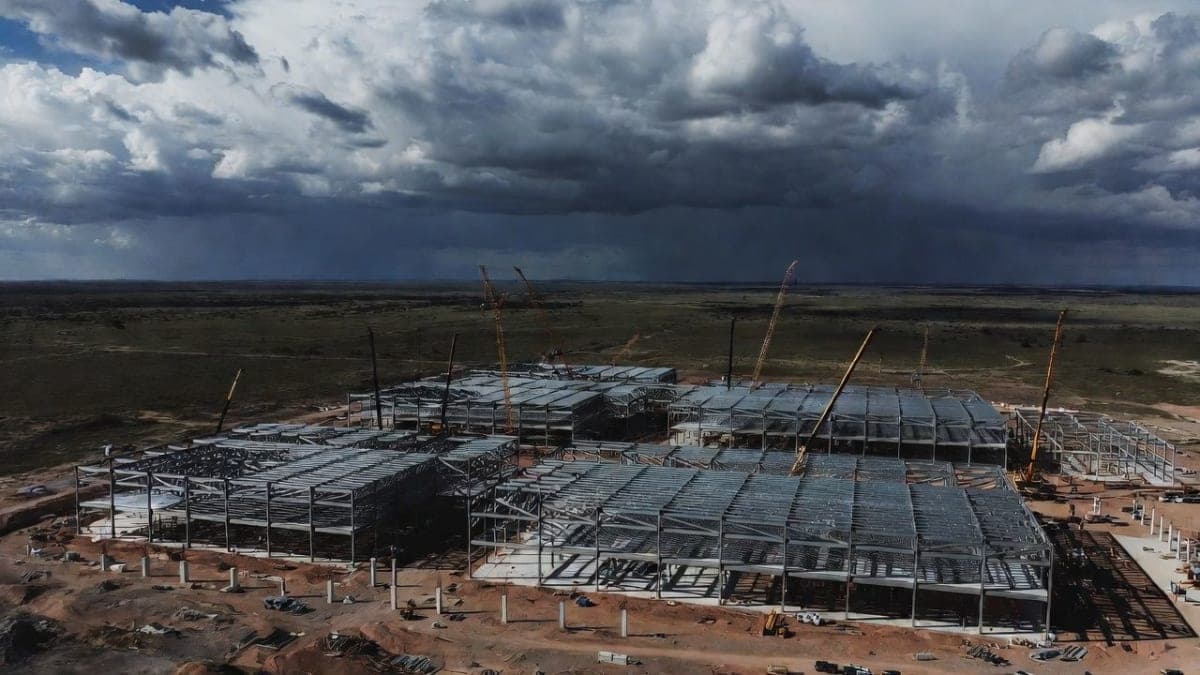
Not exactly. Construction continues at the Abilene, Texas site, where Crusoe Energy is building out infrastructure on a Lancium-owned campus, with the facility expected to power on sometime this year. Ground was broken on a second campus in Milam County, Texas last October. But these are bilateral arrangements between specific partners, not the grand three-way consortium that stood behind Trump at the podium.
The original Stargate announcement promised $100 billion "immediately" and 100,000 American jobs. The reality looks more like a patchwork of separate deals stitched together under a brand name that still photographs well. OpenAI, SoftBank, and Oracle all declined to comment on The Information's reporting.
Nvidia's earnings report drops Wednesday. Expect the Stargate question to come up.