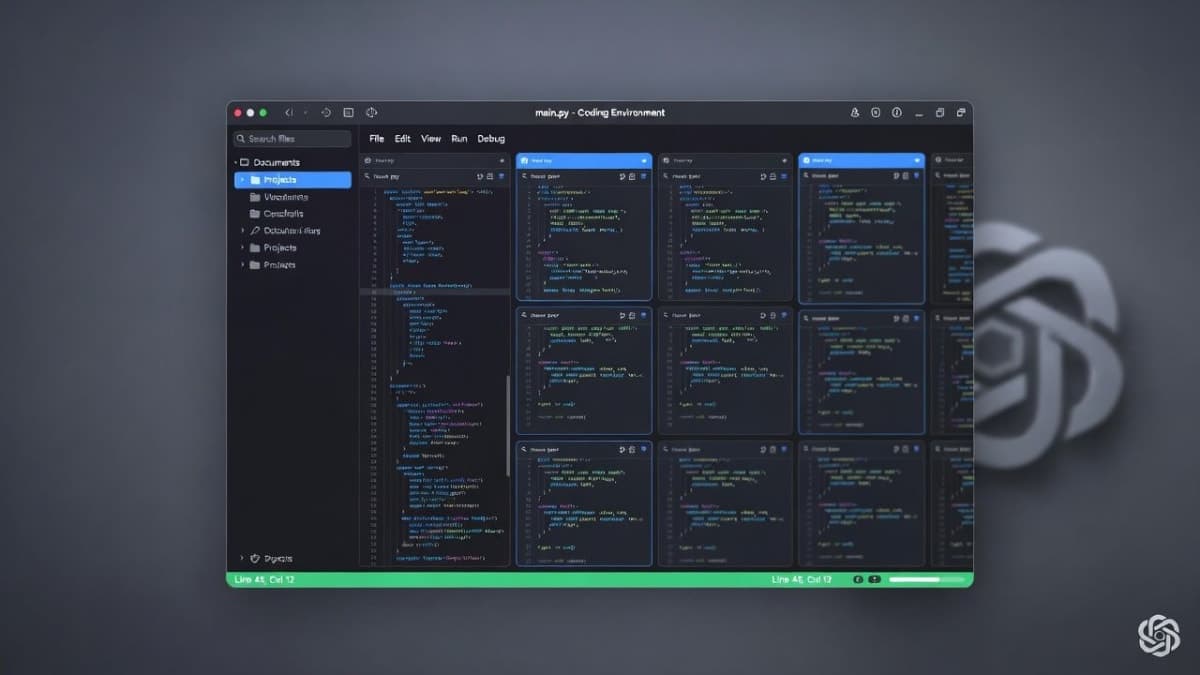
OpenAI released a Codex desktop app on Monday that reframes how developers interact with AI coding tools. Instead of pairing with a single assistant, the macOS application positions itself as a control center for orchestrating multiple agents that can work independently for up to 30 minutes before returning completed code.
The app builds on the open-source Codex CLI and runs on GPT-5.2-Codex, the company's coding-optimized model released in mid-December. OpenAI says usage has doubled since that release, with over a million developers touching Codex in the past month. Enterprise customers include Cisco, Ramp, and Duolingo, alongside startups like Harvey and Sierra.
"This is the most loved internal product we've ever had," CEO Sam Altman told VentureBeat, adding that a four-person engineering team built the Sora Android app in 28 days using Codex internally. That productivity claim is self-reported.
Key additions include Skills (bundled instructions for tasks like deploying to Vercel or pulling Figma context) and Automations that run on schedules without manual triggers. The app uses native sandboxing by default, restricting agents to their working directories unless users grant broader permissions.
Availability: macOS now, Windows coming. OpenAI is temporarily including Codex access for ChatGPT Free and Go users, while doubling rate limits for paid tiers. No end date announced.
The Bottom Line: OpenAI's move directly targets Anthropic's Claude Code, arriving weeks after Anthropic launched its own desktop coding tool in January.
QUICK FACTS
- Over 1 million developers used Codex in the past month (company-reported)
- Codex usage doubled since GPT-5.2-Codex launch in mid-December
- Four-person team built Sora Android app in 28 days using Codex
- Agents can run independently for up to 30 minutes
- macOS available now; Windows version in development