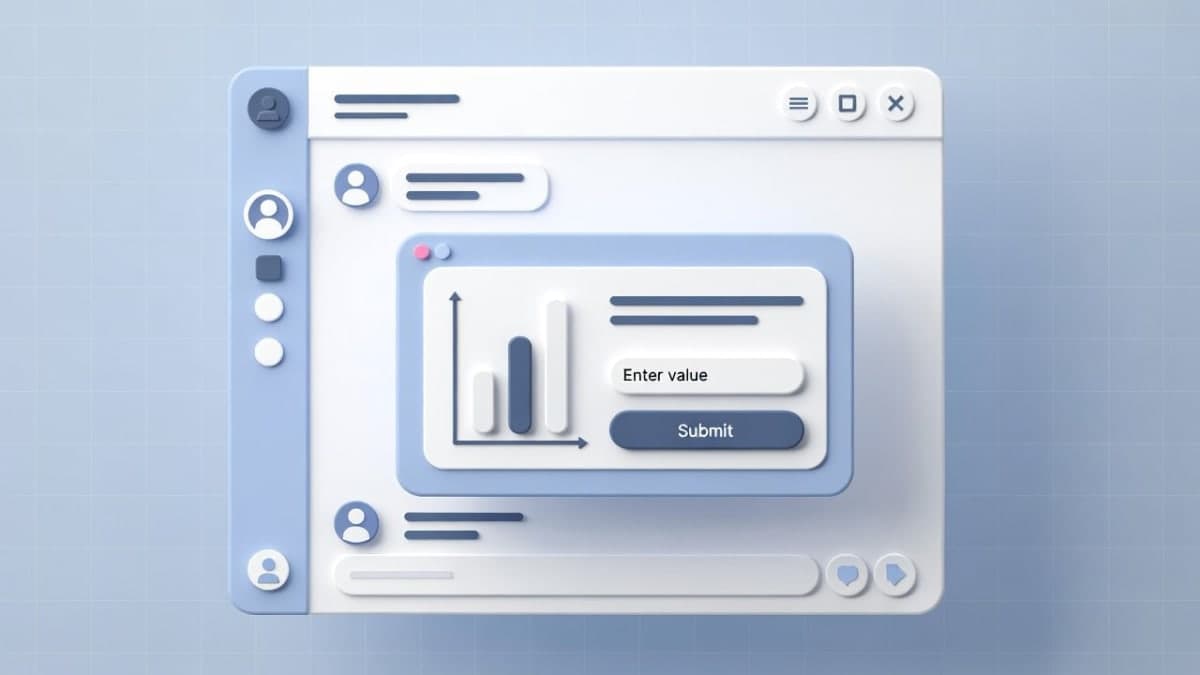
The Model Context Protocol now has its first official extension: MCP Apps. Announced Sunday, the standard lets tools return interactive UI components instead of plain text. When a tool declares a UI resource, the host renders it in a sandboxed iframe. Users interact with it without leaving the chat.
This isn't new territory. The MCP-UI project and OpenAI's Apps SDK pioneered these patterns over the past year. MCP Apps formalizes what both proved works: rich interfaces belong in AI conversations. The official spec merges their approaches into a shared open standard.
Client support is already broad. Claude, ChatGPT, VS Code Insiders, and Block's Goose all ship with MCP Apps enabled. JetBrains and AWS have signaled interest. The practical upside: a developer builds one interactive experience that works across multiple AI clients without platform-specific code.
The architecture uses two MCP primitives. Tools include a _meta.ui.resourceUri field pointing to a UI resource. The host fetches bundled HTML/JavaScript from a ui:// scheme resource and renders it sandboxed. Communication flows through JSON-RPC over postMessage. Security layers include iframe sandboxing, pre-declared templates, and user consent for UI-initiated tool calls.
The Bottom Line: MCP Apps turns chat interfaces into lightweight app platforms, standardizing what MCP-UI and OpenAI's Apps SDK built independently.
QUICK FACTS
- Supported clients: Claude, ChatGPT, VS Code Insiders, Goose
- SDK package:
@modelcontextprotocol/ext-appson npm - Security: Sandboxed iframes with user consent for tool calls
- First official MCP extension; announced January 26, 2026