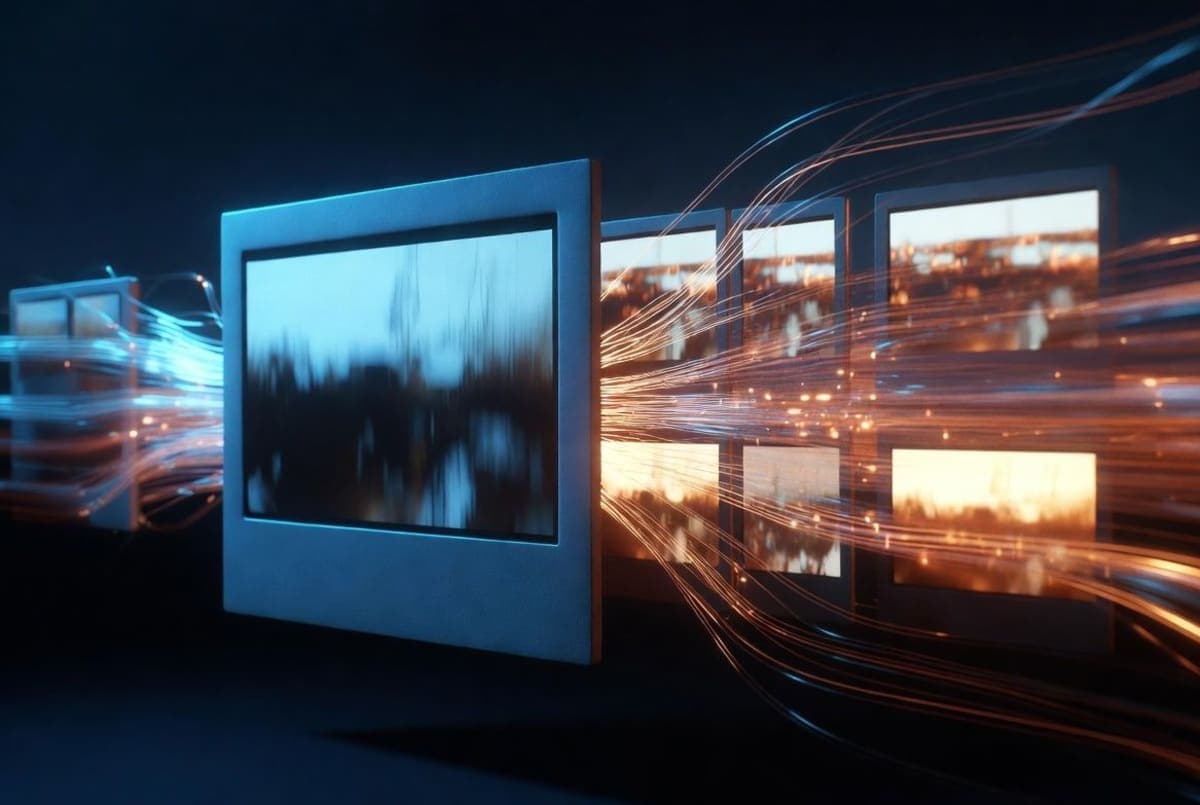
Odyssey has released its Odyssey-2 Pro API, giving developers access to its real-time video generation model. The system produces frames every 50 milliseconds at roughly 20 FPS and can sustain coherent output for multiple minutes, according to the company's claims.
What the model actually does
The pitch is straightforward. Type a prompt while a video streams, and the model adapts on the fly. CEO Oliver Cameron calls this "interactive video" and positions Odyssey-2 Pro as a general-purpose world model, distinct from the clip generators that dominate the market.
The technical approach differs from standard text-to-video tools. Most models generate short clips bidirectionally, meaning they know the ending before they start. Odyssey built a causal, autoregressive system where each frame depends only on what came before. This allows continuous generation without predetermined endpoints.
Frame times matter here. Traditional video models take one to two minutes for five seconds of footage. Odyssey's 50ms generation means you can steer the output as it plays. The company suggests this enables applications like interactive educational content, branching narratives, and real-time virtual environments.
Whether the quality justifies the architecture trade-off remains unclear. Cameron himself described the output as comparable to leading video models from a year ago, which is honest but not exactly a selling point.
The Hollywood pivot
Odyssey started with different ambitions. The company initially positioned itself as a provider of Hollywood-grade visual effects tools, developing models for geometry, lighting, and motion that filmmakers could combine into virtual worlds.
Ed Catmull joined the board. They built a custom 360-degree camera rig that weighs 25 pounds and captures 3.5K footage with depth data. The idea was to collect their own training data rather than scraping the web, which would theoretically yield more consistent results.
That film industry focus has shifted. The API documentation and recent announcements emphasize developer integration and consumer applications. The camera rig still exists, but the messaging now centers on interactive experiences rather than production pipelines.
Competitive positioning
The real-time generation space has gotten crowded. Decart's MirageLSD achieves similar frame rates through a different approach, transforming existing video streams rather than generating from scratch. Their latency sits under 40ms.
Other players approach the problem differently. Sora 2 prioritizes photorealism but takes hours for longer clips. Veo 3.1 bundles audio generation but lacks interactive capabilities. Each optimizes for different use cases.
Odyssey's infrastructure costs run between $1-2 per user-hour on H100 clusters, according to earlier reporting. That pricing puts it in a middle ground: too expensive for casual experimentation, potentially viable for specific commercial applications.
What this means for developers
The API enables continuous video streams that respond to text input mid-generation. You can mark edit points, adjust elements without regenerating everything, and maintain visual consistency over longer durations.
The company promises camera controls, lighting adjustments, and anchor features for character consistency. How well these work in practice will determine whether developers adopt the platform beyond initial curiosity.
Streaming interactive content on platforms like Twitch, where chat could influence generated narratives, seems like an obvious application. The company's demos show scenarios involving exploration and real-time editing, though extended examples beyond cherry-picked clips remain scarce.
The free demo on Odyssey's website lets anyone test the model directly. Results vary.
API access is available now through the developer portal.