Jensen Huang walked onto the SAP Center stage on March 16 and did what he does at every GTC: made chip infrastructure sound like manifest destiny. But this year's two-hour keynote had a different center of gravity. Training, the thing that made Nvidia the most valuable company on earth, barely got a mention. Instead, Huang spent most of his time on inference, AI agents, and a vision of data centers as literal factories producing tokens the way power plants produce electricity.
The headline numbers are staggering. Huang said Nvidia now sees at least $1 trillion in purchase orders for its Blackwell and Vera Rubin platforms through 2027, double the $500 billion figure he quoted at GTC last year. AWS has committed to deploying more than a million Nvidia GPUs. Azure, Google Cloud, and Oracle are all onboard. Whether those order books hold is another question, but the demand signal is hard to argue with.
The OpenClaw play
Roughly two hours into the keynote, Huang turned to OpenClaw, the open-source AI agent framework created by Austrian developer Peter Steinberger that went from side project to the fastest-growing open-source project in history in about two months. Huang called it "as big of a deal as HTML" and "as big of a deal as Linux," which is the kind of thing CEOs say when they want developers to pay attention.
He's not entirely wrong, though the comparison is doing a lot of heavy lifting. OpenClaw lets anyone spin up an autonomous AI agent that can manage email, book flights, write code, and generally do things rather than just talk about doing things. Steinberger joined OpenAI in February (not an acquisition, technically an acqui-hire), with the project moving to an independent foundation. Sam Altman said OpenClaw will remain open source, which, sure.
Nvidia's answer is NemoClaw, an enterprise stack that bolts security and privacy controls onto OpenClaw with a single command. It installs Nvidia's OpenShell runtime for sandboxed agent execution and can run Nemotron models locally, so sensitive data never leaves the building. The pitch to CIOs is straightforward: OpenClaw is powerful but has well-documented security problems (prompt injection, unconstrained file access). NemoClaw adds guardrails. Nvidia is working with Cisco, CrowdStrike, and Microsoft Security on compatibility.
"For the CEOs, the question is, what's your OpenClaw strategy?" Huang said, and honestly, that framing is clever. It positions OpenClaw as inevitable infrastructure rather than a fad, and positions Nvidia as the company making it safe enough for the Fortune 500. But NemoClaw is currently alpha software. Nvidia's own website warns developers to "expect rough edges." There's a gap between the keynote vision and what ships.
Chips in space (no, really)
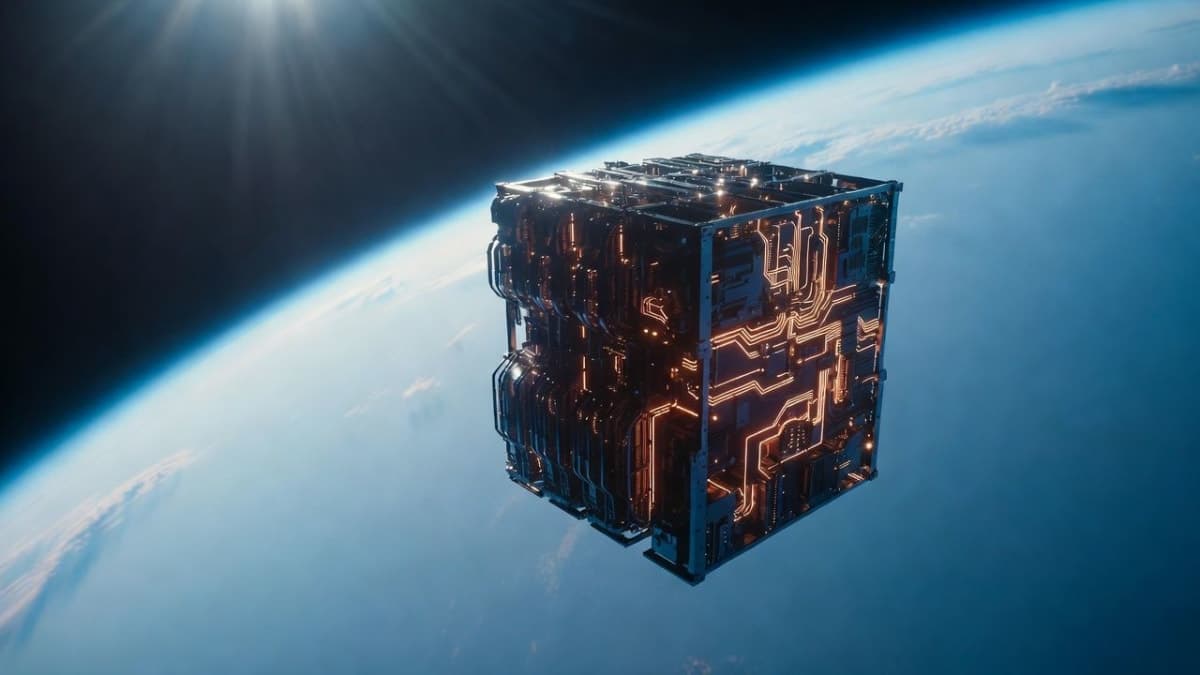
Huang announced the Vera Rubin Space-1 Module, a computing platform designed for orbital data centers. "Space computing, the final frontier, has arrived," he said, apparently without irony.
The Space-1 Module combines Nvidia's IGX Thor and Jetson Orin platforms, engineered for the size, weight, and power constraints you'd expect in orbit. Nvidia claims up to 25x more AI compute for space-based inference compared to the H100. Partners already named include Axiom Space, Starcloud, Planet Labs, and Aetherflux. Last November, Starcloud sent an H100 to orbit on a test satellite, the first time an Nvidia GPU went to space, so there's at least some precedent here.
The cooling problem is the interesting part. Huang admitted it's unsolved. "In space there's no conduction, there's no convection," he said during the keynote. "There's just radiation. And so we have to figure out how to cool these systems out in space." That kind of candor is unusual for a product announcement, and it tells you Space-1 is still early. Nvidia says it will be "available at a later date," which in hardware terms could mean anything.
The orbital data center concept has critics. OpenAI's Sam Altman, AWS CEO Matt Garman, and analysts at Gartner have all expressed skepticism. Google is pursuing a parallel approach with TPUs in space. Elon Musk has floated a million-satellite orbital AI constellation, because of course he has. Nvidia planting its flag now is more about staking a claim than shipping product.
What even is a "token factory"?
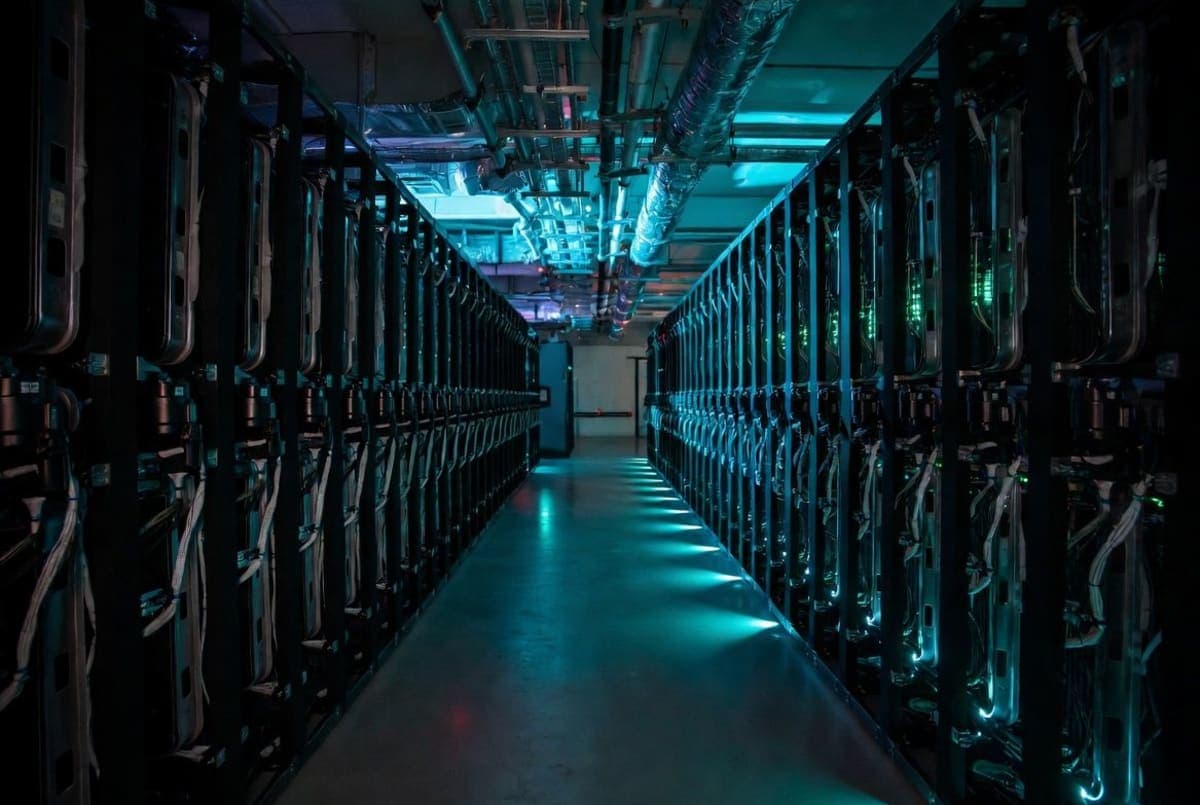
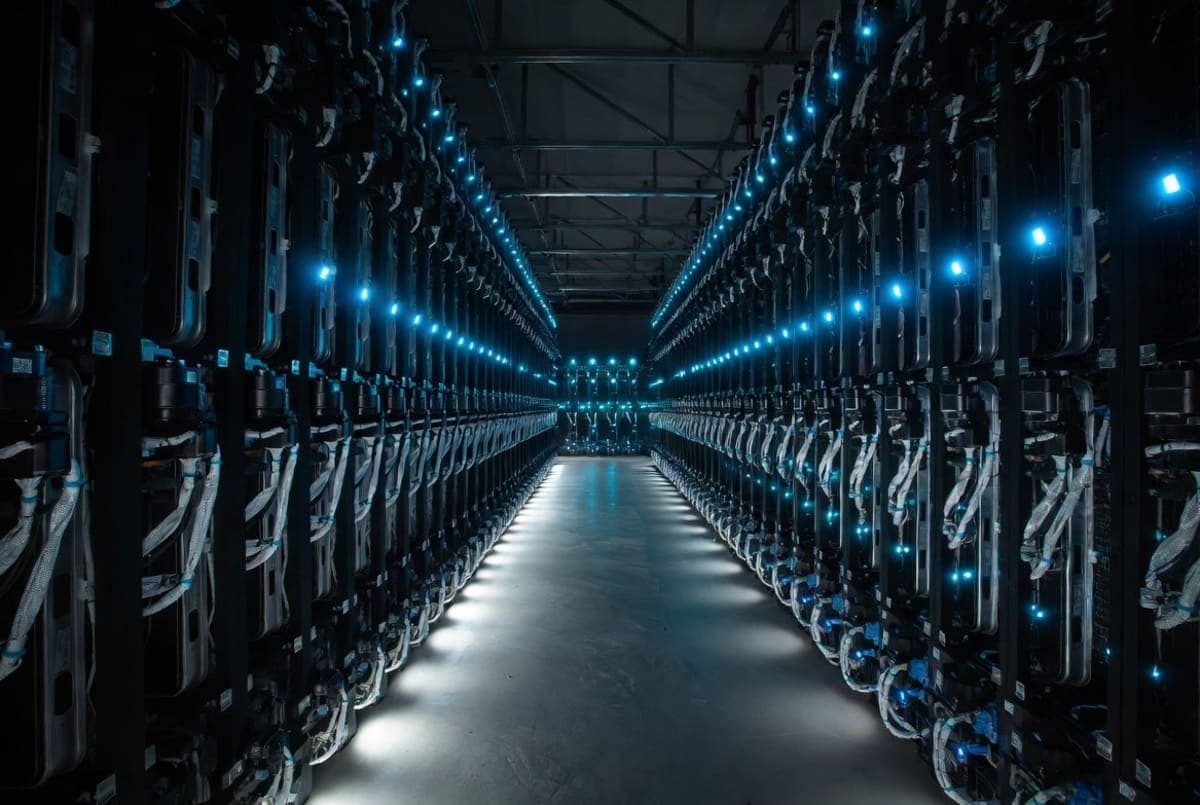
The conceptual framework Huang kept returning to was the idea that data centers are evolving into AI factories, facilities whose primary output isn't compute but tokens. He showed a chart with token throughput on one axis and inference speed on the other, mapping different pricing tiers. Free tier, mid-range, premium research and code generation. The message: tokens are a product, and Nvidia sells the manufacturing equipment.
To run these factories, Nvidia announced Dynamo 1.0, an open-source distributed operating system for inference workloads. It disaggregates the inference pipeline, splitting prefill and decode phases across different hardware, routing requests to GPUs that already hold relevant cached data, and offloading memory when it's not needed. Nvidia claims up to 7x better inference performance on Blackwell GPUs. AWS, Azure, Google Cloud, Oracle, and companies like Cursor and Perplexity have already integrated it.
Alongside Dynamo, Nvidia released the DSX platform, a digital twin blueprint for designing AI factories before they're built. DSX Air lets companies simulate their entire infrastructure (power, cooling, networking, storage) in software, which Huang says can cut deployment timelines from months to days. He estimated a factor-of-two efficiency gain from better factory design alone, and at the scale Nvidia is talking about (gigawatt-class facilities), that's not a small number.
The hardware underneath
The Vera Rubin platform itself got a full technical reveal. Seven chips, five rack-scale systems, one supercomputer. The NVL72 rack houses 72 Rubin GPUs and 36 Vera CPUs, runs on liquid cooling at 45°C, and Nvidia says it can produce 700 million tokens per second. For context, the previous generation managed 22 million tokens per second from a 1GW data center. If those numbers hold in production, the improvement is absurd.
And then there's the Groq integration. Nvidia confirmed it acquired the Groq team and licensed the technology in a deal reportedly worth $20 billion. The Groq 3 LPU, an SRAM-packed inference accelerator shipping Q3 2026, pairs with Vera Rubin through Dynamo's orchestration layer. Rubin handles prefill and attention (high throughput), Groq handles decode and token generation (low latency). Together, Nvidia claims 35x improvement in tokens-per-watt over GPU-only configurations.
Huang's allocation advice was specific: "If most of your workload is high throughput, I would stick with just 100% Vera Rubin. If a lot of your workload wants to be coding and very high valued engineering token generation, I would add Groq to maybe 25% of my total data center." That's unusually concrete guidance from a keynote stage.
So what's actually new here?
The pattern is familiar. Nvidia announces hardware that won't ship for months, software that's in alpha, and partnerships that amount to letters of intent. The stock tends to dip after these keynotes, probably because expectations run so far ahead of the show. But strip away the theater and something has shifted. A year ago, Huang was selling GPUs for training. Now he's selling an entire economic model: the token as unit of output, the data center as factory, inference as the thing that generates revenue. Dynamo, DSX, NemoClaw, the Groq integration, the space module. They're all components of a single argument that Nvidia isn't a chip company anymore. It is the operating system for AI infrastructure.
Whether that argument holds depends on execution. NemoClaw is alpha. Space-1 can't cool itself yet. Vera Rubin NVL72 is in "early sampling." The Groq 3 LPU ships in Q3. I've heard this "everything is coming soon" pitch before. But the $1 trillion demand figure, even if it's aspirational, suggests Nvidia's customers are buying the vision before the hardware arrives. The FTC and EU antitrust regulators might eventually have something to say about a company that controls this much of the AI stack. For now, though, Nvidia is building the factory and writing the operating manual at the same time, and nobody else is close.