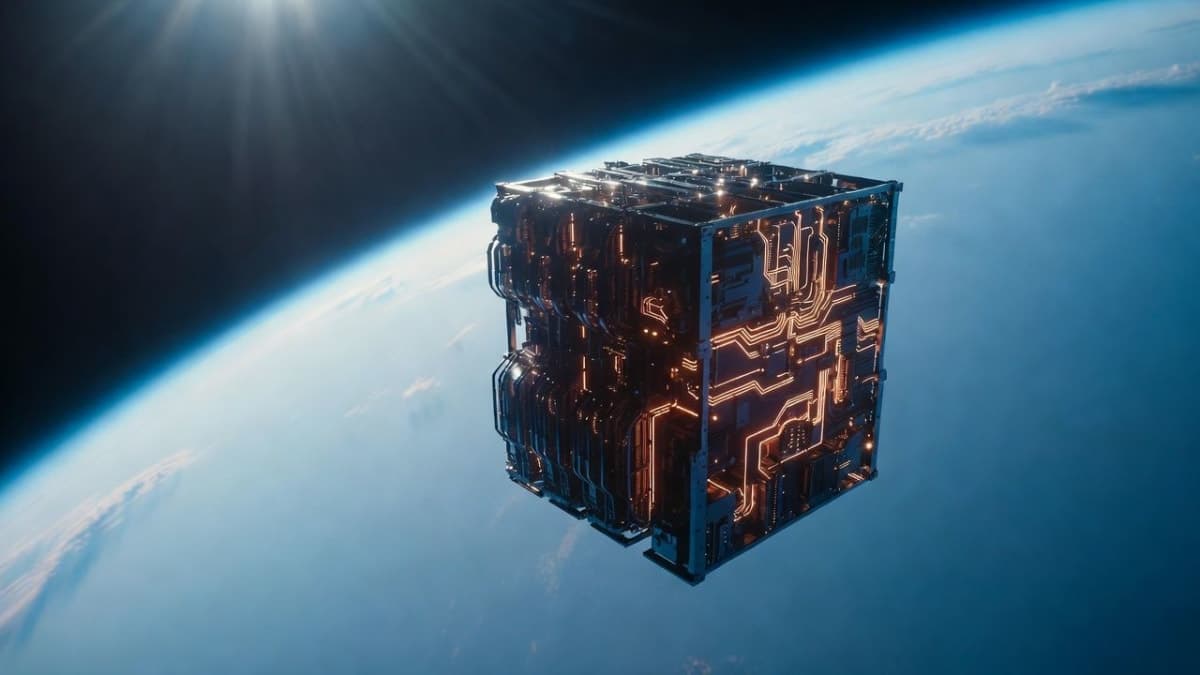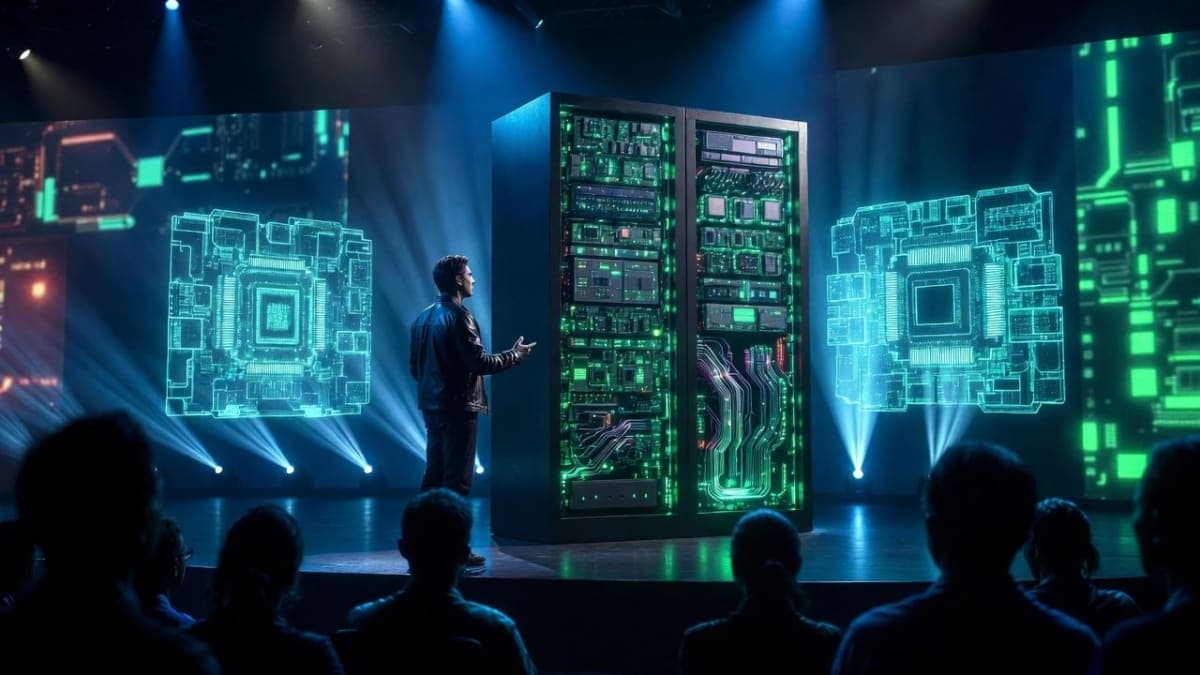
Elon Musk announced Saturday night that Tesla, SpaceX, and xAI will build a $20 billion semiconductor fabrication facility in Austin, Texas, with the goal of producing one terawatt of AI computing power annually. Roughly 80% of that output is earmarked for satellites in orbit. He calls it Terafab.
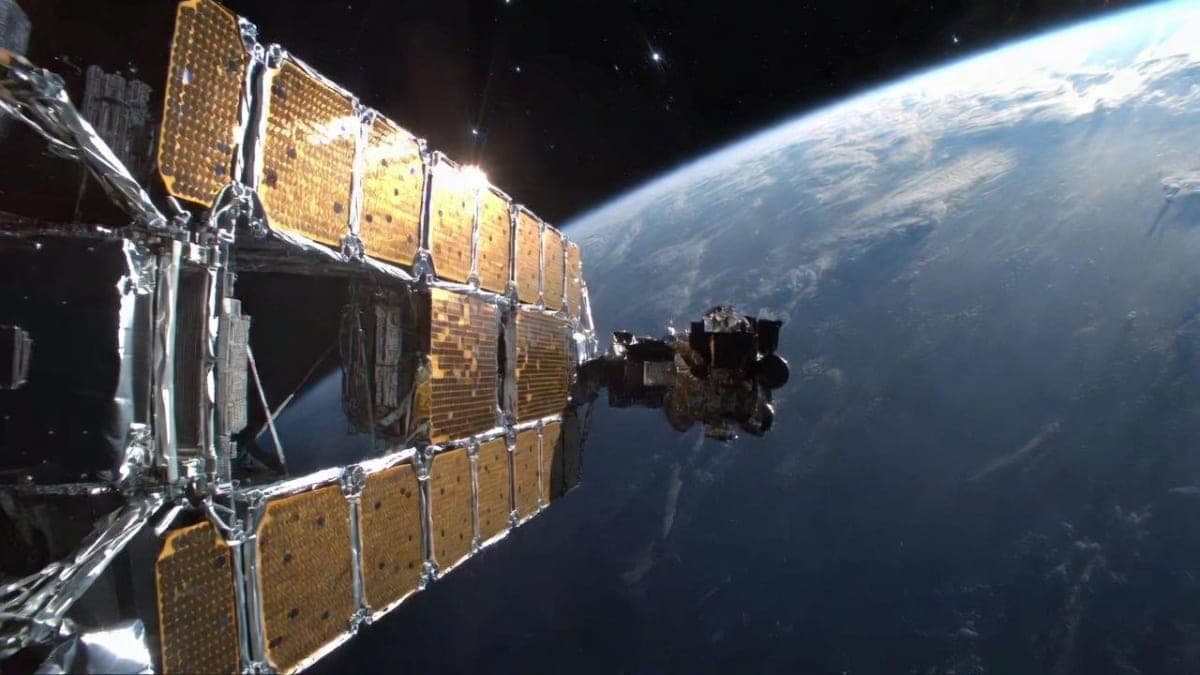
The presentation, held inside the defunct Seaholm Power Plant with Texas Governor Greg Abbott in attendance, also included a prototype rendering of a compact AI satellite rated at 100 kilowatts. That single satellite would generate roughly as much power as the entire International Space Station's solar arrays produce on average, and about five times what a Starlink V3 satellite can deliver. Musk wants Starship to haul dozens of these per launch.
What Terafab actually is
The facility would integrate every step of chipmaking under one roof: lithography mask production, logic fabrication, memory fabrication, advanced packaging, and testing. Musk claims this full loop, where you can test a chip and immediately revise the mask for the next iteration, does not exist anywhere else in the world. Bloomberg reports Musk gave no timeline for when the facility would actually produce chips.
Two chip lines are planned. One optimized for edge inference on the ground (powering Full Self-Driving, robotaxis, and Optimus robots), and another radiation-hardened variant designed to run hotter in orbit, which reduces the weight of cooling systems needed in space. The space chips will dominate production because, as Musk framed it, U.S. electricity generation tops out around 0.5 terawatts, making a full terawatt of ground-based AI compute physically impossible without rebuilding the grid.
The math is staggering (and suspect)
One terawatt is approximately 50 times the current global output of AI chips. Every semiconductor fab on Earth combined produces about 2% of what Terafab targets. Musk's argument: existing suppliers like TSMC and Samsung are growing too slowly for what he needs across Tesla's autonomous vehicles, Optimus robots, and SpaceX's orbital ambitions. "We either build the Terafab or we don't have the chips," he said during the event. "And we need the chips, so we build the Terafab."
That framing conveniently ignores that Musk has no background in semiconductor manufacturing, as Bloomberg noted, and that bringing a fab online from scratch typically requires years and tens of billions of dollars before a single production chip rolls off the line. The facility reportedly targets a 2-nanometer process node, which puts it in competition with TSMC's most advanced technology. SpaceX's own Starship, which this entire vision depends on, still hasn't flown operationally at the cadence Musk describes.
So what about those space data centers?
The Terafab announcement is the supply-side answer to a demand Musk created on paper back in January, when SpaceX filed with the FCC for permission to launch up to one million orbital data center satellites. The FCC accepted the filing for public comment within five days, though the application was notably thin on technical details: no satellite mass, no specific orbital parameters, no cost estimate, no deployment schedule.
The pitch is straightforward. Solar power in orbit is constant (no weather, no nighttime), cooling via radiative dissipation avoids the massive water usage of terrestrial data centers, and Starship's payload capacity could theoretically make the economics work. SpaceX claims launching one million tons of satellites generating 100 kW per ton would add 100 gigawatts of AI compute capacity annually.
"In the long term, space-based AI is obviously the only way to scale," Musk wrote on SpaceX's website when the company acquired xAI in early February.
The skeptics have a point
Jermaine Gutierrez at the European Space Policy Institute told Euronews he recommends adding "an invisible zero" to any of Musk's timelines. ESPI's own analysis put a competitive orbital data center at least 20 years out. Jeff Thornburg, a SpaceX veteran and CEO of Portal Space Systems, told Fortune that while you shouldn't bet against Musk, the first real challenge is power: running AI chips in orbit requires solar arrays that simply don't exist yet at the scale needed.
Georgetown researcher Kathleen Curlee was more blunt, calling the concept "technologically not feasible at the moment." Thornburg estimated a minimum of three to five years before anything is actually working, and mass production wouldn't happen before 2030.
None of which would matter much if the whole thing is really about the IPO. SpaceX is expected to raise as much as $50 billion in what could be a record-setting public offering this summer, at a valuation reportedly north of $1.75 trillion. A terawatt-scale chip factory and a million-satellite constellation make for a compelling pitch deck, whether or not the first AI satellite is ever launched.
Construction activity has already been spotted via drone footage at Giga Texas, where the Terafab will sit adjacent to Tesla's existing headquarters. Samsung's nearby Austin facility is already a Tesla chip supplier, and the University of Texas provides a semiconductor talent pipeline. But building a fab from scratch involves over 2,000 individual process steps, and Musk has yet to name a single equipment supplier or manufacturing partner for the project.
SpaceX's next Starship test launch is expected in the coming weeks. That rocket's success or failure will say more about Musk's space data center timeline than any FCC filing or Austin press event.