Mark Minevich dropped his Forbes predictions column on New Year's Eve, and the headline does not undersell it: "Agentic AI Takes Over." The piece runs through eleven forecasts covering everything from AI assistants for every employee to SpaceX going public at $1.5 trillion. Some of this tracks with what analysts are seeing. Other parts feel like someone mashed together every bullish take from the past six months.
Let me walk through what's actually happening.
The 40% Agent Claim
The headline number in Minevich's piece is that 40% of enterprise apps will embed task-specific AI agents by the end of 2026. This comes directly from Gartner's prediction, which puts the current number at less than 5%. That's an eight-fold jump in twelve months.
Gartner's own research undercuts the enthusiasm. They also predict over 40% of agentic AI projects will be canceled by the end of 2027 due to escalating costs, unclear business value, or inadequate risk controls. So yes, agents everywhere. Also, most of them won't work. The consulting firm explicitly warns against hype-driven implementations, noting that many current projects are "early stage experiments or proof of concepts that are often misapplied."
CIOs I've seen quoted are taking a more measured approach. Citizens Financial Group's Michael Ruttledge expects agentic AI to take off in workflow-heavy platforms from Salesforce and ServiceNow, but true transformation remains distant. The gap between "embedding an agent" and "agent doing real work" is enormous.
SpaceX at $1.5 Trillion
Here's where things get interesting. Minevich positions a potential SpaceX IPO as resetting valuations for the entire space sector and pulling "massive public capital" into orbital compute. The $1.5 trillion figure is real, sourced from Bloomberg's December reporting.
SpaceX is targeting mid-to-late 2026 for what would be the largest IPO in history, raising over $30 billion. For context, Saudi Aramco's 2019 listing brought in $29 billion. The company has already entered a quiet period, instructing employees to stop discussing IPO plans publicly.
But the valuation math is wild. SpaceX's 2026 revenue is projected at $22-24 billion. A $1.5 trillion valuation means 63-68 times forward sales. Lockheed Martin and Boeing trade in the single-digit to low-teens range. Even high-growth tech giants rarely sustain price-to-sales above 20-30x for long.
The bull case rests entirely on Starlink's expansion and Musk's vision of space-based AI data centers. Cathie Wood projects $2.5 trillion by 2030. Ron Baron won't sell a share. Whether that's conviction or wishful thinking depends on how seriously you take orbital compute as a near-term business.
The Energy Problem Nobody Wants to Solve
Minevich's data center numbers are approximately correct but slightly dated. The IEA's April 2025 report puts global data center electricity consumption at around 415 TWh in 2024, projected to hit 945 TWh by 2030. That's not quite doubling, but close.
U.S. data centers consumed 183 TWh in 2024, roughly 4% of total electricity consumption. By 2030, Pew Research projects this growing 133% to 426 TWh. Virginia alone saw data centers consume 26% of total electricity supply in 2023.
The "sovereign AI spending jumps to about $100B" claim is harder to pin down. UBS forecasts global AI capex at $360 billion in 2025, rising to $480 billion in 2026. Sovereign and enterprise AI accounts for about 17% of that, which works out to roughly $60-80 billion. Close enough, though the Forbes framing makes it sound more specific than the data supports.
Humanoid Robots: Demos vs. Deployments
The prediction that physical AI moves from demos to targeted pilots is already happening, though "targeted pilots" is doing a lot of work in that sentence.
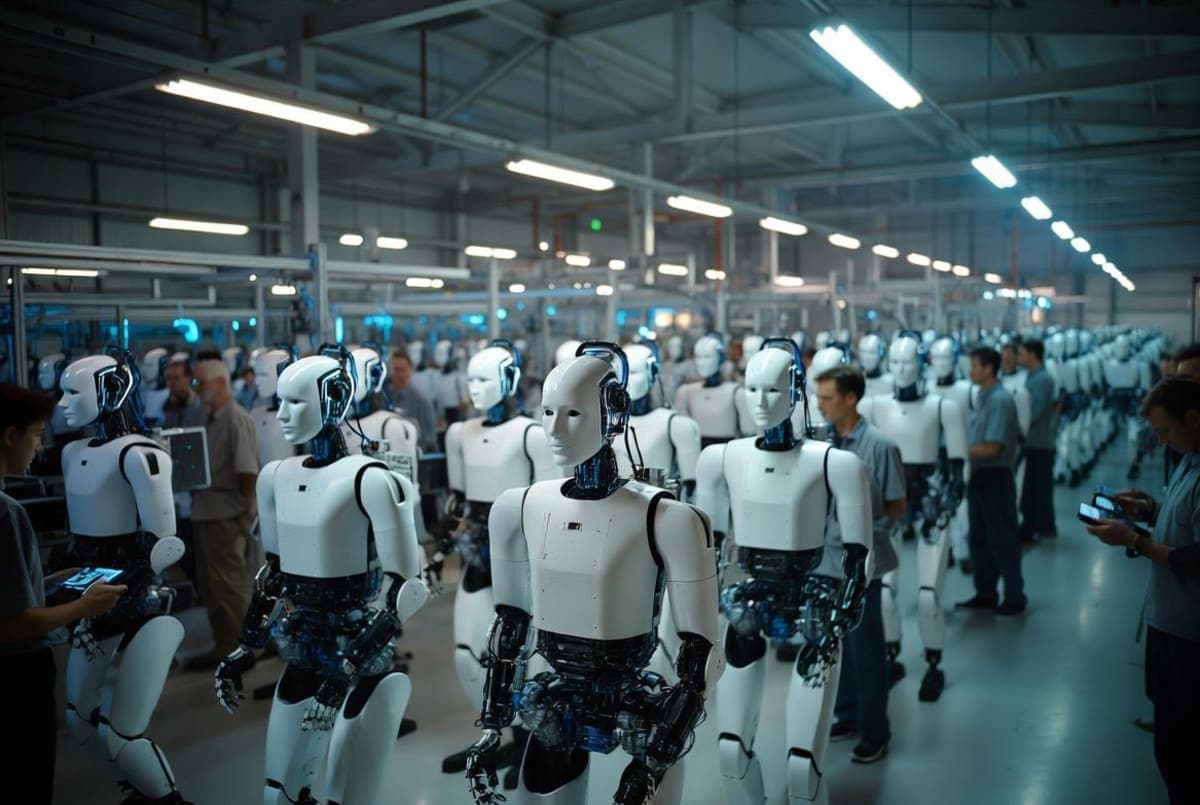
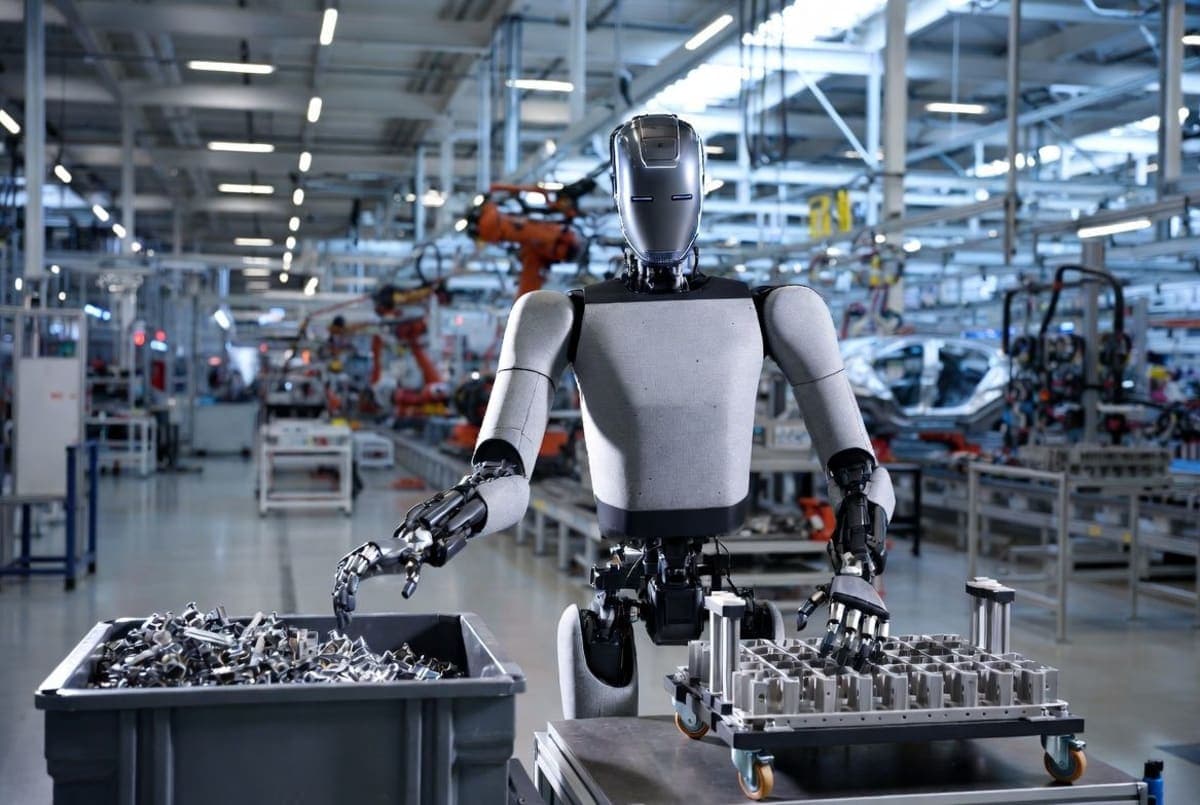
BMW has Figure 02 robots at their South Carolina plant, logging over 1,250 hours sorting X3 parts. Agility Robotics has Digit units operating at GXO's Georgia warehouse under actual commercial contracts. Amazon is running Digit trials with reported plans to expand.
Tesla's Optimus is more complicated. Musk talked about producing 5,000 units in 2025, scaling to tens of thousands in 2026. Independent reporting suggests actual production is in the hundreds, not thousands. The Gen 3 production line is "coming in 2026," which is corporate-speak for "not ready." Tesla's target of $20,000 production cost per unit remains aspirational.
The claim that these robots are "reducing defects, raising output, and shortening cycle times" may be true in very narrow applications. But Agility's CEO Peggy Johnson publicly criticized misleading marketing videos in the sector, a pretty clear shot at more cinematic demos from Tesla and Figure. The gap between what works in a controlled test and what scales in a messy warehouse is substantial.
AWS Trainium: Actually Interesting
One prediction that holds up to scrutiny is Amazon reemerging as an AI infrastructure leader. AWS revenue grew 20.2% in Q3 2025, its fastest pace in nearly three years. Trainium2 is already a multi-billion-dollar business growing 150% quarter-over-quarter, according to CEO Andy Jassy.
The numbers here are concrete. Trainium2 is fully subscribed. Over 100,000 companies are using it as their primary Bedrock inference engine. Anthropic is training Claude on a cluster of 500,000 Trainium2 chips, with plans to expand to one million. Trainium3 enters production in early 2026 with 4.4x compute performance and 40% better energy efficiency than its predecessor.
The 17-22% growth reacceleration Minevich predicts seems conservative given current trajectory. AWS is positioned to capture a significant share of AI training and inference demand. Whether "easing compute bottlenecks" materializes depends on Nvidia supply, but AWS has built enough custom silicon capacity to reduce that dependency.
What's Missing
The predictions conspicuously avoid the messy parts. Nothing about the 40% of agentic AI projects Gartner expects to fail. Nothing about the EU AI Act becoming fully applicable in August 2026, which creates significant compliance requirements for high-risk AI systems. Nothing about the reality that most organizations lack the data quality, governance maturity, and documented processes to let agents run autonomously.
The identity-as-security-battleground prediction is accurate but vague. The browser-as-operating-environment prediction is true but not new. The voice-as-advertising-signal prediction is interesting but unquantified.
The Real Story
Strip away the hype and here's what's actually happening: AI agents are proliferating into enterprise software, but most will remain copilots rather than autonomous operators. SpaceX may go public at an absurd valuation because the IPO market rewards narrative over fundamentals. Data centers will consume vastly more power, creating local grid problems before anyone figures out how to solve them. Humanoid robots will move from demos to pilots, but scaled deployment is years away. And AWS will keep gaining ground with custom silicon.
2026 is probably the year enterprises stop experimenting and start demanding ROI. Diginomica calls it the shift to "AI Realism." The trillion dollars already spent on infrastructure needs to start generating returns, or the correction everyone keeps postponing will finally arrive.
That's less exciting than "agentic AI takes over." But it's probably closer to what actually happens.