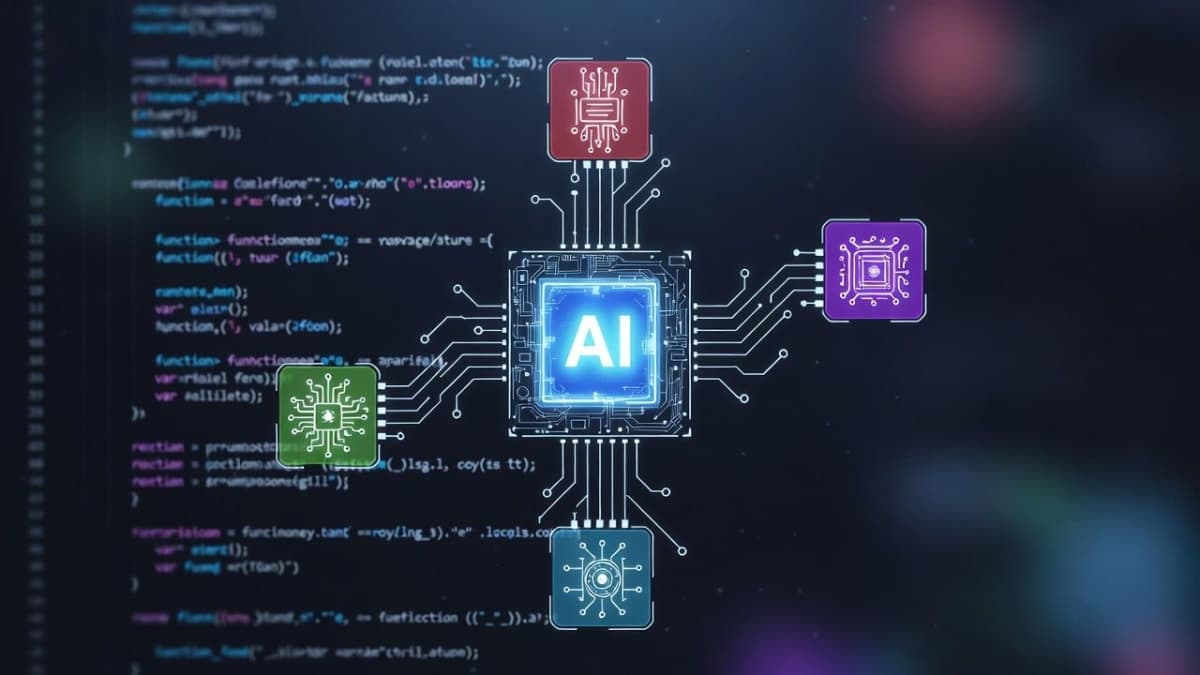
Cursor shipped version 2.4 on January 22, bringing subagents to its AI coding assistant. The feature lets a main agent spin off independent sub-agents to handle discrete parts of a task, each running in parallel with its own context window, custom prompts, and even different models.
The editor includes default subagents for codebase research, terminal commands, and parallel work streams. Users can also define custom subagents through the documentation. The pitch: faster execution and cleaner context in the main conversation, since subtasks don't bloat the parent agent's window.
Also new: image generation powered by Google's Nano Banana Pro model. Describe what you want or upload a reference, and Cursor generates images inline, saving them to your project's assets folder. Useful for UI mockups, maybe, though it's an odd addition to a code editor.
For enterprise customers, Cursor Blame extends git blame with AI attribution. It shows which lines came from tab completions, which from agent runs (broken down by model), and which from human edits. Each line links back to the conversation that produced it. The feature also tracks AI usage patterns across teams.
One smaller update worth noting: agents can now ask clarifying questions without blocking. While waiting for your response, the agent keeps reading files, making edits, and running commands, then incorporates your answer when it arrives.
The Bottom Line: Subagents could help with larger refactoring tasks where splitting work makes sense, though early forum feedback suggests users want more control over default configurations.
QUICK FACTS
- Release date: January 22, 2026
- Subagents: run in parallel with independent context, prompts, and models
- Image model: Google Nano Banana Pro (Gemini 3 Pro Image)
- Cursor Blame: Enterprise plan only
- Async Q&A: agents continue working while waiting for user responses