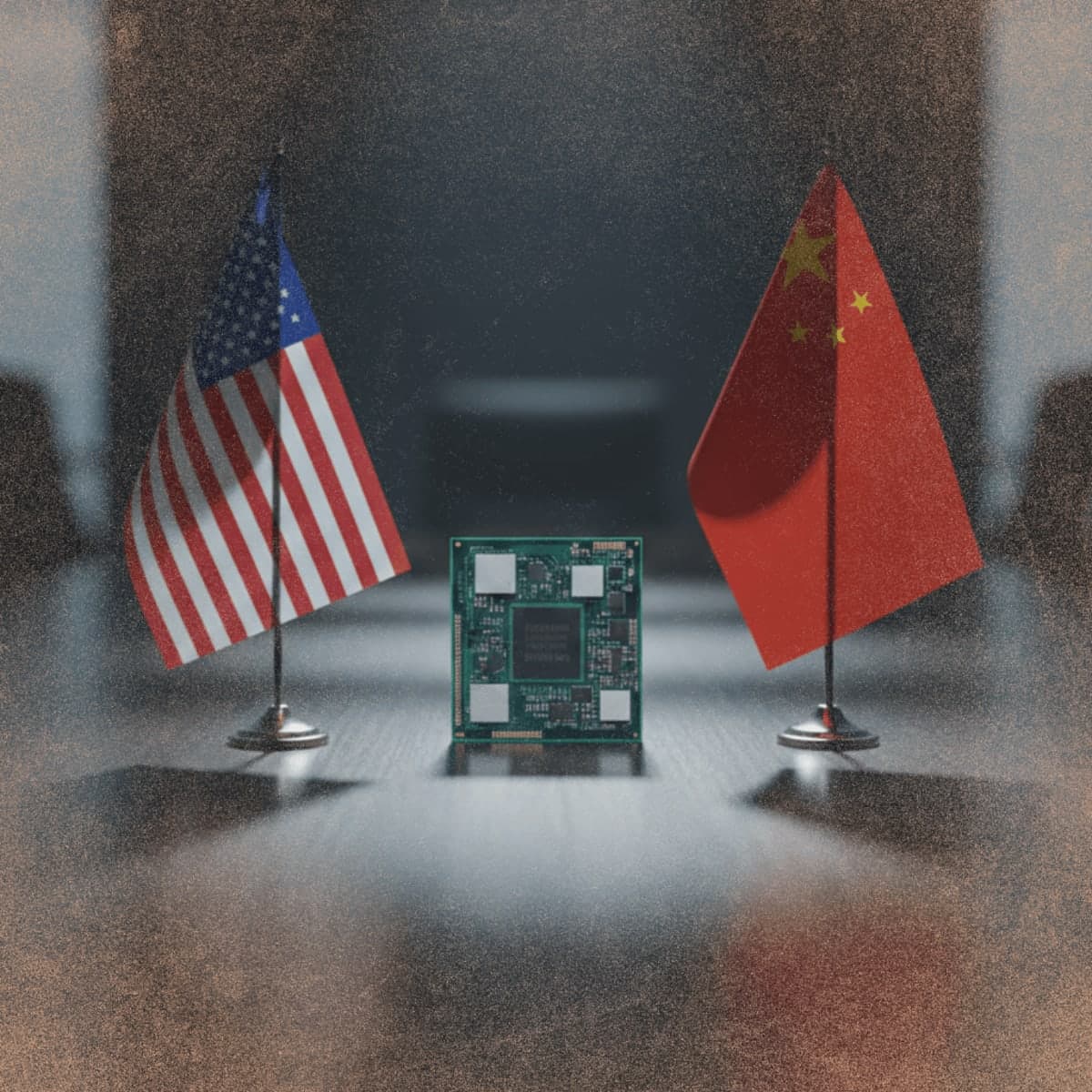
Chinese regulators plan to limit access to Nvidia's H200 AI chips even after President Donald Trump approved their export to China, according to a Financial Times report published Tuesday citing two sources familiar with the discussions. The restrictions would require buyers to justify why domestic chip suppliers cannot meet their needs.
Trump announced the H200 export approval on Monday via Truth Social, calling it a deal that would see the US government collect 25% of chip sales revenue. He said Chinese President Xi Jinping "responded positively" to the arrangement.
How Beijing's Restrictions Would Work
Chinese regulators have been discussing an approval process that would force companies to explain why they cannot use chips from domestic providers like Huawei before purchasing Nvidia's H200, according to the Financial Times. The move mirrors China's earlier decision to discourage purchases of Nvidia's less powerful H20 chip, which was designed specifically to comply with Biden-era export restrictions.
The H200 sits one generation behind Nvidia's current top-tier Blackwell architecture but remains more capable than anything Chinese chipmakers can produce at scale. Analysts at Swissquote Bank noted the approval alone may have limited impact on Nvidia's China business unless other chip lines receive similar clearance.
A Deal That Took Weeks to Negotiate
The Trump administration's decision capped weeks of internal deliberations. Nvidia CEO Jensen Huang met privately with Trump in Washington last week to discuss export controls, though neither party disclosed details of the conversation.
Under the arrangement, chips would ship from Taiwan manufacturing sites to the US for inspection by the Commerce Department's Bureau of Industry and Security, then onward to approved Chinese customers. Intel and Advanced Micro Devices are also eligible for similar terms.
Nvidia's stock rose as much as 2% on the initial news Monday, then pared gains after the Financial Times report. Shares closed up about 0.6%.
GOP Pushback Adds Complications
Some Republican lawmakers expressed immediate concern about the deal. Sen. Lindsey Graham said it raised "alarm bells," while the House Select Committee on China warned Beijing would use H200s to "strengthen its military capabilities and totalitarian surveillance."
The committee added a pointed warning: "China will rip off its technology, mass produce it themselves, and seek to end Nvidia as a competitor."
Why China Might Not Want the Chips Anyway
The restrictions reflect Beijing's broader push for technological self-sufficiency. George Chen, partner at The Asia Group, said Xi's government is unlikely to allow long-term dependence on US semiconductors regardless of what Washington permits.
Huang himself told Bloomberg in May that Huawei's AI semiconductor products are "probably comparable" to the H200. Chinese tech giants Alibaba, Tencent, and Baidu have been developing AI models using stockpiled Nvidia chips combined with local alternatives.
"The US could lift restrictions and authorize H200 sales to China today, only to ban them again tomorrow," one Chinese social media commentator wrote, per the Financial Times. "If China becomes dependent on American chips, it will never possess true security of supply."
The Department of Commerce is finalizing details of the export process. Nvidia said the arrangement "strikes a thoughtful balance that is great for America."