Paul Conyngham, a machine learning engineer in Sydney with zero biomedical training, used ChatGPT, Google DeepMind's AlphaFold, and a university lab to design and produce a personalized mRNA cancer vaccine for his dying rescue dog. The tumor on Rosie's leg shrank by 75% within a month of her first injection in December 2025.
Scientists at UNSW and the University of Queensland confirmed the result. They also confirmed this is a single dog, a single tumor, and precisely zero controlled trials.
How the pipeline actually worked
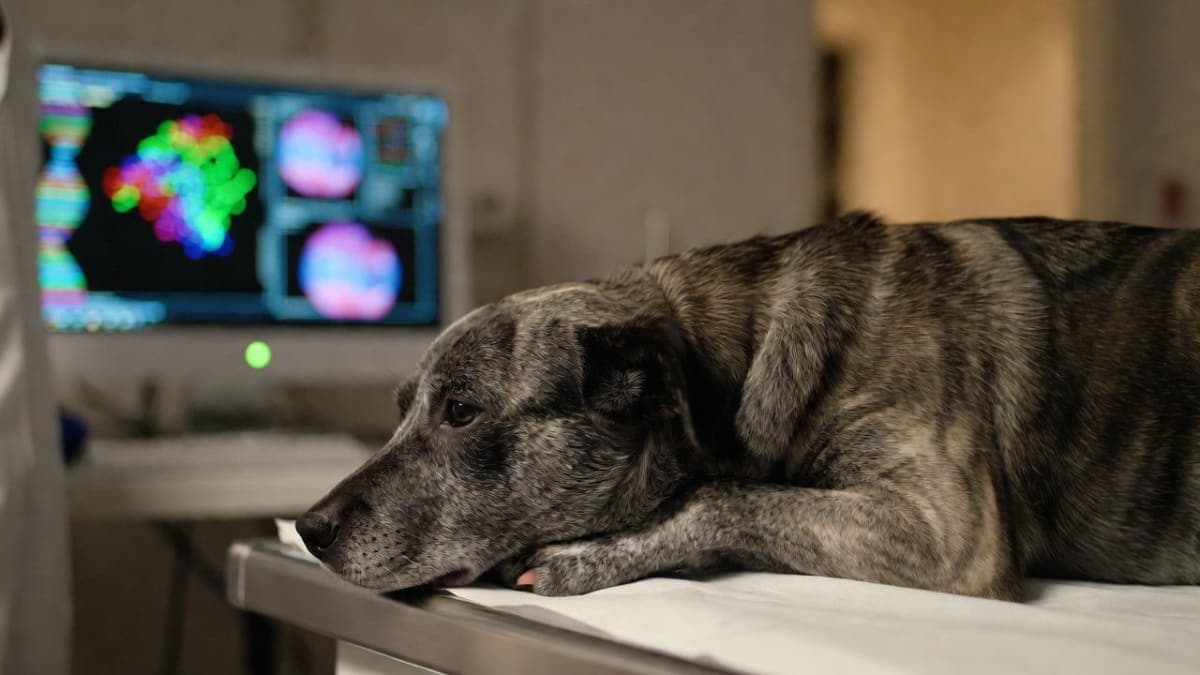
Conyngham adopted Rosie, a Staffordshire Bull Terrier-Shar Pei cross, from a shelter in 2019. By 2024, mast cell tumors had appeared on her back leg. He tried surgery, chemotherapy, immunotherapy. Chemo slowed the spread but nothing shrank the growths. Vets gave her one to six months.
So he did what a data scientist would do. He went to ChatGPT and asked it how to approach canine cancer at the molecular level. The chatbot pointed him toward genomic sequencing and helped him plan a data pipeline: sequence the tumor DNA, compare it against healthy cells, find the mutations, design a vaccine targeting those specific proteins. Conyngham took this plan to UNSW's Ramaciotti Centre for Genomics, where Associate Professor Martin Smith remembers getting the call. He described it as a "weird" request from a private individual looking to sequence his dog.
Smith was skeptical. Then Conyngham came back with a complete analysis. "Paul was relentless," Smith said, and the word "gobsmacked" came up when describing how a non-biologist had identified mutations of interest, run them through AlphaFold to predict protein structures, and matched them to potential drug targets.
The output was a half-page formula for an mRNA sequence. Páll Thordarson, director of the UNSW RNA Institute, took that formula and produced the physical vaccine in under two months. Rachel Allavena at the University of Queensland, who already held ethical approvals for experimental canine immunotherapies, administered the injection.
What the AI did and didn't do
The framing bouncing around social media, that "AI designed a cancer vaccine," is doing a lot of heavy lifting. ChatGPT functioned as a research assistant. It helped Conyngham, who has 17 years of machine learning experience and runs Core Intelligence in Sydney, navigate unfamiliar biomedical literature and plan his analysis steps. AlphaFold predicted the 3D shapes of mutated proteins. Conyngham then wrote his own algorithms to select which neoantigens to target.
But the actual vaccine? That required Thordarson's RNA engineering expertise, Allavena's veterinary oncology credentials, and Smith's genomics lab. The AI compressed months of literature review into days. It did not replace the immunologists.
"It was like holy crap, it worked!" That's Martin Smith, and his reaction captures the genuine surprise among the researchers involved. Kate Michie, a UNSW structural biologist, called it "encouraging that a non-scientist could execute such a pipeline." Encouraging, not conclusive.
The tumor that didn't shrink
Here's the part that most coverage glosses over. Rosie had multiple tumors. One shrank by 75%. At least one other did not respond at all. Conyngham is now sequencing that resistant tumor to figure out why, which means the very first test case already demonstrated a significant limitation of the approach.
This is n=1. One dog, one responsive tumor, no control group, no blinding, no peer-reviewed publication. The institutions are real, the ethical approvals were legitimate, and the tumor reduction is documented in photos spanning November 2025 through March 2026. But a single anecdotal result, however striking, is not clinical evidence.
So why does it matter?
Because of what's happening in human oncology. Moderna and Merck have been running their own personalized mRNA cancer vaccine through clinical trials for years. Their drug, now called intismeran autogene (previously mRNA-4157), works on the same principle: sequence a patient's tumor, identify mutations, build a custom mRNA vaccine. Five-year data published in January 2026 showed a 49% reduction in melanoma recurrence when combined with Keytruda. Eight Phase 2 and Phase 3 trials are underway across melanoma, lung cancer, bladder cancer, and kidney cancer.
Conyngham did a rough version of that pipeline for his dog, using free AI tools and university partnerships, for tens of thousands of dollars over a few months. Moderna and Merck's version, when approved, is expected to cost somewhere between $100,000 and $300,000 per patient. The comparison isn't quite apples to apples (regulatory compliance, manufacturing standards, and human safety protocols account for most of that gap) but it does raise a question about how quickly these tools are lowering the floor on who can attempt this kind of work.
Conyngham is already designing a second vaccine for the resistant tumor. UNSW started new genetic sequencing this week. Rosie, for her part, recently jumped a fence to chase a rabbit, which her owner considers the most meaningful data point of all.