ByteDance officially launched Seedance 2.0, its most capable AI video generation model to date. Built on a dual-branch diffusion transformer architecture, the model generates video and native audio simultaneously, accepting text, image, video, and audio as inputs. It's available now on ByteDance's Jimeng (Dreamina) platform and the Doubao app in China, with a broader global rollout planned for February 24.
But the launch hasn't been smooth.
The voice problem
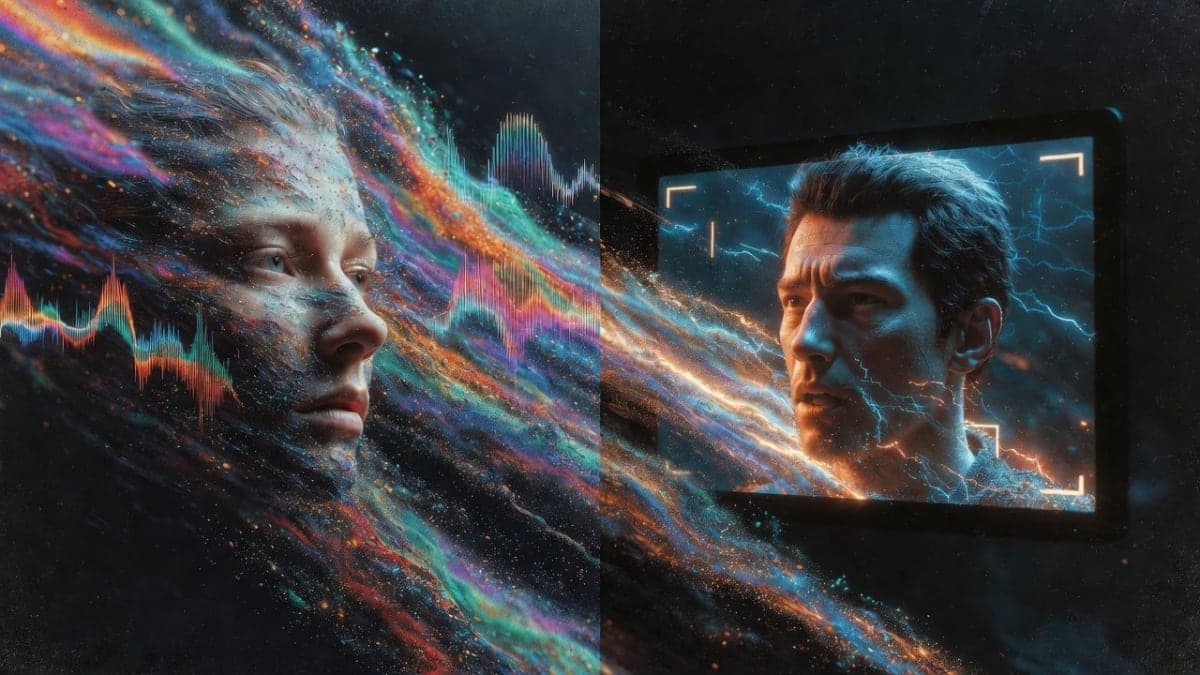
Days before the official announcement, Seedance 2.0 leaked into limited testing and immediately went viral in China. Tech reviewer Pan Tianhong, who runs the channel MediaStorm, uploaded a single static photo of his face. No voice sample. No audio prompt. The model generated a video where his digital clone spoke with what Pan described as his exact timbre, cadence, and intonation.
He called the experience "terror-inducing," which seems fair.
ByteDance moved fast. On February 10, the Jimeng platform announced it would no longer allow real-human-like photos or videos as reference subjects. Both Jimeng and the Doubao app now require live verification, where users record their own face and voice before generating a digital avatar. The fact that the model could infer someone's voice from a photograph alone, presumably from training data correlations, raises questions about what biometric patterns are embedded in ByteDance's training sets that nobody thought to audit before shipping.
What the model actually does
Strip away the controversy and Seedance 2.0 is technically ambitious. According to ByteDance's blog post, the model uses a unified multimodal architecture that jointly generates video and audio rather than stitching them together in post-processing. That matters. Previous approaches, including earlier Seedance versions, generated visuals first and layered audio on top, which produced the kind of lip-sync drift anyone who's watched AI video has learned to spot.
Seedance 2.0 supports up to 9 images, 3 video clips, and 3 audio clips as simultaneous inputs. Users can reference composition, camera movement, motion rhythm, and sound characteristics from source materials. The model outputs up to 15 seconds of multi-shot video at 1080p (ByteDance claims 2K support, though independent confirmation is thin), with dual-channel stereo audio.
The physics modeling is where ByteDance is making the loudest claims. The product page showcases figure skating sequences with synchronized takeoffs and landings, fabric that drapes under gravity, and fluid dynamics that behave like actual fluids. The company says it trained physics-aware objectives that penalize implausible motion during generation. One claim circulating widely: a 90% usable output rate on first generation, compared to an industry average around 20%. That's a striking number if accurate, though ByteDance is measuring itself against its own internal benchmarks using something called SeedVideoBench-2.0, not an independent evaluation.
Where it sits in the field
The AI video generation race has gotten crowded. OpenAI's Sora, Google's Veo 3, Runway's Gen-4, and Kuaishou's Kling all compete for roughly the same creator market. Seedance 2.0's native audio co-generation is a genuine differentiator, as most competitors treat audio as a separate pipeline. The architecture builds on work described in the Seedance 1.5 Pro paper, which detailed the dual-branch diffusion transformer approach, though ByteDance hasn't published a dedicated technical paper for 2.0 yet.
ByteDance has one structural advantage none of its competitors can replicate: it operates TikTok and Douyin, the world's dominant short-form video platforms. The feedback loop between a platform that processes billions of videos and the team training video generation models is not theoretical. ByteDance knows what makes video compelling because it has the data to prove it.
Still, international access remains a mess. Jimeng requires a Chinese phone number and the platform is congested enough that free users report multi-hour queues. The BytePlus Playground offers limited testing without an account, and Dreamina's international version doesn't yet support Seedance 2.0. A public API hasn't launched. For developers outside China, "available now" is generous.
What ByteDance isn't saying
The official launch post is refreshingly honest about limitations in places: multi-person lip sync isn't reliable, text rendering needs work, and multi-subject consistency breaks down in complex scenes. ByteDance's own evaluation admits that "further improvements remain underway" in fine-grained stability and hyper-realism.
What the post doesn't address is the voice-cloning incident beyond vague references to "responsibility." The ability to reconstruct someone's voice from a photograph suggests the model learned correlations between facial features and vocal characteristics from training data, training data that presumably included paired audio-visual content from ByteDance's platforms. Whether users of those platforms consented to their biometric patterns being used this way is a question ByteDance hasn't answered publicly.
Seedance 2.0's full global rollout via Dreamina and CapCut integration is targeted for February 24, 2026, with API access through BytePlus expected around the same time.