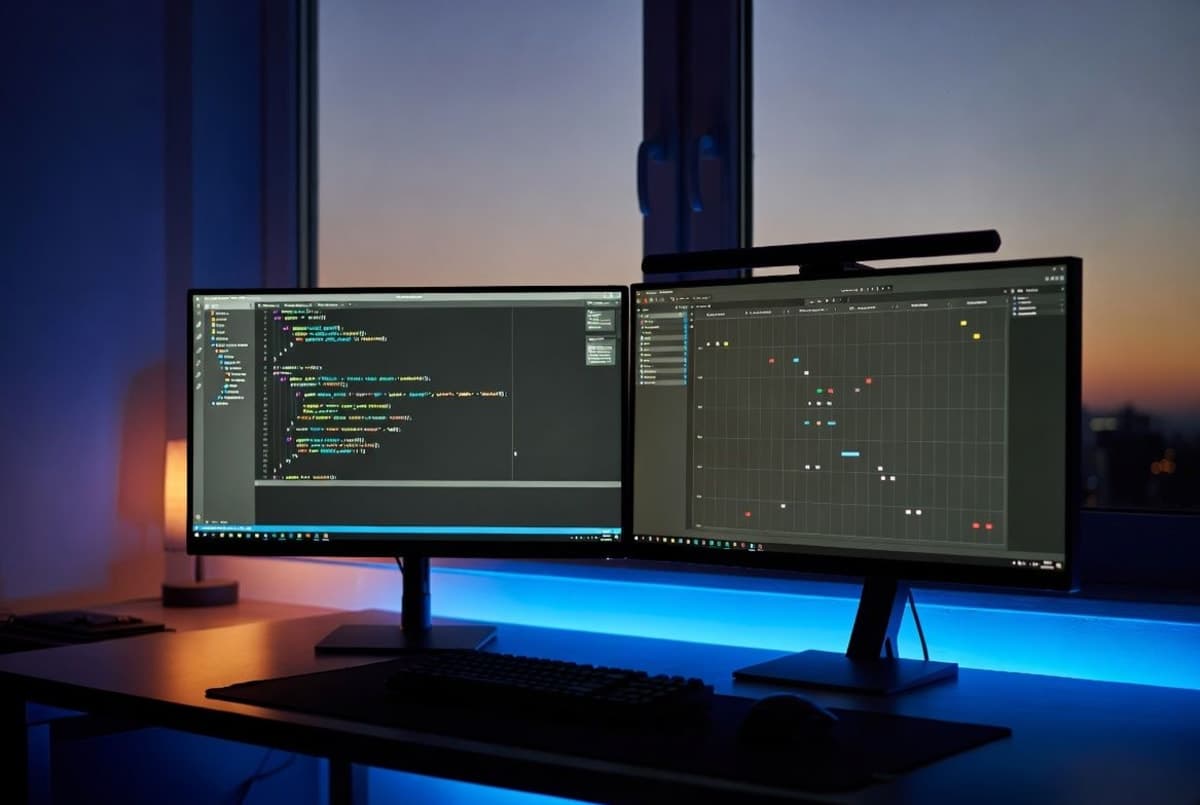
Anthropic and Cerebral Valley are running a week-long virtual hackathon from February 10 through 16, timed to Claude Code's first anniversary. The prize: $100,000 in Claude API credits for the winner, plus an invitation to demo at an in-person birthday party in San Francisco on February 21. The whole thing runs on Opus 4.6, which Anthropic released three days ago.
The timing here is not subtle. Claude Code launched as a research preview in February 2025, a simple terminal tool for chatting with Claude, editing files, and running bash commands. Twelve months later it is, by Anthropic's own accounting, a billion-dollar-run-rate product that counts Netflix, Spotify, and Salesforce among its enterprise clients. A birthday party hackathon is the kind of thing you do when you want to remind everyone how far you've come.
The structure
Each of the 500 accepted participants gets $500 in Claude API credits to build for the week. Teams max out at two people. Six judges from the Claude team evaluate submissions: Boris Cherny, Cat Wu, Thariq Shihpar, Lydia Hallie, Ado Kukic, and Jason Bigman. Entry is by application only through Cerebral Valley's platform, and applications are now closed (or close to it, given the event starts tomorrow).
The brief is deliberately open-ended. Anthropic wants agents, new workflows, "problems we haven't even imagined." That vagueness is both a feature and a marketing choice. Hackathons with loose prompts tend to produce more shareable demos.
Why Opus 4.6 matters for this
Opus 4.6 shipped on February 5 with a 1-million-token context window and a new "agent teams" feature that lets multiple Claude instances coordinate on a single project in parallel. According to TechCrunch's reporting, Scott White, Anthropic's Head of Product, compared the feature to having a team of humans splitting a workload.
That context window is the real unlock for a hackathon setting. Previous Opus models topped out at 200K tokens, which meant developers working with large codebases had to get creative with chunking. A million tokens is enough to ingest an entire mid-sized project and reason across it. Whether participants can actually leverage that in a week of hacking remains to be seen. Building something that uses a million-token window well is a different skill than building something that uses 200K well.
And the pricing hasn't changed: $5 per million input tokens, $25 per million output tokens. So those $500 credits go further than you might expect for prototyping, but agent teams burning through parallel requests could eat through credits fast.
The Cerebral Valley connection
Cerebral Valley started in early 2023 as a nickname for the cluster of AI startups and hacker houses around Hayes Valley in San Francisco. Co-founded by Ivan Porollo, it has since grown into something between a community and a business, with a newsletter reaching over 40,000 subscribers, hackathons with partners like Mistral and OpenAI, and enterprise event services. Their LinkedIn page mentions a fintech hackathon with Anthropic, Rogo, and UBS just last year.
For Anthropic, partnering with Cerebral Valley gives the hackathon a built-in distribution channel to exactly the developer audience they want. For Cerebral Valley, co-hosting with Anthropic on the day their flagship coding product turns one is a credibility play. Both sides get what they need.
What's actually at stake
The $100K prize is in API credits, not cash. That matters. Credits tie winners deeper into the Anthropic ecosystem. It is a developer acquisition strategy wrapped in a competition, which is fine, every company does this, but worth noting.
The more interesting bet is the February 21 demo event. Winners get to present in San Francisco to what will presumably be a room full of Anthropic engineers and Cerebral Valley's network of founders and investors. For a two-person team building something genuinely novel with Claude Code, that exposure could be worth more than the credits.
But I'm curious what the submissions will actually look like. Claude Code's growth has been driven partly by what Wikipedia calls "vibe coding," a wave of non-programmers using the tool over the winter holidays. A curated hackathon with 500 vetted developers is the opposite of that. Anthropic seems to want to showcase the ceiling, not the floor.
Whether that ceiling has moved meaningfully with Opus 4.6's agent teams, or whether it is mostly a context window bump with a coordination feature bolted on, is the question a week of intense building might actually answer.