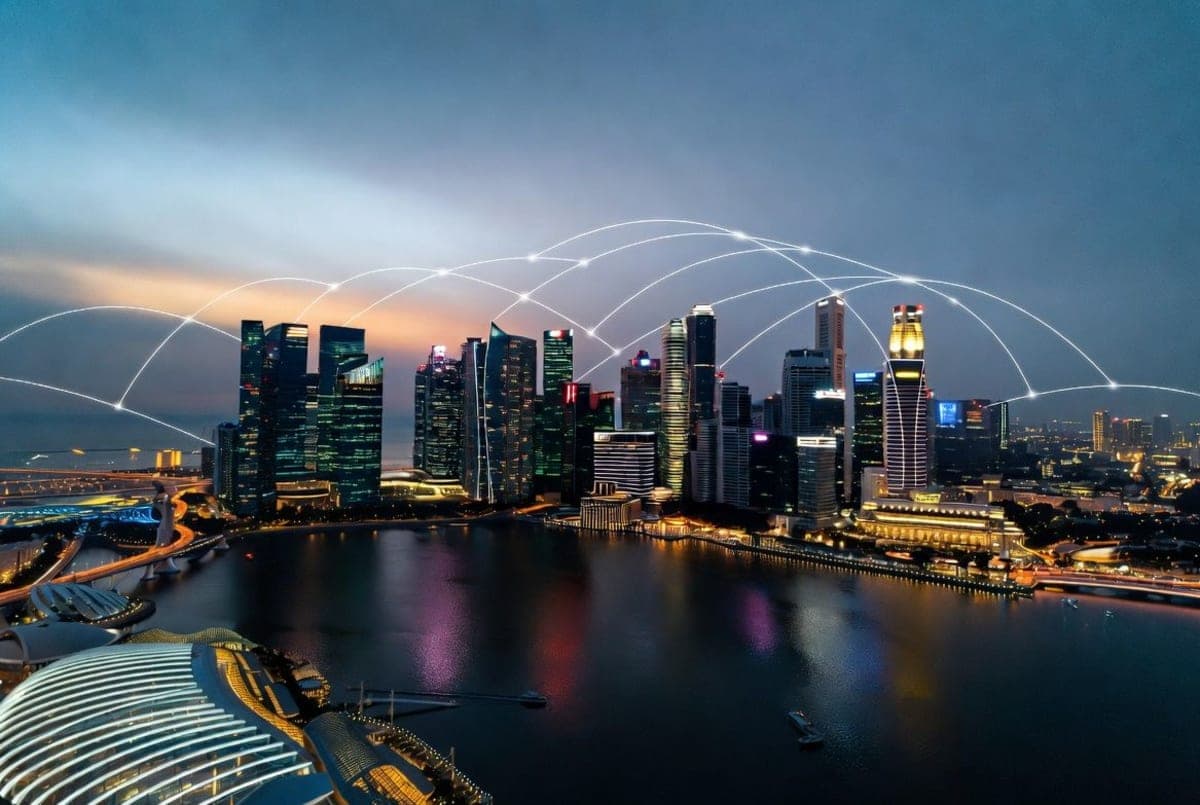
Singapore has stopped pitching itself as a bridge between Washington and Beijing. AI companies have started using it as a wall. According to a Reuters analysis published Friday, Anthropic plans to open a Singapore office, joining OpenAI, Meta's Superintelligence Labs, and Google's DeepMind in a city-state increasingly used to keep both governments at bay.
The hedge
The pitch is straightforward: park your headquarters, your engineers, and your IP in Singapore, and clients stop worrying about whether Beijing will demand your data or Washington will block your chips. Kerry Goh, who runs Kamet Capital, told Reuters that setting up there "gives a lot of comfort" to international buyers, which is the sort of thing investors say when they need to close deals with skittish customers. Goh's firm has put more than $8 million into Topview, an AI video startup founded by two former Alibaba executives who picked Singapore precisely because their product isn't sold in China.
Anthropic's connection to Singapore already runs deeper than a planned office. Its $30 billion round in February was co-led by GIC, the Singaporean sovereign wealth fund, at a $380 billion valuation. Anthropic declined to comment on the office plans.
For US firms, the appeal is less geopolitical and more bureaucratic. Trump's overhaul of the H-1B visa program has made it harder to bring engineers into the United States, while Singapore's employment passes can clear in three days. Indonesian engineer Vincent Tatan moved there after his US employer started, then cancelled, his green card application. "I can fight for it, but is it worth the fight and the wait?" Tatan asked Reuters. That question is being asked quietly in a lot of HR departments right now.
Then Manus happened
The strategy worked until it didn't. Late last year, Meta acquired Manus, a Chinese AI agent startup that had relocated its headquarters to Singapore, in a deal reported at around $2 billion. By March, Beijing was reviewing whether the sale violated outbound investment and tech export rules. Co-founders Xiao Hong and Ji Yichao were told they could not leave China while the review continued, the Financial Times reported. China also told MiroMind, whose parent is Chen Tianqiao's Shanda, not to send talent abroad after the startup opened offices in Singapore, Japan, and the US.
Venture circles have a name for the maneuver: "Singapore washing." Setting up a legal entity on the island and hiring a few local staff is not the same as moving a company. Tan Yinglan of Insignia Ventures Partners told Reuters that for a Chinese founder to be genuinely insulated, they need to give up their Chinese passport, stop employing engineers in China, and move revenue, data, and headquarters out. Most haven't.
"Given increasing demands from the U.S. and Chinese governments to keep their tech stacks separate, there is a risk that Singapore is seen as a grey space for technology transfers."
That is Chong Ja Ian, a political scientist at the National University of Singapore, and he is essentially predicting that Singapore's neutrality has a shelf life. Whether it runs six months or six years depends on which superpower decides first that a Singaporean address looks more like evasion than relocation.
What's next
Legal AI startup Harvey opens its Singapore office in June, joining the parade. The bigger test arrives whenever Beijing decides what to do next about Manus. That answer will tell every Chinese AI founder whether the Singapore route is still worth the airfare.