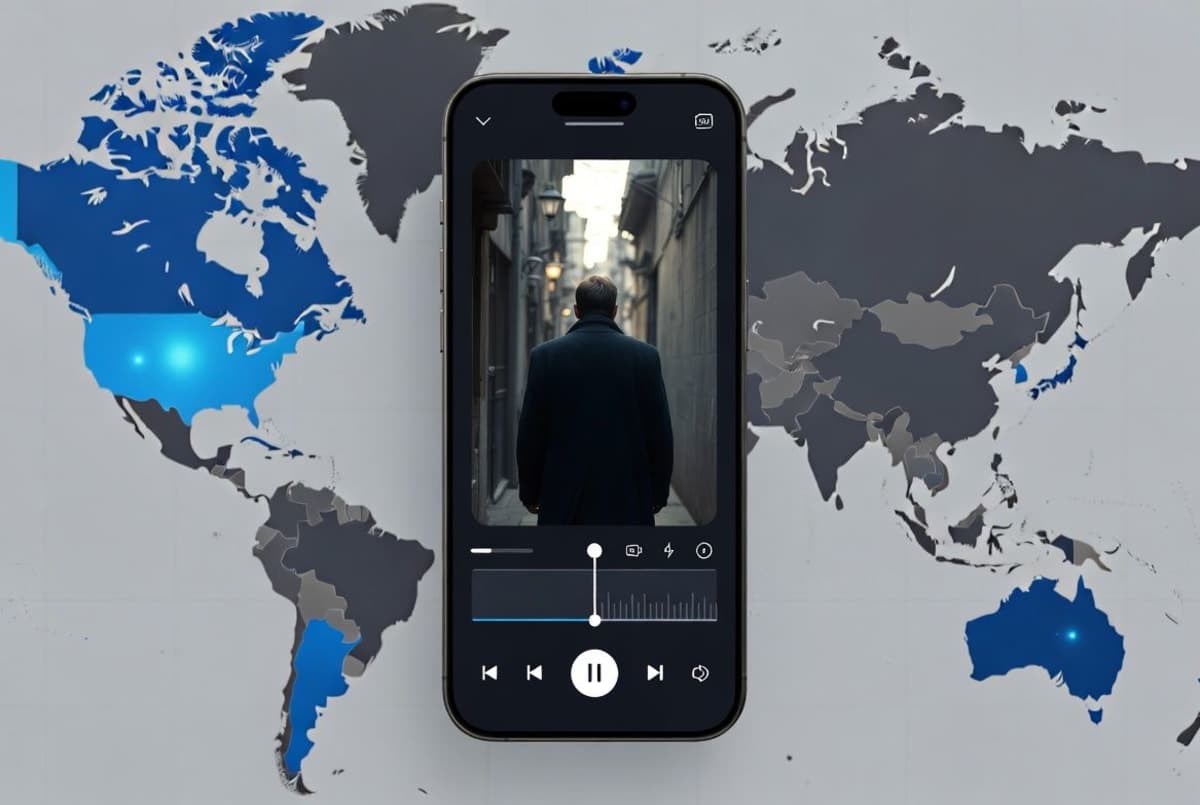
ByteDance is expanding access to its Seedance 2.0 AI video generator through CapCut, pushing into additional global markets just days after OpenAI pulled the plug on its competing Sora app. The phased rollout, which began on March 26 with paid users in Brazil, Indonesia, Malaysia, Mexico, the Philippines, Thailand, and Vietnam, has since grown to include parts of Africa, South America, and the Middle East. Reports from CapCut's social channels suggest Europe, Canada, Australia, New Zealand, and South Korea may be next in line, though those specific regions haven't been confirmed by CapCut's official newsroom.
The timing here is almost too neat. OpenAI killed Sora on March 24, citing compute costs and a pivot to robotics. Two days later, ByteDance started rolling out Seedance 2.0 inside its editing platform. Coincidence? Sure. But the competitive dynamics are hard to ignore.
The Sora-shaped hole
Sora's collapse was spectacular even by AI product standards. Downloads fell roughly 66% from a November peak of about 3.3 million to just over 1.1 million by February, according to Appfigures data cited by TechCrunch. The app generated a total of $2.1 million in lifetime revenue from in-app purchases. Against estimated inference costs that one analysis pegged at $15 million per day at peak, those economics were never going to work. Bill Peebles, OpenAI's own head of Sora, admitted on social media that the numbers were "completely unsustainable."
The Disney deal collapsed too. What was supposed to be a $1 billion investment and three-year licensing agreement for 200 characters across Disney, Marvel, Pixar, and Star Wars properties? Gone. Disney said it "respects OpenAI's decision to exit the video generation business," which is corporate-speak for being blindsided. Variety reported that Disney's tech team learned about the shutdown the night before the announcement.
So now the consumer AI video market belongs largely to ByteDance and Google. And ByteDance, unlike OpenAI, isn't building a standalone social app. It is embedding Seedance directly into CapCut, which already has millions of active creators. That distribution advantage matters.
How we got here (the copyright mess)
Seedance 2.0 launched in China on February 12 and immediately became a copyright flashpoint. An Irish filmmaker named Ruairi Robinson posted a 15-second clip of AI-generated Tom Cruise fighting Brad Pitt on a rooftop. "This was a 2 line prompt in seedance 2," he wrote on X. The clip went viral with over 1.2 million views.
Hollywood responded with the full legal arsenal. The MPA's Charles Rivkin accused ByteDance of engaging in unauthorized use of copyrighted works "on a massive scale." Disney, Paramount, Warner Bros., Netflix, and Sony all sent cease-and-desist letters. The Hollywood Reporter confirmed the MPA sent its first-ever cease-and-desist to a major generative AI company, calling copyright infringement "a feature, not a bug" of the video generator. SAG-AFTRA piled on. Japan launched its own investigation over anime characters showing up in generated clips.
ByteDance paused the global rollout in mid-March. The company told the BBC it "respects intellectual property rights" and was adding safeguards. And now, less than two weeks later, here it is launching again.
Do the guardrails actually work?
ByteDance claims it has added restrictions that block video generation from images or videos containing real faces. CapCut says it blocks unauthorized generation of copyrighted characters. Content gets invisible watermarks and C2PA Content Credentials. A third-party red-teaming partner tested the model before relaunch. That all sounds reasonable on paper.
But TechCrunch raised a good point in its coverage: if the restrictions were working well enough, the model would already be available in the United States. It isn't. And one TechStory report noted that red-teaming tests suggest creative prompting can still bypass the filters to create what they called "likeness-adjacent" characters. I'm not sure what to make of that phrase, but it doesn't exactly scream problem solved.
The US and India remain excluded from the rollout entirely. The EU AI Act's documentation requirements for training data may be part of the reason for the European delay, though ByteDance hasn't said so directly. ByteDance still hasn't disclosed what data was used to train the model.
What Seedance actually does
The model generates 15-second video clips from text prompts across six aspect ratios. It handles audio-visual synchronization natively, so you get matching sound effects and ambient noise without post-production. It accepts multimodal inputs: up to nine reference images, three videos, and three audio clips per project. The character consistency across scenes, what ByteDance calls solving the "identity drift" problem, is apparently the headline technical improvement over the first version.
Within CapCut, it powers the AI Video and Video Studio features. ByteDance also plans to bring it to Dreamina, its standalone AI generation platform, and Pippit, its marketing tool. In China, the model has been available through the Jianying app since February.
The geographic strategy
Look at where ByteDance is launching first: Southeast Asia, Latin America, Africa, the Middle East. These are regions with large creator populations, growing social media markets, and (not coincidentally) less litigious entertainment industries than Hollywood. The US, where the MPA has its sharpest teeth, stays locked out. Europe, with its AI Act compliance requirements, gets a slower approach.
Whether ByteDance can eventually negotiate licensing deals with studios the way OpenAI tried with Disney remains an open question. But given that every major studio has already sent ByteDance legal threats, the path to a friendly arrangement looks narrow. And unlike OpenAI, ByteDance hasn't shown much interest in paying for licenses. Its playbook with TikTok has always been to grow fast, deal with legal problems later.
The next few months will tell us whether Seedance 2.0's safeguards hold up under real-world use, and whether Hollywood's legal threats carry actual weight outside the US. The FTC and EU regulators are watching. ByteDance, for its part, seems content to keep expanding one region at a time while avoiding the markets where it would face the most friction. Not exactly a profile in courage, but as a business strategy, it's hard to argue with.