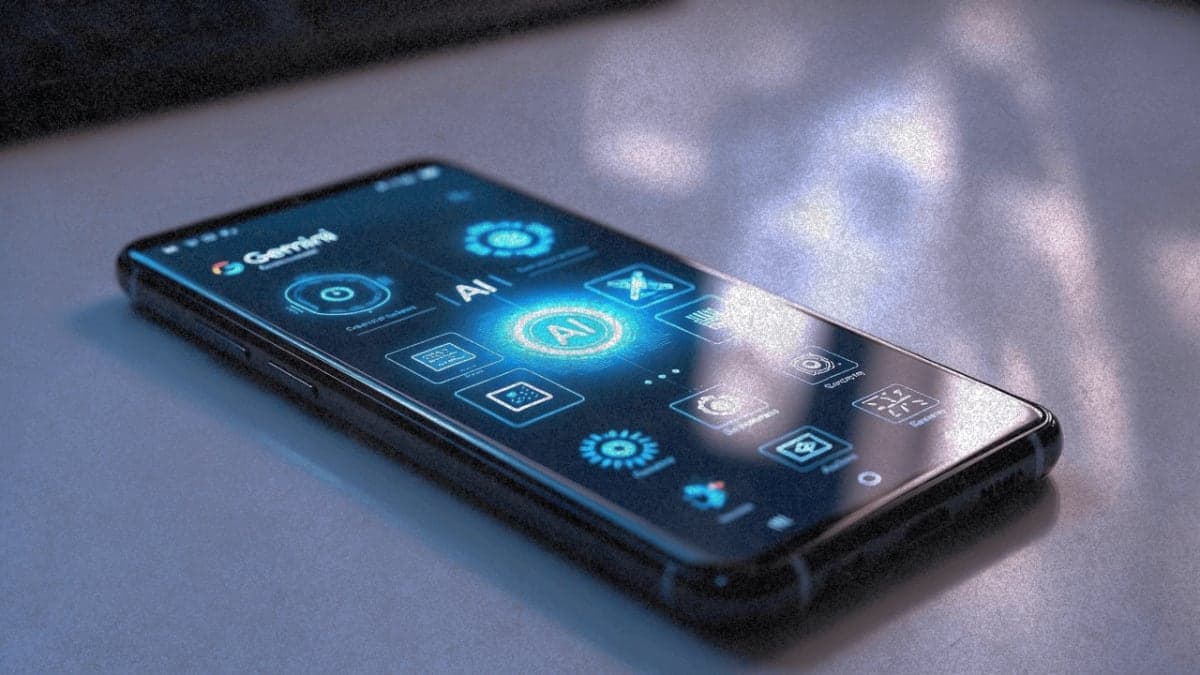
Samsung Electronics will deploy Google's Gemini AI across 800 million mobile devices by the end of 2026, doubling last year's 400 million. T.M. Roh, who became co-CEO in November, confirmed the target in a Reuters interview at CES on Sunday.
The Google play
So here's the thing about this announcement: it's less about Samsung than it is about Google.
As the world's largest Android device maker, Samsung's commitment essentially hands Gemini a distribution channel that neither OpenAI nor Anthropic can touch. 800 million devices isn't a product launch. It's an installed base. And when you're locked in a knife fight with Sam Altman over consumer AI adoption, installed base wins.
Roh was unusually candid about Samsung's position: the company admits it lacks sufficient in-house AI capabilities compared to industry leaders. That's a stark admission from a company that's historically preferred to build rather than buy. But the numbers don't lie. Galaxy AI brand awareness jumped from 30% to 80% in a single year, according to company surveys. Whatever Samsung is doing with Google, users are noticing.
The Apple problem
Apple, meanwhile, continues to struggle with its AI narrative.
The "more personalized Siri" that Apple showed off at WWDC 2024? Still not here. CNBC reported in March that Apple pushed those features to 2026, roughly 18 months after they were first announced. Bloomberg's Mark Gurman says the target is now spring 2026, assuming development "proves promising" over the next few weeks.
That's a lot of conditionals for a feature that was already used in iPhone 16 marketing.
And Apple's AI team has been bleeding talent. John Giannandrea, the machine learning chief, is retiring this year. Meta poached the company's AI design lead. The new Siri keeps getting delayed while the old one keeps embarrassing itself (remember those notification summaries that were rewriting news headlines?).
Samsung's edge isn't just the Google partnership. It's timing. Apple is playing catch-up with a product that doesn't exist yet while Samsung is shipping features now.
But wait, there's Perplexity
Here's where it gets interesting.
Samsung isn't going all-in on Google. Leaks from the One UI 8.5 beta show that Bixby, Samsung's long-neglected assistant, is already pulling answers from Perplexity. The partnership appears set to launch officially with the Galaxy S26 next month.
The arrangement mirrors what Apple did with ChatGPT and Siri: let the startup handle the heavy lifting while the native assistant handles basic device controls. Screenshots show Perplexity's answers appearing with source citations in the Bixby interface, though users might not even realize another AI is involved.
Samsung confirmed back in July that Galaxy AI would support multiple assistants including Gemini. Perplexity gets the search queries. Gemini powers the broader feature set. Bixby does... whatever Bixby does.
It's a hedged bet, but probably a smart one. Why be dependent on any single AI provider when you control the hardware?
The money situation
Roh acknowledged that Samsung isn't immune to the global memory chip shortage. Component costs are rising. Device prices might follow. The memory semiconductor crisis is squeezing the mobile business's margins even as it boosts Samsung's chip division.
Separately, Samsung announced in November it would invest 450 trillion won, roughly $310 billion, in domestic operations over five years. Most of that goes toward semiconductors and AI data centers. The company is building a fifth production line at its Pyeongtaek plant, scheduled for 2028.
It's a lot of money. But Samsung clearly believes the AI distribution play is worth protecting.
What happens next
Galaxy S26 launches in late February. That's when we'll see whether the Perplexity-powered Bixby actually works, and whether Samsung's aggressive Gemini rollout translates into features users care about.
Apple's revamped Siri is supposedly coming in spring 2026. Apple is expected to adopt Google's Gemini model for some capabilities, according to The Information, reflecting an internal view that large language models are becoming commoditized.
Which is probably the real story here. Samsung and Apple are both betting that the AI layer will matter less than distribution and device integration. Google wins either way.