China submitted 2,370 papers to the 2025 Neural Information Processing Systems conference, trailing the United States by just 80 papers. The US leads with approximately 2,450 accepted papers, according to data compiled by papercopilot.com from the conference running December 2-7 in San Diego.
The gap between the two countries is now less than 5%. The United Kingdom placed third with roughly 500 papers, less than a quarter of either leader's total.
The Rest of the Field Falls Far Behind
Singapore, Germany, and South Korea each contributed between 200 and 400 papers. Every other country trails those numbers by a wide margin.
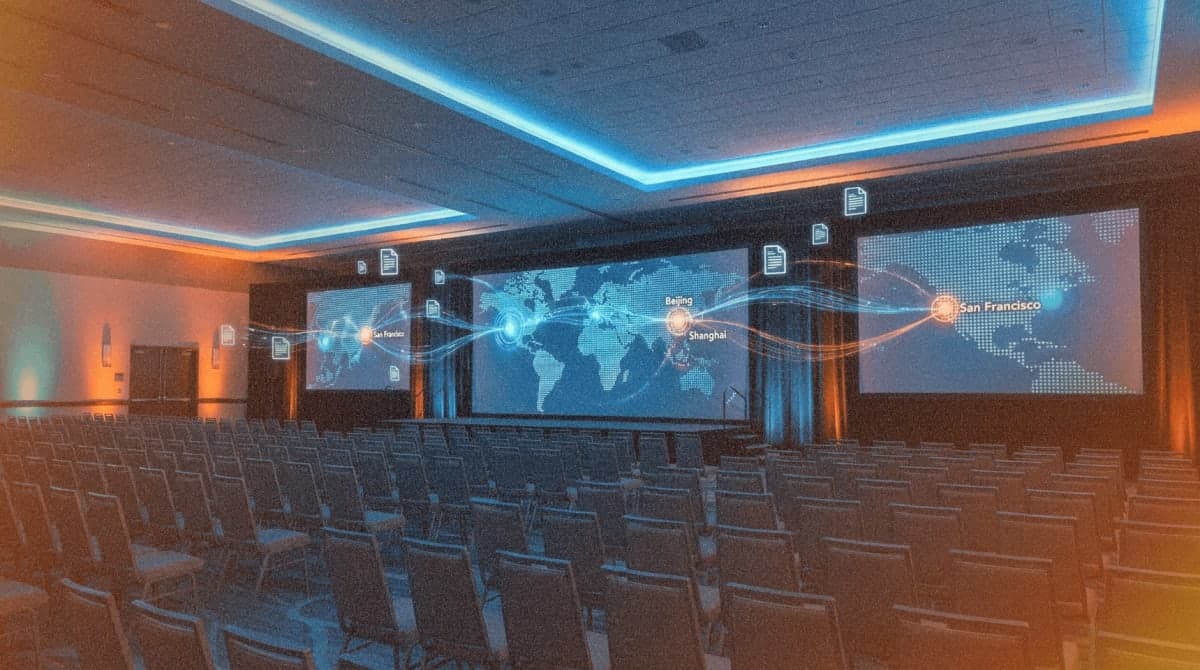
An independent analysis by AI World, a research group affiliated with the Centre for European Policy Studies, examined 100% of accepted papers from the OpenReview platform. Their findings confirm that Beijing, Shanghai, and San Francisco now function as the three dominant hubs for AI research that reaches this level.
Beyond China and the US, several institutions punch above their national weight. The Mohamed bin Zayed University of Artificial Intelligence (established in Abu Dhabi in 2019), Singapore's Nanyang Technological University and National University of Singapore, and South Korea's KAIST all placed significant numbers of papers.
Best Papers Show Chinese Researchers at the Top
The conference named four best papers this year. Researchers from Alibaba's Qwen team, Princeton, and the University of Washington led three of them. A paper titled "Faster R-CNN," co-authored by He Kaiming, Sun Jian, Ren Shaoqing, and Ross Girshick, received the "Test of Time Award" recognizing its lasting influence since its original publication.
This is the 39th NeurIPS and the first to run as a dual-city conference, with sessions in both San Diego and Mexico City. Both locations sold out their registrations.
New Track Addresses Societal Impact
NeurIPS added a position paper track this year for submissions examining how AI systems affect economies, institutions, and daily life. The AI World analysis noted a pattern: many leading authors now hold both academic posts and research positions at major AI labs, blurring the line between academic publishing and commercial development.
NVIDIA CEO Jensen Huang has previously stated that Chinese researchers now represent 50% of AI researchers globally and that China receives 70% of AI patents. China is also adding electricity capacity faster than the US, a factor that could affect AI infrastructure in coming years.
NeurIPS 2026 dates and location have not been announced.