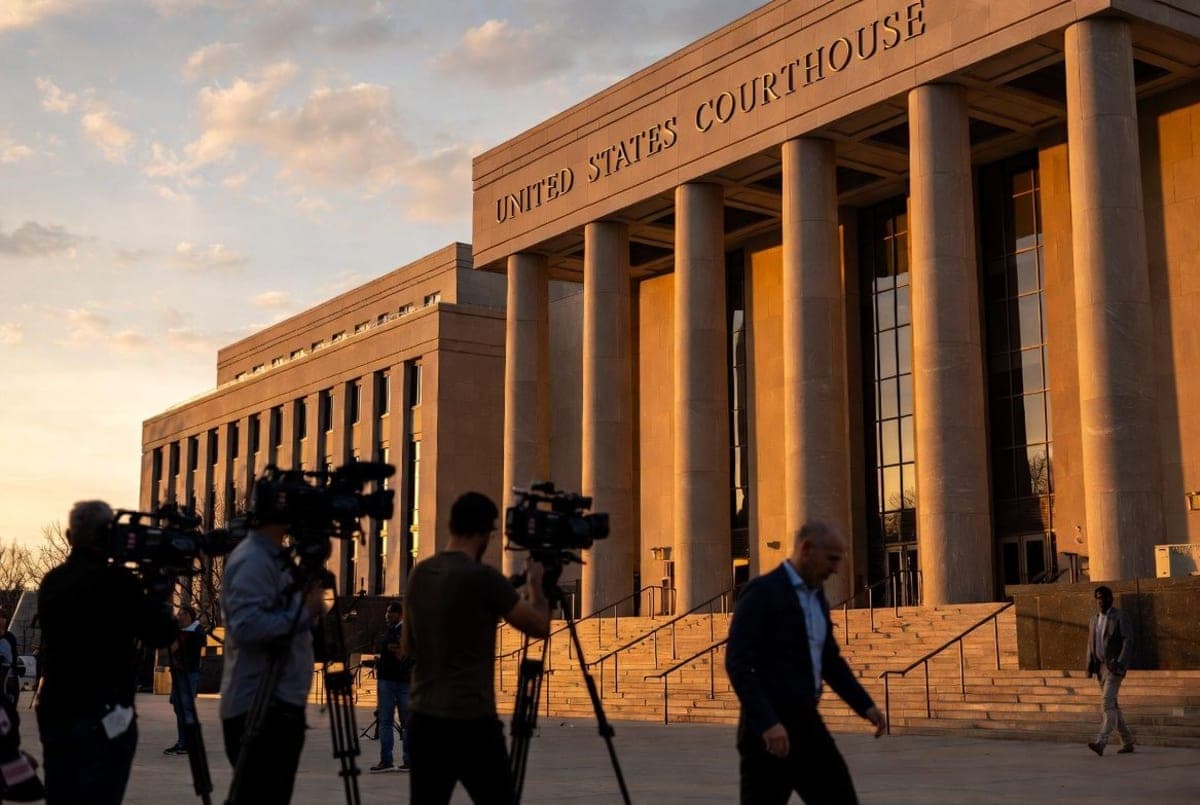
A federal jury in Oakland sided with OpenAI and Sam Altman on Monday, throwing out Elon Musk's lawsuit after about 90 minutes of deliberation. Musk had sought as much as $134 billion in disgorged profits, the removal of Altman and President Greg Brockman, and a forced unwinding of OpenAI's 2025 restructuring. He got none of it.
The technicality Musk hates
The jury didn't actually rule on whether Altman and Brockman "stole a charity," as Musk has put it. They ruled on timing. Musk filed the suit in February 2024, but the nine-member advisory panel found he was aware of the alleged breach as early as 2021, which puts him well outside California's three-year statute of limitations for breach of charitable trust claims.
Judge Yvonne Gonzalez Rogers, who didn't strictly need the jury's input since the panel was advisory, adopted the finding anyway. "I was prepared to dismiss on the spot," she said in court, per CNBC's coverage. The substantive question, whether OpenAI's for-profit pivot betrayed its founding promise, never went to a vote.
That suits Musk's framing. Within hours he was on X calling the decision a "calendar technicality" and Gonzalez Rogers a "terrible activist" judge. His lead attorney Marc Toberoff confirmed they will appeal. The framing isn't wrong, technically. It's also what every plaintiff says after losing on procedural grounds, which is worth remembering.
Microsoft walks too
Microsoft's exit was simpler. Its alleged role, "aiding and abetting" OpenAI's claimed breach, collapsed the moment the underlying breach claim did. The roughly $13 billion the software giant invested in OpenAI between 2019 and 2023 is no longer at legal risk in this proceeding.
OpenAI's lawyer William Savitt was less restrained than Microsoft's, calling the suit "a hypocritical attempt to sabotage a competitor." That competitor is xAI, which Musk founded in 2023 (a year and a half before filing this case) and which has since been folded into SpaceX. The portrait Savitt painted, of a man who wanted control, didn't get it, watched the company succeed without him, and sued, is not entirely unfair given the evidence that surfaced at trial.
About that timing
Monday's verdict lands days before SpaceX's public S-1 prospectus is expected to hit the SEC's EDGAR database, possibly as soon as May 21. Musk merged xAI into SpaceX in February at a $1.25 trillion combined valuation, with the rocket business at $1 trillion and the AI unit at $250 billion. The combined entity is targeting roughly $1.75 trillion at its planned June IPO. Carrying a fresh multi-billion-dollar judgment into that prospectus would have been an awkward disclosure for underwriters.
The trial itself ran three weeks from April 27, with testimony from Altman, Brockman, Microsoft CEO Satya Nadella, OpenAI cofounder Ilya Sutskever, and Musk himself. Brockman's personal diaries were entered as evidence. So were texts between Musk and Mark Zuckerberg about possibly buying OpenAI together, which is the kind of detail you only get through discovery and which says more about the two men than the original complaint did.
Musk's appeal goes to the Ninth Circuit next. The SpaceX prospectus hits within days regardless.