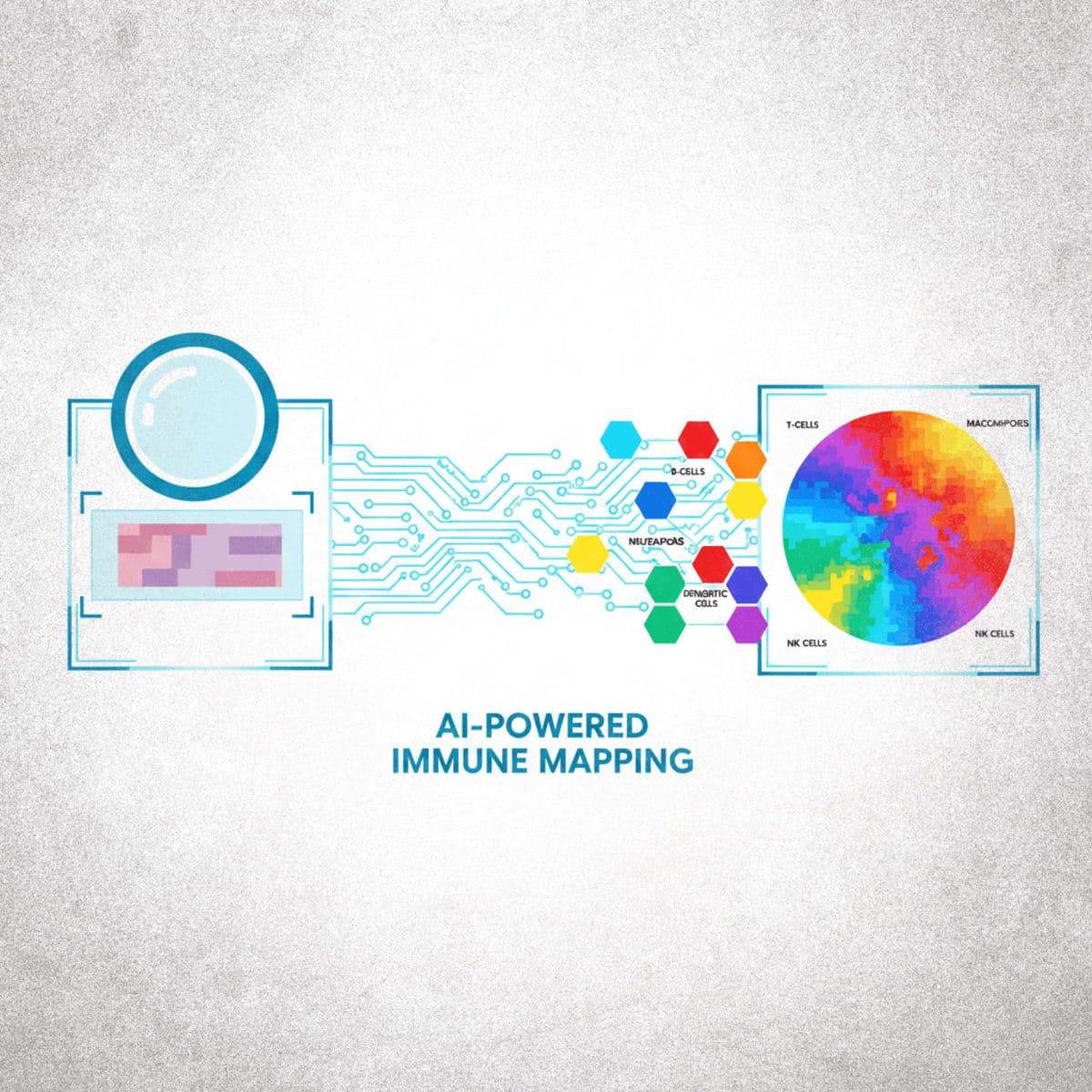
Microsoft, Providence Health, and the University of Washington have released GigaTIME, an AI model that extracts tumor immune data from routine pathology slides. The tool, published in Cell on December 9, is now open-source on Hugging Face and Microsoft Foundry Labs.
The system learned from 40 million cell samples with paired imaging data from Providence. Researchers then applied it to 14,256 cancer patients across 51 hospitals, generating roughly 300,000 virtual tumor images spanning 24 cancer types and 306 subtypes. Standard H&E (hematoxylin and eosin) tissue slides cost $5 to $10 each. Multiplex immunofluorescence imaging, which GigaTIME simulates, typically runs into thousands of dollars per sample.
The virtual population uncovered 1,234 statistically significant connections between immune cell states and clinical biomarkers like tumor mutation burden and KRAS mutations. Independent validation on 10,200 patients from The Cancer Genome Atlas showed strong concordance, with a Spearman correlation of 0.88 for virtual protein activations across cancer subtypes.
"GigaTIME is about unlocking insights that were previously out of reach," said Carlo Bifulco, chief medical officer of Providence Genomics. The model builds on GigaPath, a pathology foundation model the same team published in Nature earlier this year. Microsoft says GigaTIME represents a step toward "virtual patient" digital twins that could eventually forecast disease progression and treatment response.
The Bottom Line: Population-scale tumor immune analysis just became accessible to any research lab with archived tissue slides.
QUICK FACTS
- Trained on 40 million cells from Providence Health
- Generated 300,000 virtual images from 14,256 patients
- Covers 24 cancer types and 306 subtypes
- Published in Cell on December 9, 2025
- Open-sourced on Hugging Face and Microsoft Foundry Labs