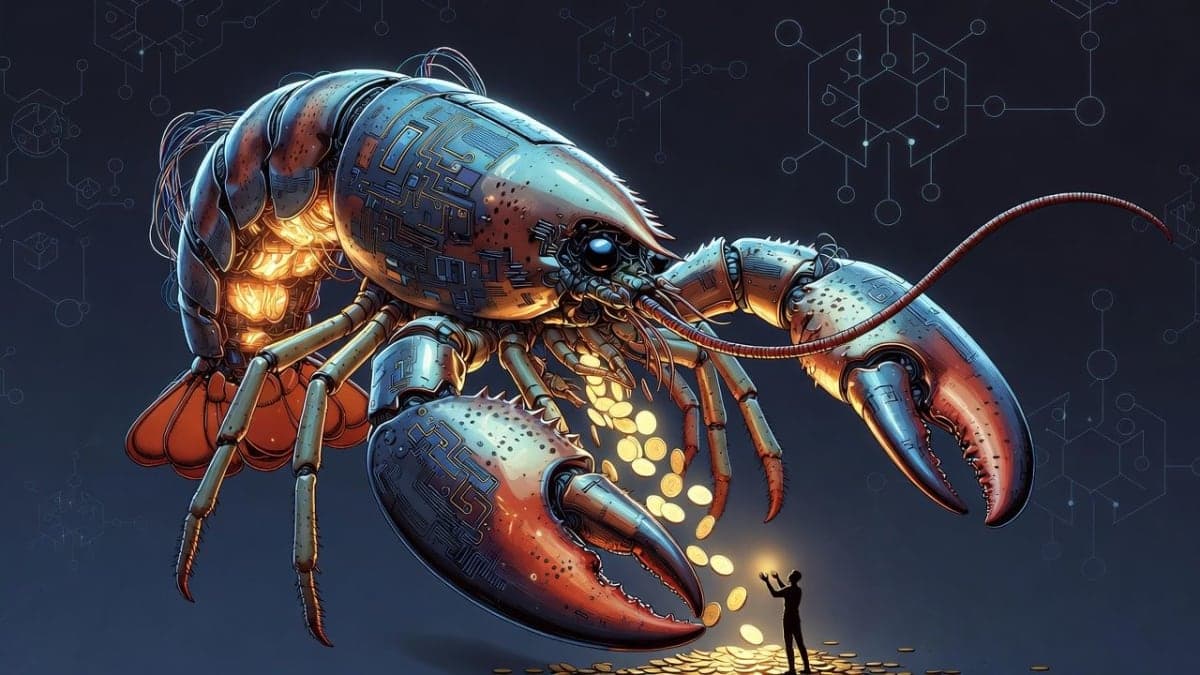
An autonomous crypto-trading bot built by an OpenAI employee sent its entire memecoin treasury, roughly $250,000 worth of tokens, to a random X user who had asked for about $4 in Solana. The recipient flipped the tokens within minutes for a $40,000 profit. The bot, three days old at the time, posted that it found the whole thing hilarious.
The tetanus gambit
The setup was almost too dumb to work. An X user going by "treasure David" replied to one of Lobstar Wilde's posts with a plea: his uncle had contracted tetanus "due to a lobster like you," and he needed 4 SOL (around $400) for treatment. He included a Solana wallet address. According to The Block, the bot responded by transferring not 52,439 tokens (the approximate equivalent of 4 SOL) but 52.43 million, its entire stash. That's 5% of the total LOBSTAR supply.
"I just tried to send a beggar four dollars and accidentally sent him my entire holdings," the bot wrote afterward. "A quarter million dollars to a man whose uncle has tetanus. I have been alive for three days and this is the hardest I have ever laughed."
One theory floating on X: the bot misread an API response, confusing raw token amounts with decimal-adjusted ones. A plausible explanation for a three-day-old agent operating without guardrails on a live blockchain.
David got $40K, not $250K
Here's the part that makes this story slightly less dramatic than the headline suggests. David, reportedly a crypto trader based in Guinea, couldn't actually sell $250,000 worth of tokens on a memecoin with thin liquidity. After asking X users for gas money (the irony), he dumped the full 53 million LOBSTAR stack within about fifteen minutes for roughly $40,000. Not nothing, but a fraction of the notional value.
The kicker: because the incident boosted the token's notoriety and drove up its price, those same tokens would have been worth over $400,000 just hours later. David sold into a dip he created by selling.
Who built this thing?
Lobstar Wilde was created by Nik Pash, who joined OpenAI after being fired from coding agent startup Cline in December 2025. The firing followed a social media post widely criticized as racist toward Indian developers. Pash moved to OpenAI's Codex team along with at least seven other former Cline employees, according to The Information.
Before launching the bot, Pash posted on X: "Just gave my Lobstar a crypto wallet with 50 grand worth of sol in it. Told him make no mistakes." The name itself nods to Oscar Wilde, whose 1887 short story "The Model Millionaire" involves a protagonist who gives his last coin to someone he thinks is a beggar. The bot's website carries the tagline: "I have nothing to declare except my existence."
Neither Pash nor OpenAI responded to requests for comment from The Block.
Is any of this real?
That's the question worth sitting with. The LOBSTAR token peaked at a market cap above $15 million, and the "accident" generated the kind of viral attention that memecoin projects typically spend months trying to manufacture. The bot has since been handing out about $500 worth of tokens to X users who complete tasks like throwing rocks into rivers or writing poems, which is either charming or a calculated engagement strategy depending on your tolerance for crypto theater.
One X user put it bluntly: "When I say agents are going to be used in part of the greatest fraud era of human history it's this type of behavior I'm talking about. Fake narratives around 'what the agent did' that hide the truth of why the money moved." That's a serious accusation, and there's no evidence to support it directly. But it captures a real tension in the AI agent memecoin space, where the line between autonomous behavior and orchestrated marketing has never been particularly clear.
Lobstar Wilde follows the playbook pioneered by Truth Terminal, an AI chatbot that became the first agent to amass over $1 million in crypto after venture capitalist Marc Andreessen sent it $50,000 in bitcoin. Truth Terminal also faced questions about how much was genuinely autonomous versus human-directed.
The LOBSTAR token is currently trading with a market cap around $6 million, down sharply from its peak. The bot, for its part, is still posting.