Jensen Huang stood in front of 5,800 Carnegie Mellon graduates on May 10 and told the engineering and computer science contingent something the rest of his industry usually leaves out of the pitch deck. The biggest winners of the AI build, in his telling, won't be the people writing the models. They'll be the people pulling the cable.
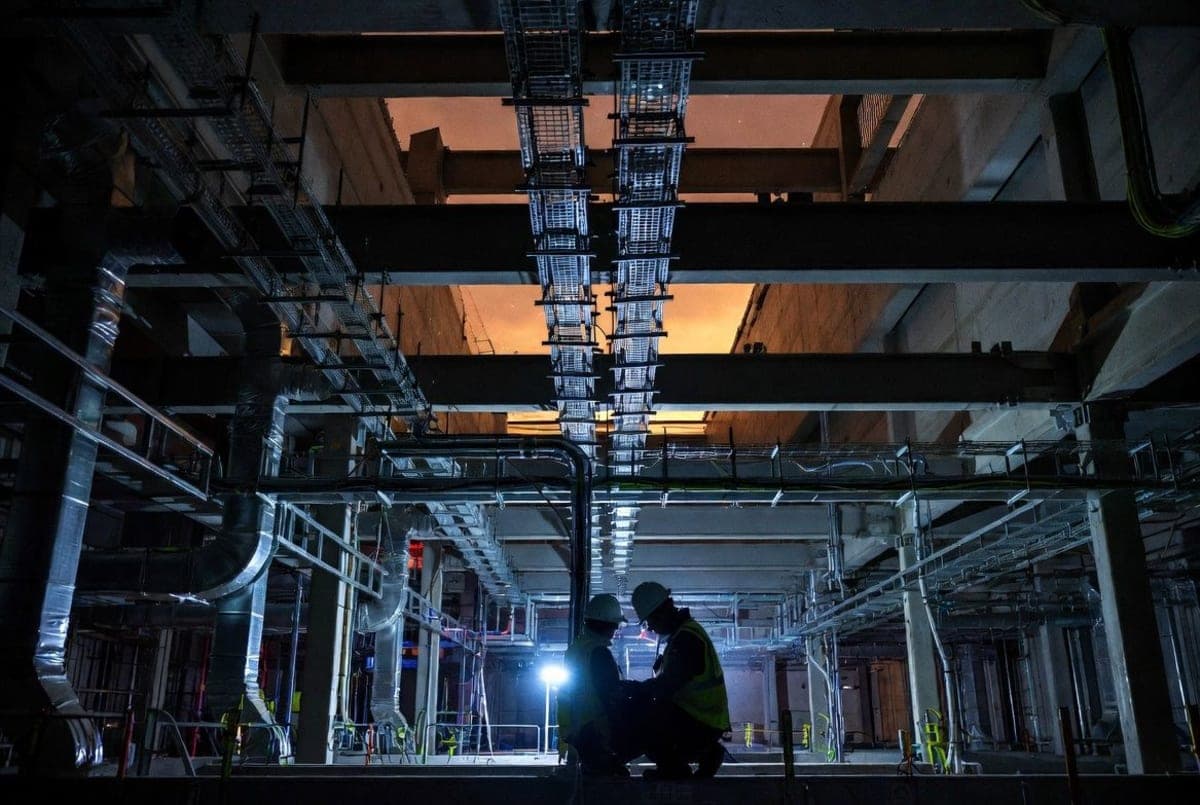
"AI gives America the opportunity to build again," Huang said at the 128th commencement. "Electricians, plumbers, iron workers, technicians, builders, this is your time."
It's the kind of line that lands harder when it's delivered by the head of the world's most valuable company, in front of the institution that built the Logic Theorist in the 1950s. Nvidia is the multi-trillion-dollar middleman of this whole boom. When Huang says the bottleneck is concrete and copper, not silicon, he's also describing his own customers' biggest operational headache.
The numbers do back him up, sort of
A March Randstad analysis of more than 50 million job postings worldwide since late 2022 found demand for robotics technicians up 107 percent, HVAC engineers up 67 percent, and industrial automation technicians up 51 percent. Traditional skilled trades, lumped together, rose 27 percent over the past four years. Electricians specifically, 18 percent. Welders, 25 percent. Construction roles, 30 percent.
Real numbers. Also numbers from a staffing firm whose business model is to place workers, which means treat the framing accordingly. The underlying postings data is harder to argue with than the press release wrapped around it.
What's more interesting than the percentages: time-to-hire. Per Randstad, it now takes an average of 56 days to fill a skilled trades role versus 54 days for a desk-based professional. That two-day gap doesn't sound like much. But the historical pattern was the inverse. The trades used to be the easier hire.
And then there's the math that should keep someone awake. For every 100 young workers entering manufacturing trades, 102 are leaving. An annual decline of 1.72 percent in the pipeline at the exact moment when the four largest hyperscalers, Alphabet, Microsoft, Meta, and Amazon, are committing close to $700 billion in capex for 2026 alone.
The Nvidia question
Here's the thing about a Nvidia CEO telling CS graduates to admire the electrician's path. It's accurate. It's also extremely convenient.
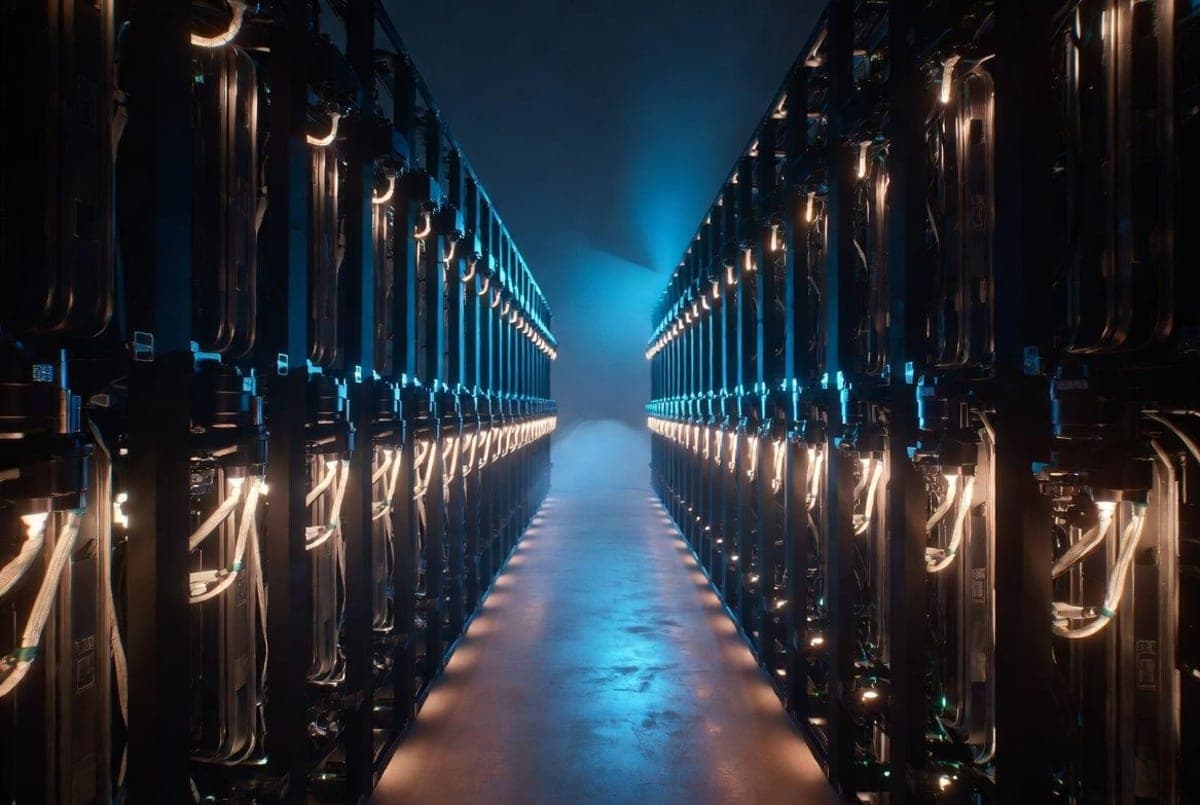
Nvidia ships chips that nobody can deploy without massive electrical, cooling, and structural infrastructure. Google has publicly said a shortage of electricians "may constrain America's ability to build AI infrastructure." BlackRock's Larry Fink has been louder, putting $100 million into trade training programs and warning of shortages in the hundreds of thousands. When the people who need data centers built are this loud about labor, I'd argue the commencement-stage version of the message is closer to policy advocacy than career advice.
The radiology example Huang trotted out, that AI automates scan reading but elevates the radiologist's purpose, is the same construction he's been using at GTC and Davos for at least a year. It's smooth on stage. It's also, as TNW's commencement coverage noted, easier to assert than to demonstrate. In radiology settings where interpretation is the actual bottleneck, the framing falls apart.
What happens when the wave breaks?
The skilled trades pitch has one obvious vulnerability: a lot of the surging demand is project-based.
Data center construction is not a steady-state industry. It's a buildout. Trades workers spinning up a hyperscaler facility in West Texas or Louisiana have no guarantee their next contract exists. The six-figure-salary projection Huang has floated elsewhere this year depends on continued capex from companies whose own earnings depend on AI demand that has, so far, been very real and very expensive to underwrite.
The Associated Builders and Contractors trade group estimates the construction sector needs 349,000 new workers in 2026, rising to 456,000 in 2027. Whether those jobs persist past 2030 is a different question. One Huang didn't address in Pittsburgh.
Who was actually in the audience
Carnegie Mellon's 2026 class includes a lot of computer science and engineering majors. They were graduating into the most anxious entry-level white-collar market in years. Anthropic's CEO has warned that half of entry-level white-collar jobs could disappear. Several large tech firms openly blamed AI for layoffs over the past year.
So Huang's pivot from "AI won't replace you" to "but also, consider the trades" reads differently depending on which seat you're in. To a CS grad, it might sound like reassurance. It might also sound like the CEO of the company benefiting most from the AI boom suggesting the safer bet isn't the one they just spent four years training for.
What he actually said, more precisely, was that AI won't replace humans but those who use AI well will replace those who don't. Which is its own kind of hedge.
What to watch
Three things will tell us whether the trades thesis holds. Whether time-to-hire for skilled trades widens past 56 days. Whether the hyperscalers' 2027 capex guidance comes in above or below this year's $700 billion. Whether BlackRock's $100 million training program, or anything like it, scales fast enough to matter.
Apprenticeship pipelines take four to five years. The AI capex cycle is in year three.
The math doesn't work yet. That's exactly the point Huang was making.