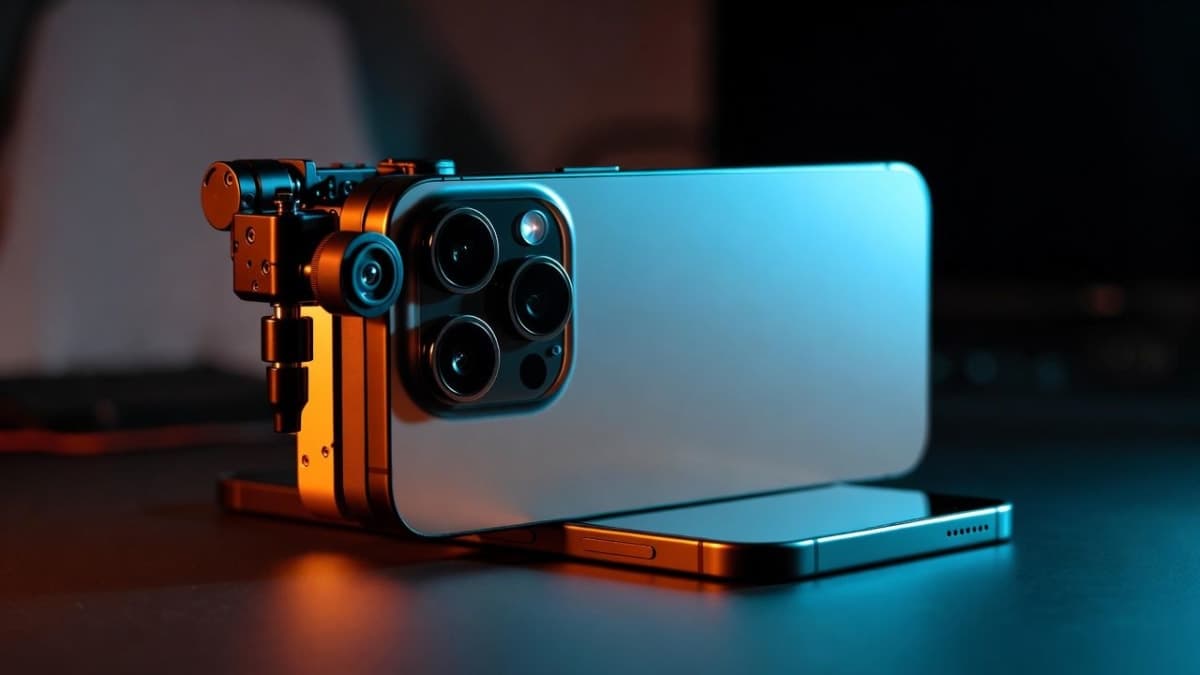
Honor showed a working prototype of its Robot Phone at MWC 2026 in Barcelona on Sunday, and the thing is genuinely weird. A 200-megapixel camera module pops out of the back of the phone on a miniaturized robotic arm, physically moves to track subjects, and can nod or shake its head in response to voice commands. CEO Jian Li confirmed the device will go on sale in China in the second half of 2026. No price yet.
Forget the AI companion stuff
Honor is marketing this as a phone with a built-in AI companion, complete with "emotional body language" and the ability to bop along to music. The company calls it a "new species" of smartphone, which is the kind of language that should make you reach for your skepticism. But underneath the anthropomorphic pitch, there is an actual product idea worth paying attention to: a phone with a built-in mechanical gimbal.
The camera sits on a four-degree-of-freedom gimbal system with three-axis stabilization. When you are not using it, the module retracts behind a slide-open cover on the back. When deployed, it can physically reposition itself to follow a moving subject, perform 90-degree and 180-degree rotational pans (Honor calls this "AI SpinShot"), and keep footage stable without relying purely on software tricks. Engadget's hands-on noted the camera can cock its head, agree, disagree, and do a full 360-degree flip. A spokesperson mentioned five pre-loaded songs it can dance to, leaving it unclear whether that is a demo gimmick or a shipping feature.
Honor also announced a collaboration with ARRI, the German company whose Alexa cameras have shot a long list of Hollywood films. ARRI's image science is being integrated into the Robot Phone's camera processing, which, if it delivers anything close to ARRI's color rendering, could be the most interesting part of the whole package. "Natural color, gentle highlight roll-off, and a sense of depth," is how ARRI VP Benedikt von Lindeiner described the goal, though translating cinema-grade aesthetics to a phone sensor is a promise plenty of companies have made before.
The durability question nobody answered
Moving parts and pockets full of lint have never been a great combination. The smartphone industry tried pop-up cameras a few years ago with devices like the OnePlus 7 Pro. Those worked, mostly, but they were mechanically simpler, just a camera sliding up and down. Honor's gimbal adds active motor-driven movement during recording, which means more heat, more power draw, and more potential failure points.
Honor says the robotic arm uses the same materials as its Magic V6 foldable hinge, with 2800 MPa tensile strength. The micro motors are reportedly 70% smaller than competing gimbal systems. Those are interesting specs but they dodge the question people actually care about: what happens after six months of daily pocket time? Nobody at MWC was allowed to go hands-on with the device, TechCrunch reports, which suggests the prototypes are not ready for public scrutiny.
IDC analyst Francisco Jeronimo put it plainly to CNBC: the novelty will attract attention, but converting that into sales will be difficult, particularly if the phone is expensive or bulky. Given that a mechanical gimbal system adds weight, components, and manufacturing complexity on top of flagship-tier internals, expect pricing well above standard flagships.
Who is this actually for?
Strip away the dancing and nodding, and the Robot Phone looks like a specialized content creation device. A phone with a built-in gimbal that can autonomously track a subject while you film is a genuine pitch to solo creators who currently strap their phones to DJI Osmo handles. If Honor can shrink that workflow into the phone itself, there is real utility there.
The AI companion angle, where the camera becomes "eyes" for an always-aware assistant that can suggest outfit choices or help with household tasks, is harder to take seriously at this stage. Honor showed a demo of the camera analyzing someone's wardrobe and nodding approval. Charming in a controlled presentation. Less clear how that translates to something you would use on a Tuesday morning.
One wrinkle for potential buyers outside China: NotebookCheck reports the Robot Phone will not be sold in the US due to ongoing restrictions tied to Honor's former parent company Huawei, though Honor has operated independently since 2020 and sells other products internationally with Google services. Regional availability beyond China remains unconfirmed.
Honor says features are still being finalized. Expect more concrete details, and hopefully actual hands-on time, in the coming months before the planned second-half launch.