Bill Gurley has been writing about open source for nearly three decades. His 1999 essay at Above the Crowd predicted that open source production would matter as much as Henry Ford's assembly line. A week ago, the longtime Benchmark general partner published a long follow-up arguing the prediction was correct but incomplete. Open source is no longer just a way to build software. It is, in his framing, a corporate weapon. Six historical examples, then two live ones: autonomous vehicles and AI.
The pattern, briefly
The mechanism repeats across all six cases. A coalition of also-rans rallies around a neutral foundation, releases a project under permissive licensing, and commoditizes a layer where one player dominates. Google did it to Apple with Android. Google did it again to Amazon with Kubernetes. Meta did it to hardware vendors with the Open Compute Project. Telecom carriers tried it (with messier results) against Cisco through LF Networking. Berkeley academics did it accidentally, and then on purpose, with RISC-V. Amazon, Meta, Microsoft, and TomTom did it to Google itself when they founded Overture Maps in 2022.
Gurley's framing here is genuinely useful. He grounds the case in Eric Raymond's Cathedral and Bazaar and pulls Michael Porter's supplier-power analysis through it. The honest read of his thesis: this is mostly defensive strategy. You do not have to beat the incumbent. You have to neutralize their pricing power and prevent them from owning the architecture. His 2011 post on why Search needed Android remains the cleanest articulation of that logic. Android did not have to make money. It had to keep Apple from owning the device.
What is striking is how repeatable the steps have become. Neutral foundation. Common adversary. Member contributions on a regular cadence. A widening tent over time. Six examples in, the playbook is almost mechanical.
The AI bet, with an asterisk
Then Gurley applies the framework to AI, and the piece gets more contentious. He acknowledges the terminology problem upfront, which is the right move. "Open source" in AI usually means open weights, not the full training stack. The structural dynamics, he argues, are the same. Without an open frontier, the AI economy collapses to two or three closed-Cathedral vendors who set the terms for everyone else.
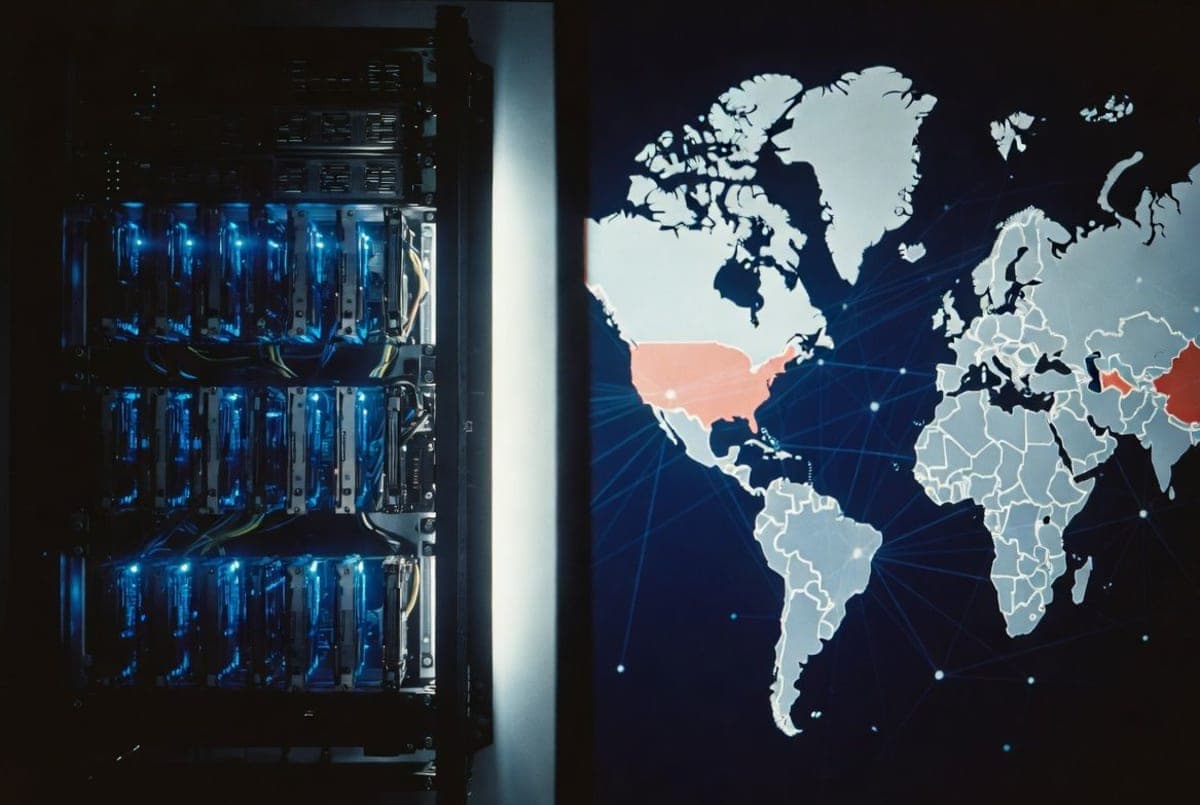
Here is where the geography gets uncomfortable. China currently leads at the open-weight frontier. DeepSeek's R1 release on January 20, 2025 was the inflection point. Alibaba's Qwen, Moonshot's Kimi, and Zhipu's GLM followed. Demis Hassabis of Google DeepMind said it directly in a YC interview: the Chinese models are leading in open source. OpenAI and Anthropic are at the absolute frontier and both are closed. Meta has quietly stepped away. Mark Zuckerberg's 2024 manifesto, titled "Open Source AI is the Path Forward," reads differently now that Llama 4 underperformed and the Behemoth frontier model was shelved.
Gurley's most provocative point is not about who is winning. It is about what happens next. The closed-Cathedral incumbents have every incentive to push Washington toward restricting Chinese open-weight models on national-security grounds, which would conveniently leave the American market with no serious open competitor. The early signal is already there. Semafor reported on April 29 that two House committees sent letters to Anysphere (Cursor's parent) and Airbnb asking about their use of Chinese open-weight models. Both companies picked those models on price-performance grounds. Both got letters anyway.
The honest assessment, per Gurley: there is currently no credible Western open frontier player. Mistral is the closest, sitting a tier below. If a Western alternative does not emerge and Congress treats Chinese open weights as a security threat, the rest of the world picks the AI stack that is free, capable, and not embargoed. That stack is made in China. The conclusion is uncomfortable for almost everyone.
What about the developers?
Here is where the essay gets quieter. Gurley's framework treats open source as a chess piece. CIOs play it. Executives play it. Foundations play it. Governments play it. The actual humans who write the code show up mostly as a beneficial side effect of "leveraged development."
That gap got harder to ignore over the past two weeks. The Bun JavaScript runtime, owned by Anthropic since late 2025, just merged a Claude-generated Rust port of roughly a million lines of Zig code. Six days of work. 99.8% of the existing test suite passing on Linux x64 glibc. A second pull request, the one removing 600,000 lines of Zig, was automatically flagged by GitHub as "AI slop" and closed. It will be back in some form.
This was not a clean divorce. The Zig Software Foundation banned LLMs from contributions earlier this month, after which Bun's roughly 4x compile-speed improvement could not be upstreamed. Loris Cro of the Zig foundation framed the rule as "contributor poker": you bet on the person, not the patch. Bun forked rather than comply. Then Anthropic's compute turned Bun into a Rust project anyway, with Jarred Sumner casually noting that human engineers haven't actually been typing code at Bun "for many months now."
The developer reaction has been ugly. Some of it predictable language-tribe stuff. Some of it more specific, and angrier: a maintainer who built a community around Zig walked away from the language the day his employer's compute became plentiful. One comment on the merge, capturing the mood: "What a nice reviewable little commit. I'm sure it will not contain any bugs."
This is the thing Gurley's framework cannot quite see. Open Source Strategy works when the developers are happy to be coalition partners. When they are not, when they are being used as raw material for an executive thesis or simply routed around by AI tooling, they notice. They ban LLM contributions. They fork. They post angry threads. The Bun story is not a counterexample to Gurley's thesis. It is a footnote that suggests the playbook gets messier when the coalition is involuntary.
What to watch
Two things will resolve over the next eighteen months. Whether a credible Western open frontier player emerges (Mistral, or some hyperscaler that has not yet declared its hand), and whether Congress turns the China-hawk framing into actual restrictions on open-weight distribution. Gurley's bet is that the second outcome would be a self-inflicted wound on the entire American software ecosystem. Hard to disagree.
The autonomous-vehicle section of his essay is the more speculative bet. The argument that fifty-plus non-Waymo, non-Tesla companies should band together under a neutral foundation is logically airtight and politically improbable. Maybe China leads that one too. Gurley basically says so.
Open source, he concludes, is no longer just how good software gets built. It is how dominant incumbents get neutralized. The companies that understand this will compound their advantages. The countries that understand this will lead. The developers who built the thing in the first place are not, in this telling, the protagonists. Whether that ends well depends on whether anyone reads the footnote.