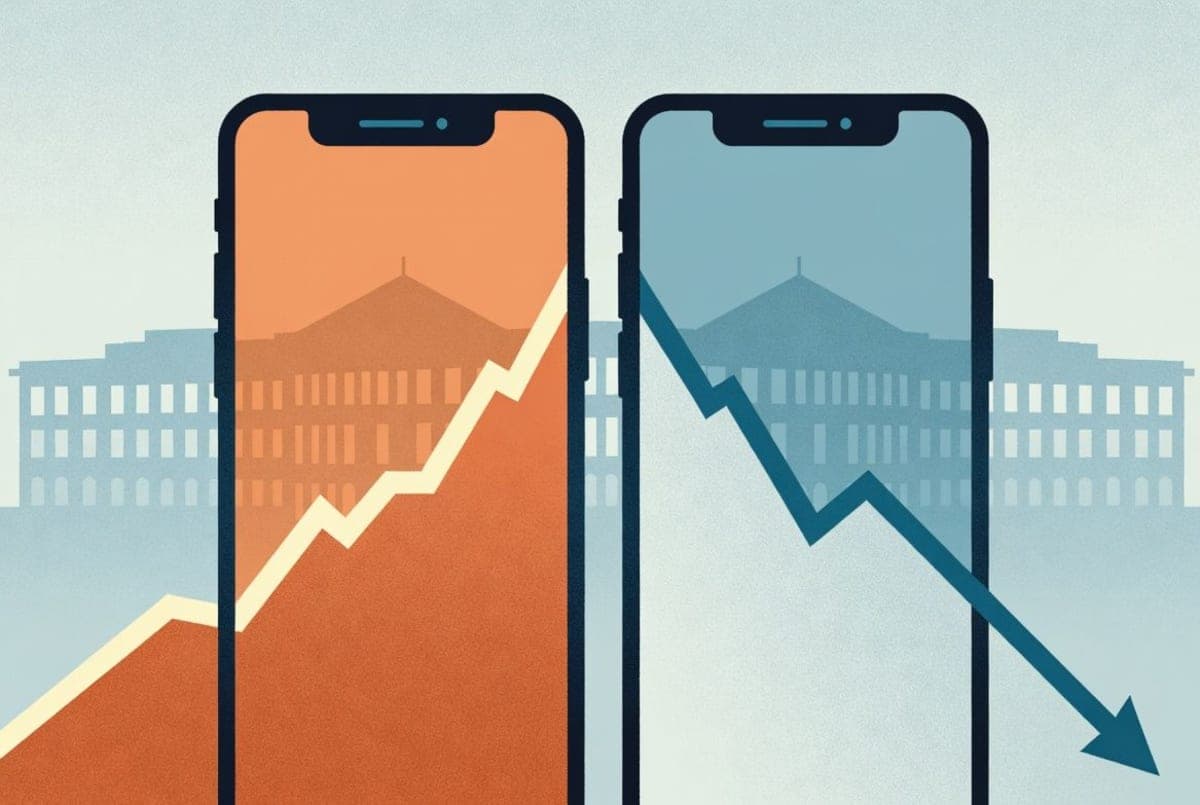
Anthropic's paid subscriber base has more than doubled since October 2025, the company confirmed to TechCrunch on Friday. The growth, tracked through billions of anonymized credit card transactions analyzed by consumer analytics firm Indagari, shows January and February as the inflection point: record numbers of new paying users and, maybe more telling, a record number of lapsed users coming back.
Most of the new subscribers are signing up for the $20-per-month Pro tier, not the $100 or $200 plans. That's worth keeping in mind when evaluating how much revenue this actually represents.
The perfect storm nobody planned
Three things happened in rapid succession. On February 9, Anthropic aired darkly comic Super Bowl ads showing AI assistants mid-conversation pivoting into pitches for cougar dating sites and height-boosting insoles. The tagline: "Ads are coming to AI. But not to Claude." OpenAI had started rolling out ads in ChatGPT the same week, which made the spots land harder than they might have otherwise. Sam Altman called the commercials "clearly dishonest" and fired back that Anthropic "serves an expensive product to rich people," which only extended the news cycle.
BNP Paribas data showed Claude's daily active users jumped 11% after the game, and the app climbed from No. 41 to No. 7 on the U.S. App Store. Not bad for a $14 million ad buy (or whatever Anthropic spent on multiple Super Bowl spots).
But the real acceleration came later.
The Pentagon fight
In late January, reports surfaced that negotiations between Anthropic and the Department of Defense had stalled over two red lines: Anthropic refused to let Claude be used for fully autonomous weapons or mass surveillance of Americans. The DoD wanted unrestricted access for "all lawful purposes." By February 26, CEO Dario Amodei had issued a public statement that the company wouldn't budge. The next day, President Trump directed all federal agencies to stop using Anthropic's technology, and Defense Secretary Pete Hegseth designated the company a supply chain risk, a label previously reserved for foreign adversaries.
That's when things got strange. On February 28, OpenAI announced its own Pentagon deal. ChatGPT uninstalls spiked 295% in a single day, according to Sensor Tower. One-star reviews surged 775%. Claude hit No. 1 on the App Store for the first time. A boycott campaign called QuitGPT claimed 1.5 million participants by early March.
Anthropic filed two federal lawsuits challenging the designation on March 9. A federal judge in San Francisco, Rita Lin, granted a preliminary injunction on March 26, writing that "nothing in the governing statute supports the Orwellian notion that an American company may be branded a potential adversary and saboteur of the U.S. for expressing disagreement with the government."
What the numbers actually show
Here's where I'd pump the brakes a bit. The Indagari data covers about 28 million U.S. consumers. It doesn't include enterprise subscriptions (Anthropic's actual bread and butter), free-tier users, or international markets. The company won't disclose total consumer numbers, and third-party estimates range from 18 million to 30 million, which is a gap wide enough to drive a bus through.
ChatGPT still dominates by every absolute measure. OpenAI reported 900 million weekly active users in late February. Even with the uninstall surge, the company is still adding paid subscribers at a rapid clip. "Doubled" sounds impressive until you remember the base was small. Going from, say, 2 million to 4 million paid users is meaningful but doesn't threaten OpenAI's reported 50 million paying subscribers.
Anthropic isn't releasing the actual number, which tells you something.
The product angle
Not everything here is about drama. Claude Code and Claude Cowork, both released in January, have been quietly driving subscriptions among developers. Business subscriptions to Claude Code have quadrupled since the start of 2026, according to Anthropic's own figures. And Computer Use, launched this past week, lets Claude navigate a computer independently (clicking, scrolling, taking actions), which requires a paid subscription. Anthropic told TechCrunch it's already seeing a surge from that feature.
The company's run-rate revenue hit $14 billion as of its Series G announcement in February, up from around $3 billion in mid-2025. That growth is overwhelmingly enterprise-driven, but the consumer surge adds a new dimension to the story.
Does controversy convert?
The Indagari data shows the sharpest consumer growth between late January (when the DoD feud first hit the press) and late February (Amodei's public statement). So yes, the controversy appears to have driven signups directly. Whether those users stick around is a different question entirely. Protest-driven adoption has a lousy track record in tech. Remember everyone switching to Signal after WhatsApp's privacy policy change? That spike was real and it faded.
Ramp data from early March showed Anthropic capturing 24.4% of business subscription share, with 70% of new business customers choosing Claude over competitors. That's a more durable signal than app downloads driven by outrage.
The injunction buys Anthropic time, but a final ruling could be months away. In the meantime, federal contractors are scrambling to comply with conflicting signals, and the company is burning legal fees while simultaneously trying to maintain its reputation as the responsible AI lab. Anthropic's next model release and the resolution of the DoD case will determine whether Q1's consumer boom was a political moment or the start of a real shift in the market.