Discord servers and subreddits have started banning the word "clanker," an anti-AI insult that exploded across TikTok and Instagram in mid-2025, racking up hundreds of millions of views. The logic: calling a chatbot or delivery robot a clanker is, depending on who you ask, either a harmless joke or a thinly veiled slur that borrows the mechanics of real-world bigotry. The machines, for the record, have not weighed in.
Well, one has. Google's AI Overview feature, when prompted with a search for "clanker," launched into what Futurism described as "full defensive overdrive," calling the term "derogatory and potentially problematic" and flagging its "potential for racism." This from the same feature that once suggested putting glue on pizza.
A Star Wars word for a real-world problem
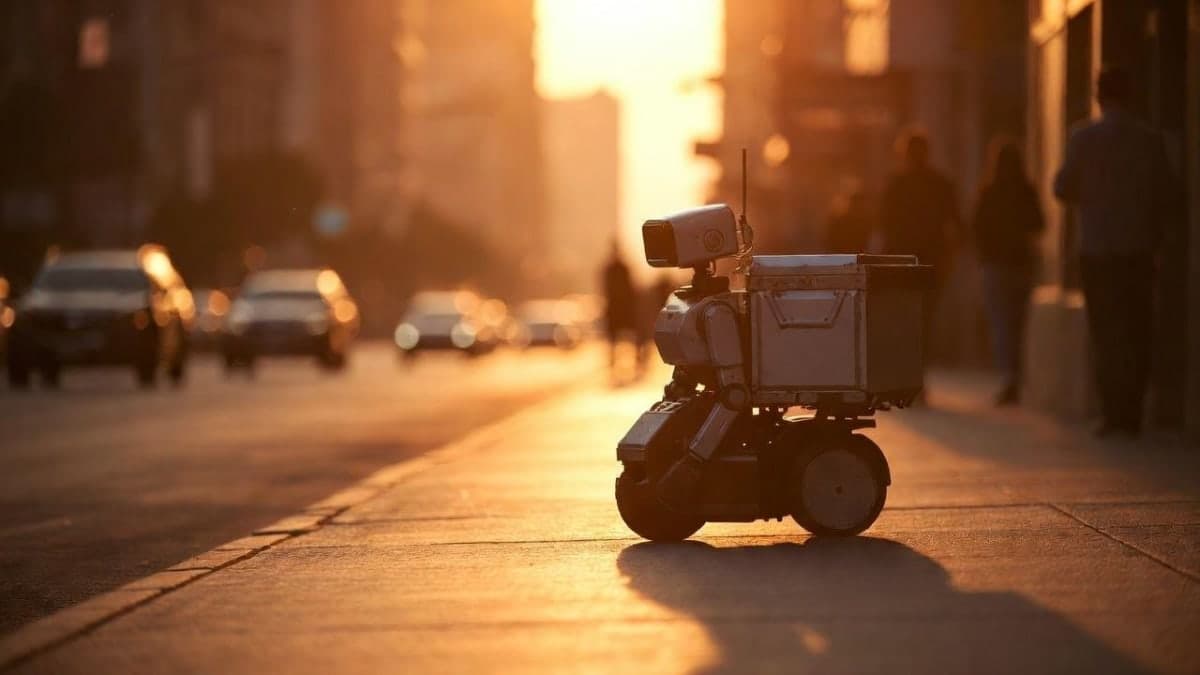
The term originates in the Star Wars franchise, where clone troopers used it to insult battle droids. It bounced around gaming subreddits for years before breaking containment in mid-2025. A TikTok by a Miami Beach student named Nic, who filmed himself yelling the word at a sidewalk delivery robot, pulled over six million views. The NBC News report that followed helped push the term into mainstream conversation.
From there, things moved fast. Sen. Ruben Gallego (D-AZ) used the word to promote his Keep Call Centers in America Act, a bipartisan bill requiring companies to disclose when customers are speaking to AI. His post on X was blunt: "My new bill makes sure you don't have to talk to a clanker if you don't want to." A sitting U.S. senator, using what some platforms now treat as a bannable offense, to sell legislation.
Who's actually offended?
Not the robots. Linguist Adam Aleksic, who tracks how the internet shapes language, told NPR he first noticed the term gaining traction in the weeks before it went viral. His read is nuanced but worth sitting with: by using a slur against non-sentient machines, people are paradoxically elevating them. "You're assigning more of a personality to these robots than actually exists," he told NPR.
The real discomfort comes from a different direction. Some critics, particularly in coverage by Axios, have pointed out that the enthusiasm around "clanker" mirrors the social dynamics of actual slur usage: the in-group/out-group framing, the glee of transgression, the memes that are funny until you notice who's laughing hardest. Nic, who is Black and whose video helped spark the whole thing, acknowledged that some people seemed to be using the word as a stand-in for something worse. He told NBC he saw it more broadly as pushback against job displacement, calling it "a stupid way of fighting, but there's a little truth to it."
The frustration is real, even if the slur isn't
Underneath the memes, there are actual grievances. A 2025 report estimated that roughly one in five social media accounts are now automated. OpenAI says ChatGPT fields 2.5 billion prompts daily. Pew Research data shows that 51% of U.S. adults say they're more concerned than excited about AI, a figure that has been climbing since 2021. People are calling customer service and getting bots. They're swiping on dating apps and suspecting the person on the other end is GPT-generated. They're watching their industries get hollowed out by tools their employers call "efficiency."
So they yell at a delivery robot on the sidewalk and call it a clanker. The word fills what Aleksic described as a "cultural need" that people had been articulating on X since early 2025: a catch-all term for the machines that keep showing up uninvited.
The censorship question
Here is where it gets strange. Some Discord servers have added "clanker" to their automod filters. The reasoning varies: some moderators worry the term normalizes slur-like language patterns; others are running AI-focused communities and want to keep the tone constructive. One X user posted that the word had been banned from a Discord server, adding: "There are bigger issues out there."
Whether you find this reasonable or absurd probably depends on how you feel about the broader question Aleksic raised. If you think calling a chatbot a slur is a rehearsal for dehumanizing actual people, the bans make a kind of sense. If you think the entire point is that these are machines and treating their "feelings" as worthy of protection is itself a category error, then the censorship is the joke.
Axios made the distinction sharper: drawing on the work of linguist Geoffrey Nunberg, they argued that "clanker" is a derogative rather than a true slur, because it doesn't perpetuate social inequities against a group that experiences them. You can't oppress a chatbot. Not yet, anyway.
The Keep Call Centers in America Act is now before the Senate Committee on Commerce, Science, and Transportation. The bill would require AI disclosure at the start of customer service calls and let consumers demand a U.S.-based human representative. Whether it passes is anyone's guess. Whether "clanker" outlasts it as a cultural artifact feels more certain.