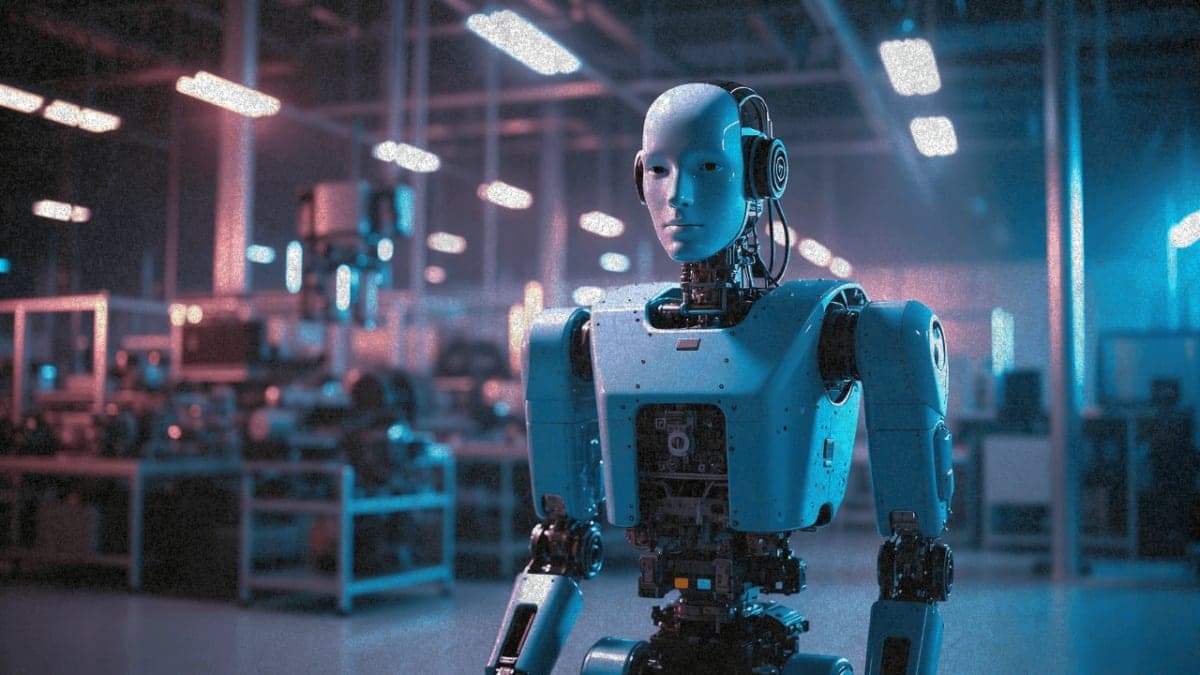
Atlas picked itself up off the floor at Mandalay Bay yesterday, walked around the stage for several minutes, waved at the crowd, and then did something no Boston Dynamics robot has done before: it introduced its replacement. The blue production model that rolled out is already in manufacturing in Boston. All 2026 units are spoken for.
So. The dancing robot has grown up.
The demo was teleoperated, for what it's worth
I need to point this out because Boston Dynamics buried it: an engineer piloted the Atlas prototype from backstage during the CES demonstration. The company says it'll run autonomously in the field, but what we saw on stage was essentially a very expensive puppet show. Flawless, sure. But let's be clear about what was proven and what wasn't.
The production version is taller (6.2 feet), stronger (lifts 110 pounds), and has 56 degrees of freedom, up from 50 in the April 2025 prototype. Joints rotate 360 degrees. It can work in temperatures from -4°F to 104°F, which matters when you're putting this thing in a Georgia factory. The battery lasts four hours, and here's the actual interesting part: it swaps its own batteries in under three minutes. No human intervention required. Just walks itself to the charging station and gets back to work.
That's the pitch, anyway. Continuous operation. No breaks. No union.
Google's back (they can't quit this thing)
Boston Dynamics announced a partnership with Google DeepMind to stuff Gemini Robotics models into Atlas. If you remember your robotics history, Google bought Boston Dynamics in 2013, then sold it to SoftBank, who sold it to Hyundai. Now Google's back. Make of that what you will.
The idea is that Gemini gives Atlas the ability to reason about what it's seeing rather than just executing pre-programmed routines. Carolina Parada from DeepMind said on stage that the robot can "learn almost anything you can consistently demonstrate through teleoperation." DeepMind also hired Boston Dynamics' former CTO Aaron Saunders in November, which tells you where this is heading.
Here's what they're not saying: how well this actually works outside controlled demos. The partnership "kicks off in the coming months." Research phase. No production timeline for Gemini integration.
The money situation
Boston Dynamics won't say what Atlas costs. One aggregator site claims around $420,000, which would be roughly five times what Spot goes for at $75,000. The company says customers should see ROI within two years. How they calculated that without publishing the price is a mystery to me.
What we do know: Hyundai is investing $26 billion in U.S. manufacturing, including a robotics factory capable of producing 30,000 units per year by 2028. They own 88% of Boston Dynamics. The first Atlas fleets ship this year to Hyundai's Robotics Metaplant Application Center and to Google DeepMind. Everyone else waits until 2027.
Boston Dynamics generated about $130 million in revenue in 2025 from Spot and Stretch combined, according to CEO Robert Playter. The company has "consistently lost millions annually despite viral fame," as one outlet put it. Atlas is the bet that changes that equation.
What it's actually going to do
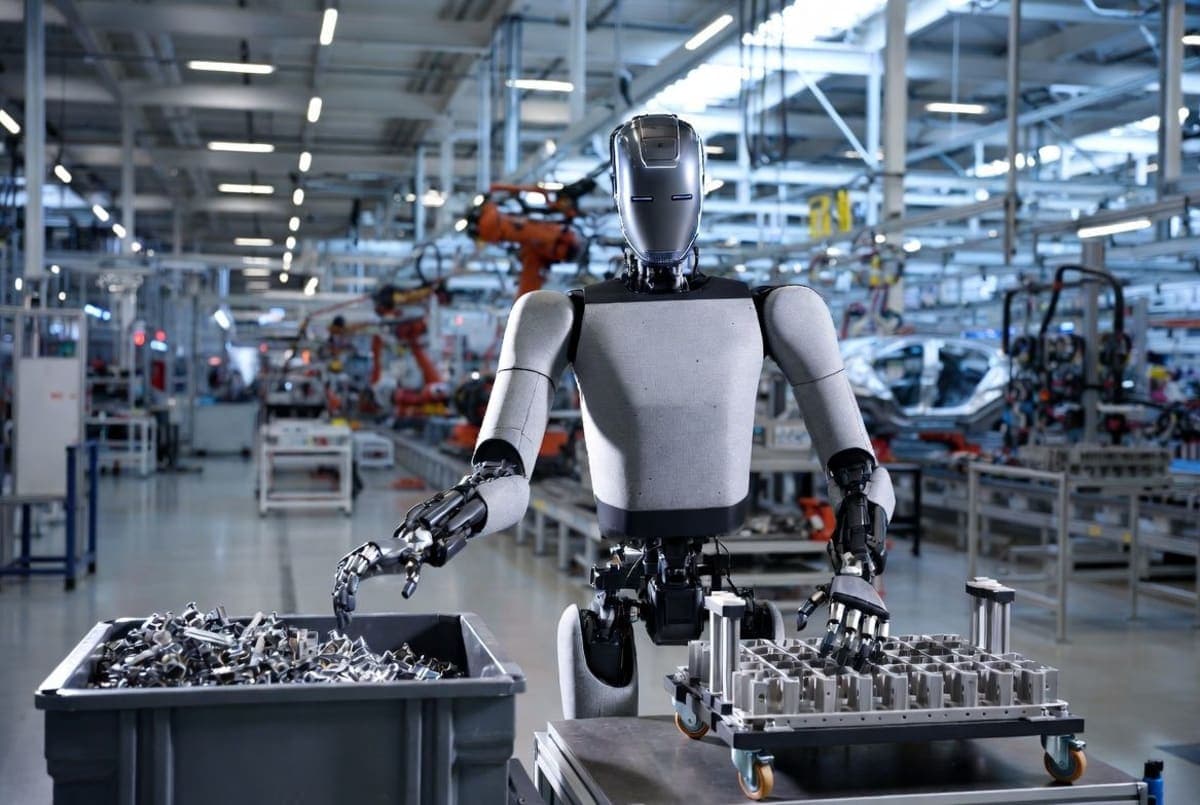
Parts sequencing. That's the initial job. At Hyundai's EV plant in Savannah, Georgia, starting 2028. The robot grabs components from shelves and racks and delivers them to the assembly line. By 2030, they want it doing actual component assembly. "Repetitive motions, heavy loads, and other complex operations."
The company emphasized safety repeatedly, which is what you do when you're putting 6-foot robots with superhuman strength near human workers. Atlas has human detection, fenceless guarding, and barcode/RFID integration for workflow tracking. DeepMind's Parada talked about Gemini performing "artificial reasoning" to prevent dangerous behavior. Playter acknowledged that "even the little ones can be dangerous."
Reassuring.
Not going home anytime soon
Some competitors are talking about home deployment. Figure AI. Tesla's Optimus. Playter was explicit: that's not the strategy. "I can't wait to have a robot help lift me out of bed 20 years from now," he said. "We do want to go into homes, just not now." He cited high costs, limited capabilities, and zero safety standards for domestic robots.
This is the most honest thing anyone said at CES. The factory floor is controlled. Structured. Documented. A home is chaos. Different problem entirely.
Hyundai's planning a subscription model (robotics-as-a-service) to lower upfront costs for smaller manufacturers. Smart move if you can't sell a $400K robot outright. Bundle hardware with software updates and remote maintenance, hope the economics work out over time.
The competition is real
Over 200 Chinese firms are developing humanoid robots, according to industry group CMRA. Tesla plans to reveal its updated Optimus in February or March. Everyone's chasing the same premise: physical AI is the next big industrial market. Hyundai's vice chairman put it bluntly: "Over the past three years, AI has evolved rapidly, from generative AI to agent AI and now physical AI."
The difference with Boston Dynamics is the 30-year head start on the hard part. Making robots that don't fall over. Making robots that recover when they do. The Gemini brains are borrowed, but the body is proprietary.
Whether that matters when China can undercut on price is the question nobody on stage wanted to answer.