Jenny Wen, who leads design for Claude at Anthropic, told Lenny Rachitsky on his podcast this week that the traditional design workflow of research, mockups, and iteration has become functionally obsolete. When an engineer can spin up multiple AI agents and ship a working version before a designer finishes exploring options, the whole discover-expand-narrow framework (what the industry calls the double diamond) stops making sense.
Wen should know. She was Director of Design at Figma, where she led the teams behind FigJam and Slides. Then she left, voluntarily, to go back to individual contributor work at Anthropic. That alone is the most interesting part of the conversation.
What replaced the process
According to Wen, design at Anthropic has split into two distinct modes. The first is what she calls supporting implementation: giving engineers feedback, tweaking things directly in code, doing last-mile polish on products that are already being built. The second is short-term vision work, setting direction on a 3-to-6-month horizon instead of the multi-year roadmaps that design leaders used to obsess over.
The reasoning tracks with what Anthropic's CPO Mike Krieger described in his own Lenny's Podcast appearance: when everyone can build fast, the bottleneck shifts upstream to deciding what to build. Wen's version of that argument is more specific to designers. Someone has to point all these fast builders in a coherent direction, and that job looks nothing like producing Figma mockups.
Her day-to-day at Anthropic, according to the Figmalion newsletter summary, involves surfing internal prototypes, pairing directly with engineers, and handling implementation herself. Not exactly what you'd expect from someone whose last title included the word "Director."
Why she took a demotion
Wen managed 12 to 15 direct reports at Figma. She walked away from that to be an IC at Anthropic because, as she put it in the interview, she doubted the future of middle management in design and wanted hands-on skills during a period of rapid change. It's a bet that looks less crazy with each passing month. If AI tools can compress the execution layer of product development, the people sandwiched between strategy and shipping face an uncomfortable question about their own relevance.
She says she doesn't regret it, which is the kind of thing you'd expect someone to say on a podcast, but her public posts back it up. She's described the move as embracing "fluidity" between crafting products and leading teams. Whether that framing survives contact with the next reorg is another matter.
The chatbot isn't going anywhere
Perhaps the least expected claim from the interview: Wen argues that chat interfaces are more durable than most people in tech assumed. The industry had a consensus forming that chatbots were a transitional interface, a stopgap until something better came along. Wen pushes back on that. Chat sticks around because of its flexibility. You can ask it anything. The future she describes is a hybrid where the model generates purpose-built UI elements for specific tasks, but chat remains the connective tissue between them.
This matters because Anthropic just shipped Claude Cowork, a product reportedly built in about 10 days, much of it written by Claude Code itself. Cowork extends Claude beyond the chat window into file management and desktop tasks. If Wen is right that chat is permanent, Cowork starts to look less like a separate product and more like the natural expansion of an interface that's proving harder to kill than anyone predicted.
Figma isn't dead, but its role changed
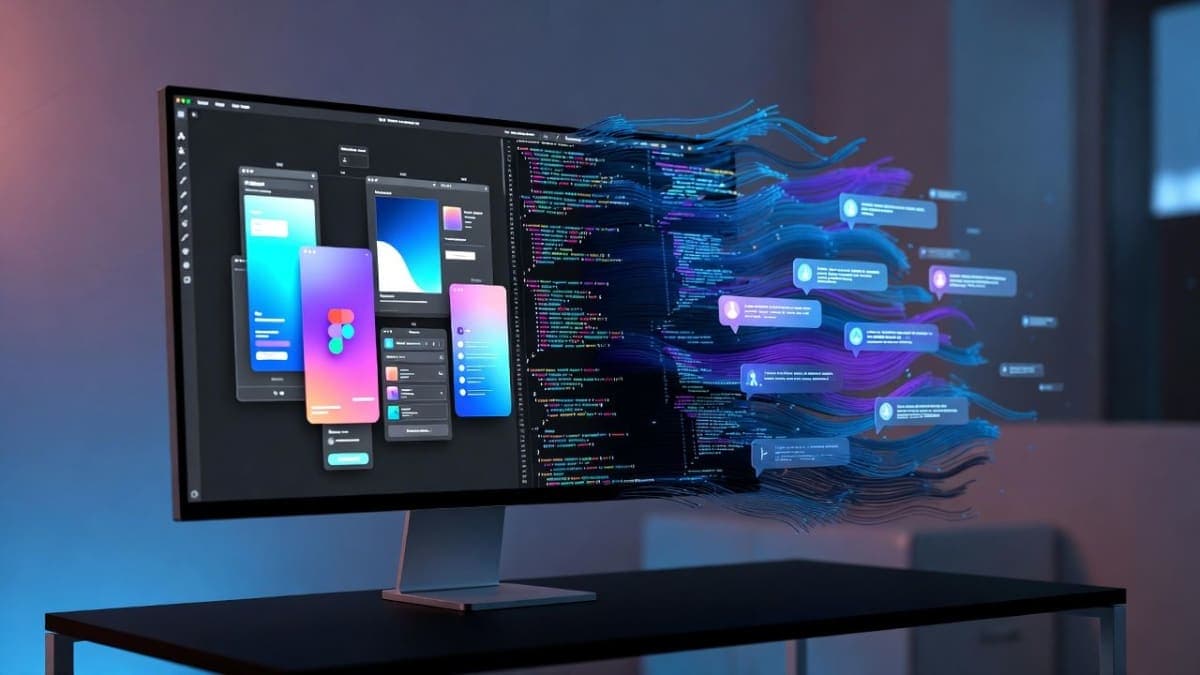
Wen still uses Figma. She's clear about that. But the reason is narrower than it used to be. Figma's value, she argues, is that you can spread 8 or 10 directions across a single canvas and compare them simultaneously. Code-based tools are linear. You invest effort in one direction and develop a bias toward it. Figma's spatial layout prevents that sunk-cost thinking.
That's a meaningful defense, but it's also a much smaller job description than "where all design happens." Design tools that survive this shift will probably look less like full workflow platforms and more like specialized exploration spaces.
Who she's hiring
Wen outlined three archetypes she's looking for at Anthropic, and one of them is counterintuitive: fresh graduates with zero industry experience. Her logic is that people without ingrained habits or attachment to established processes are an advantage when those processes are changing fast. Everyone else in tech is chasing senior talent. Anthropic, or at least Wen's team, is betting that inexperience is underpriced right now.
The episode, which runs about 77 minutes, is available on YouTube, Spotify, and Apple Podcasts. Wen's next public talk is a keynote called "Don't Trust the Process" at the Hatch Conference.