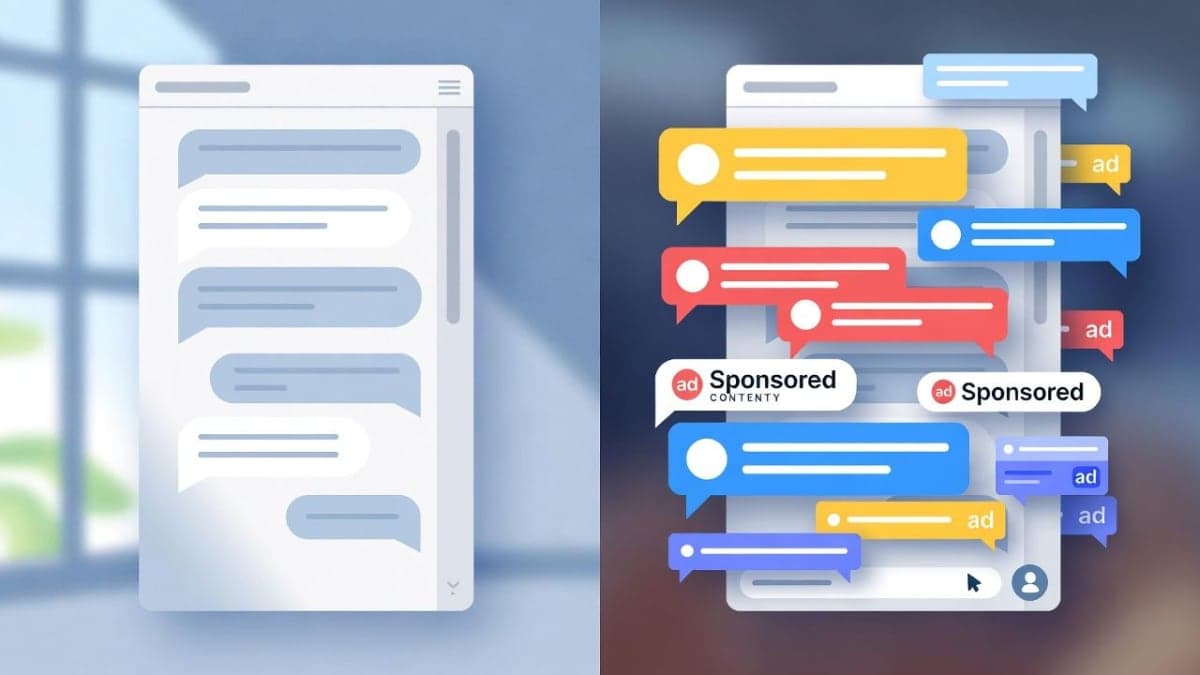
Anthropic published a blog post Wednesday declaring that Claude will remain permanently ad-free, a move timed three weeks after OpenAI announced plans to test advertisements in ChatGPT. The company is backing up the policy statement with its first Super Bowl campaign, airing spots that parody the prospect of ads interrupting AI conversations.
The pitch and the punch
"There are many good places for advertising. A conversation with Claude is not one of them," Anthropic wrote. The company promises no sponsored links, no advertiser-influenced responses, no third-party product placements users didn't request.
The Super Bowl ads, created with agency Mother and director Jeff Low, depict scenarios where helpful AI responses get hijacked by sponsor pitches. One spot shows a man asking about getting six-pack abs; the "AI" starts with fitness advice before pivoting to hawk insoles. Another features someone seeking advice about communicating with their mom and getting served a dating app for older women. The tagline lands bluntly: "Ads are coming to AI. But not to Claude."
Anthropic estimates the pre-game and in-game spots will reach about 120 million viewers. That's aggressive marketing spend for a company that, just a few months ago, had minimal consumer brand presence.
Why now
The timing is pointed. OpenAI's January 16 announcement confirmed that ChatGPT would start testing ads for free users and its new $8-per-month Go tier. CEO Sam Altman had previously called the idea "uniquely unsettling" and described ads as a "last resort," which makes the reversal notable. OpenAI says ads will appear below responses, clearly labeled, and won't influence what ChatGPT says.
Anthropic is betting users will pay attention to the difference. The company argues that AI conversations are fundamentally unlike search results or social feeds because people share more personal context. Internal analysis, the company claims, shows "an appreciable portion" of Claude interactions involve sensitive topics or complex work where ads would feel wrong.
This framing conveniently ignores that Claude's 30 million users are dwarfed by ChatGPT's 800 million. The ad-free stance costs Anthropic less when there's less consumer attention to monetize.
The business case
Anthropic insists its revenue model already works without advertising. The company reported over $9 billion in annualized revenue by late 2025, with projections targeting $18 billion to $26 billion for 2026. Around 80% comes from enterprise contracts and API usage, not consumer subscriptions.
The real growth story is Claude Code, the coding assistant that hit $1 billion in annualized revenue within six months of its public launch. That product, not consumer chat, is driving Anthropic's financial trajectory. Enterprise deals with Deloitte, Cognizant, Netflix, and Salesforce anchor the recurring revenue. When your customers are developers and corporations paying for API calls, a Super Bowl ad saying "no ads" is as much about brand positioning as it is about business model purity.
What they're not ruling out
The blog post includes some careful hedges. Anthropic says it's "exploring agentic commerce," meaning Claude could eventually handle purchases or bookings on a user's behalf. The company will "continue to build features that enable our users to find, compare, or buy products." These interactions, Anthropic insists, would be "user-initiated" rather than advertiser-driven.
The distinction matters, but it's also blurry. If Claude recommends products when asked, and Anthropic earns referral fees, that's a different monetization model but still commerce. The company's explicit promise is narrow: no sponsored links adjacent to conversations, no advertiser influence on responses. Everything else remains open for future interpretation.
One line stands out: "Should we need to revisit this approach, we'll be transparent about our reasons for doing so." That's corporate-speak for "never say never," even while the marketing says "never."
The bigger split
This shapes up as a real business model divergence in generative AI. OpenAI is chasing scale through free access subsidized by ads. Anthropic is chasing enterprise value through premium positioning.
Both paths have precedents in tech history. Google built an empire on ad-supported search. Apple built one on premium hardware that doesn't need to monetize user data. Neither approach is inherently wrong, though both invite criticism. OpenAI risks eroding the trust that made ChatGPT dominant. Anthropic risks keeping frontier AI accessible only to those who can afford subscriptions.
For now, the practical difference for most users is minimal. ChatGPT Plus, Pro, and Enterprise tiers remain ad-free, just like Claude. The ads are targeting free users and the new budget tier. But the philosophical divergence is real, and Anthropic is spending Super Bowl money to make sure everyone knows which side it's on.