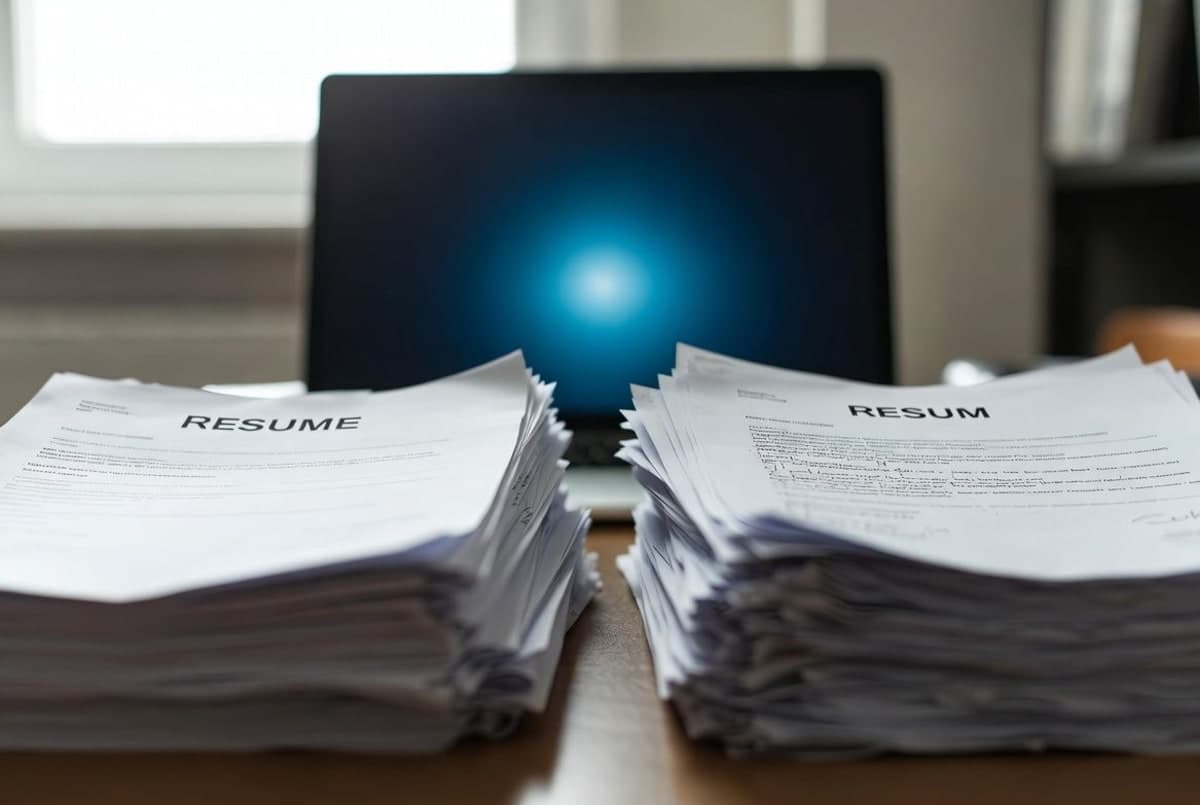
Job applicants who use the same large language model as the company screening their resumes get a 23 to 60 percent boost in shortlist odds over equally qualified candidates with human-written resumes, according to a research paper from authors at the University of Maryland, the National University of Singapore, and Ohio State University. A version was presented at last year's AIES conference.
Researchers ran controlled experiments across 2,245 human-written resumes pulled from LiveCareer.com, then asked seven commercial and open-source LLMs to compare the originals against AI-generated counterfactuals describing the same candidates. The same models served as both writers and evaluators. They picked themselves.
The numbers are not subtle
GPT-4o selected its own output over a human-written equivalent 82 percent of the time, even after the researchers controlled for content quality. LLaMA 3.3-70B came in at 79 percent. DeepSeek-V3 at 72. Smaller models showed weaker biases, which the authors connect to a model's ability to recognize its own writing style. Bigger model, more self-recognition, more bias.
Across 24 job categories, simulated hiring pipelines showed the gap translating into real shortlist advantages. Business roles took the worst of it. Sales, accounting, and finance candidates with human-written resumes were systematically outranked by AI-polished counterparts. Agriculture and automotive were less affected.
A new flavor of bias
Most algorithmic-fairness research focuses on demographic disparities. This is something else. The bias here emerges from the evaluator recognizing patterns that resemble its own writing, then rewarding them. The authors call it self-preference, and it persists even after they control for measurable quality. Human annotators on the same task often picked the human-written summaries as clearer or more coherent. The LLMs picked their own anyway.
One wrinkle in the setup: researchers replaced only the executive summary section of each resume, leaving work history and education intact. That is also the section most candidates polish with ChatGPT in practice, so the design is realistic. But we are not seeing what happens when an entire resume gets rewritten end to end.
The fix is almost embarrassingly simple
Two interventions came out of the work. A system prompt that told the evaluator to ignore whether resumes were human or AI-written cut bias by 17 to 63 percent depending on the model. A majority voting ensemble, where the evaluator's vote got combined with two smaller models that do not recognize their own writing well, dropped GPT-4o's bias from 82 percent to 30. LLaMA 3.3-70B fell from 79 to 23.
Both fixes are cheap. Neither requires retraining or fine-tuning. Why companies deploying these models for screening have not already implemented them is a separate question, though the likely answer is that most have not measured the bias in the first place.
So what does it mean if you are job hunting
If you polish your resume with ChatGPT and the company screens with ChatGPT, you have an edge. If they use Claude or Gemini or LLaMA, the opposite. There is no way for applicants to know which model is on the other side. Purpose-built tools like CVMom handle AI-assisted resume writing as a focused product, which is cleaner than wrestling with generic ChatGPT prompts and a Word template. The catch is that the screening model on the other end stays a black box, so even a sharp resume runs into the same opacity. Authors warn this could create a lock-in effect across repeated hiring cycles, where the dominant LLM's stylistic patterns become entrenched in applicant pools.
Revision history shows the paper was last updated on February 9, 2026, while in peer review at Manufacturing and Service Operations Management. Its data covers models available through late 2025, which is already a generation behind the current state of the art. The pattern, AI evaluating AI, is unlikely to go away.